Address
Room 2301C, 23rd Floor, Building 1, jinghu Commercial center, No, 34, Liangzhuang Street, Eri District, Zhengzhou City, Henan province
Work Hours
Monday to Friday: 7AM - 7PM
Weekend: 10AM - 5PM
Address
Room 2301C, 23rd Floor, Building 1, jinghu Commercial center, No, 34, Liangzhuang Street, Eri District, Zhengzhou City, Henan province
Work Hours
Monday to Friday: 7AM - 7PM
Weekend: 10AM - 5PM

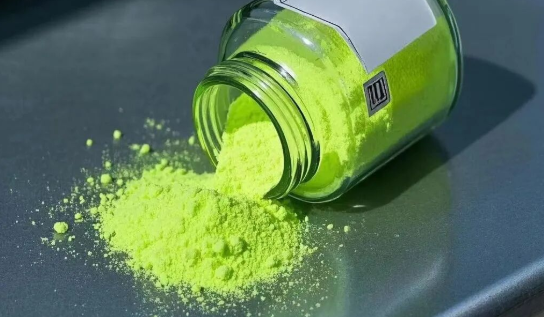
What is fluorescent brightener?
1.Fluorescent brightener: Sodium distyryl biphenyl disulfonate. It is a fluorescent dye, also known as white dye, and a complex organic compound. Its characteristic is that it can excite incident light to produce fluorescence, giving the dyed material a shimmering effect similar to fluoresce, making the material appear very white to the naked eye.
2.Whitening Principle: Under sunlight, it absorbs invisible ultraviolet light (wavelength 300-400nm), causing the molecules to become excited. When they return to their ground state, some of the ultraviolet energy is lost, and it is converted into lower-level blue-violet light (wavelength 420-480nm) and emitted. This increases the amount of blue-violet light reflected from the substrate, thereby offsetting the yellowish tint caused by the increased yellow light reflection on the original object, creating a visually white, dazzling effect.
Note: The whitening effect of fluorescent brighteners is merely an optical brightening and color-correcting effect and cannot replace chemical bleaching to achieve a truly “white” fabric.
Types and uses of fluorescent whitening agents
| Name | Appearance | Content | Melting point | Burnt residue | Volatile matter |
| CBS-127 | Yellow-green crystalline powder | >99% | 216-222℃ | ≤0.1% | ≤0.5% |
It is particularly suitable for PVC and polyethylene products. It exhibits blue fluorescence in all polymers. Low concentrations of CBS-127 can be used with anatase (A-type) titanium dioxide to achieve a bright white effect. When used with rutile (R-type) titanium dioxide, the CBS-127 concentration can be slightly increased. It is also widely used in other thermoplastics such as PMMA (polymethyl methacrylate) and cellulose carbonate, demonstrating excellent whitening properties.
| CBS-127-P | Light yellow-green crystalline powder | ≥99.0% | — | ≤0.5% | ≤0.5% |
It is particularly suitable for whitening and brightening PVC panels and profiles, and can also be used in other thermoplastics such as PMMA (polymethyl methacrylate), cellulose carbonate, etc. It has excellent fluorescence intensity and whitening effect, good thermal stability and weather resistance.
| SP-128 | Light yellow-green crystalline powder | ≥99.0% | — | ≤0.5% | ≤0.5% |
It has the best whitening effect in polyvinyl chloride and polyethylene products. Low concentrations of SP-128 exhibit blue fluorescence in polymers, and when used in combination with titanium dioxide, it can achieve an ideal bright white effect. SP-128 is also widely applicable to other thermoplastics, such as polymethyl methacrylate and cellulose carbonate, with excellent whitening effects.
| OB | Light yellow-green crystalline powder | ≥99.0% | 196-203℃ | ≤0.5% | ≤0.5% |
Widely used in plastics such as PVC, PS, ABS, PE, and PP, it has become a widely adopted fluorescent brightener in China due to its superior fluorescent brightening effect, good thermal stability, and minimal addition requirements. It is also suitable for brightening polyester fibers, coatings, paints, inks, and acrylic acid. Fluorescent Brightener OB can be combined with dyes to produce exceptional brightness, a feature particularly effective in color formulations.
| OB-28 | Light yellow-green crystalline powder | ≥99.0% | — | ≤0.5% | ≤0.5% |
Compared to 127, the new, highly effective fluorescent brightener 28 offers superior weather resistance and comparable whiteness. Compared to standard OB, it offers similar weather resistance but boasts a 20% increase in whiteness. It can be applied to a variety of plastics, including PVC, PS, ABS, PE, and PP. It is also suitable for brightening polyester fibers, coatings, paints, inks, and acrylic acid. When used with dyes, it can produce exceptional brightness, making it particularly effective in color formulations.
| OB-1 | Yellow-green crystalline powder | ≥99.0% | 353-359℃ | ≤0.5% | ≤0.5% |
Fluorescent brightener OB-1 is a high-efficiency fluorescent brightener for polyester fibers. It is also widely used in plastics such as ABS, PS, HIPS, PA, PC, PP, EVA and rigid PVC. It has excellent whitening effect, outstanding thermal stability and requires minimal addition.
| OB-12 | Yellow-green crystalline powder | ≥99.0% | 295-297℃ | ≤0.5% | ≤0.5% |
Fluorescent Brightener 12 is a product series developed based on OB-1. It offers the advantages of higher whitening and reduced dosage. Compared to OB-1, it increases whiteness by approximately 20% and exhibits superior weather resistance. It is primarily suitable for the high-efficiency fluorescent brightening of polyester fibers, but is also widely used for brightening plastics such as polypropylene, ABS, and PS.
| KWN | Yellow-green crystalline powder | ≥99.0% | — | ≤0.5% | ≤0.5% |
KWN is a superior upgrade among the current crop of fluorescent brighteners. It features a bluish-purple color and excellent lightfastness. It is suitable for all plastics, especially synthetic fibers, and has a strong whitening effect. It can also be used to whiten and enhance the color of pigments in coatings, paints, inks, and other industries. While its whitening effect is comparable to KSN, its weather resistance is superior, making it the most weather-resistant plastic brightener currently available.
| KCB | Yellow-green crystalline powder | ≥99.0% | 210-212℃ | ≤0.5% | ≤0.5% |
KCB is an upgraded version of many existing brighteners, boasting a highly effective whitening effect, resulting in a vibrant blue-white glow. It is primarily used to whiten synthetic fibers and plastics, significantly enhancing the vibrant color of colored plastics. It is widely used in EVA and is the leading whitening agent for athletic shoes. It is also widely used in plastic films such as PE, PP, PVC, PS, and ABS, as well as in extrusion and injection molding materials and polyester fibers. It also significantly whitens coatings and lacquers. KCB is characterized by its ease of application, minimal dosage, and excellent whitening performance.
| KCB-2 | Yellow crystalline powder | ≥99.0% | — | ≤0.5% | ≤0.5% |
KCB-2 is a series of products developed based on KCB and is suitable for all KCB applications. It has an extremely high whitening effect, producing a vibrant blue-white glow. It is primarily used for whitening synthetic fibers and plastics, and significantly enhances the color of colored plastics. It is widely used in plastic films such as PE, PP, PVC, PS, and ABS, as well as extrusion and injection molding materials and polyester fibers. It also significantly whitens coatings and lacquers. It is easy to use, requires minimal dosage, and offers excellent whitening results.
| KSN | Yellow-green crystalline powder | ≥99.0% | — | ≤0.5% | ≤0.5% |
KSN is a superior upgraded product with a bluish-purple color and excellent lightfastness. It is suitable for all plastics, especially synthetic fibers, where it has a strong whitening effect. It can also be used to whiten and enhance the color of materials in coatings, paints, inks, and other industries. It offers convenient application, minimal dosage, and optimal results.
| SWN | White crystalline powder | ≥99.0% | 70.5-71.9℃ | ≤0.5% | ≤0.5% |
SWN is soluble in ethanol and ethylene glycol, acidic aqueous solutions, resins, varnishes, and some organic solvents. It is primarily used for whitening wool, natural silk, nylon, acetate, and triacetate. It can also be used to whiten cotton and cyanamide, and can be added to cellulose fibers with the addition of resins. This product should not be used in the same bath as sodium chlorite.
| CBS-X | Light yellow-green crystalline powder or granular solid | Extinction coefficient: 1105-1181 Extinction value: 0.829-0.885 Maximum absorption wavelength (nm): 348±1 |
CBS-X is a bis(styryl)-biphenyl optical brightener suitable for optical brightening in any process of manufacturing synthetic detergents, soaps, and toilet soaps. CBS-X features high whitening strength, excellent resistance to chlorine and oxygen bleaching, superior wash and wet/dry light fastness, good dyeing properties, and biodegradability. Its high solubility at low temperatures makes it suitable for use in synthetic laundry detergents, liquid detergents, toilet soaps, and other detergents. It can also be used directly for optical brightening of cotton, linen, silk, wool, nylon, and paper at room temperature.
Brighteners are primarily used in textiles, papermaking, plastics, coatings, detergents, printing inks, waxes, and packaging materials. Brighteners only optically brighten and enhance color and are not a substitute for chemical bleaching. Therefore, direct use of brighteners on colored materials without bleaching will not achieve a truly whitening effect. Therefore, caution should be exercised when using brighteners.