Address
Room 2301C, 23rd Floor, Building 1, jinghu Commercial center, No, 34, Liangzhuang Street, Eri District, Zhengzhou City, Henan province
Work Hours
Monday to Friday: 7AM - 7PM
Weekend: 10AM - 5PM
Address
Room 2301C, 23rd Floor, Building 1, jinghu Commercial center, No, 34, Liangzhuang Street, Eri District, Zhengzhou City, Henan province
Work Hours
Monday to Friday: 7AM - 7PM
Weekend: 10AM - 5PM

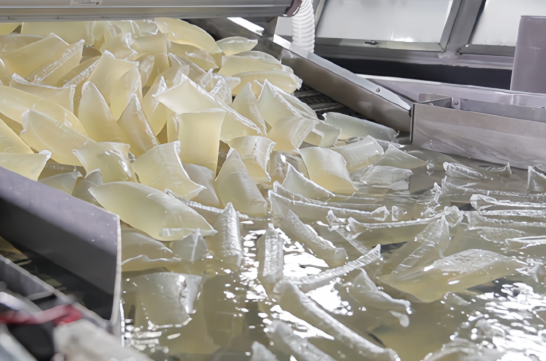
There are many types of industrial adhesive with different performances. Only by considering many aspects comprehensively when selecting adhesives can the best bonding effect be achieved.
Select adhesive based on the chemical properties of the substrate being bonded
(1) For bonding polar materials (such as steel, aluminum, titanium, magnesium, and ceramics), it is recommended to use highly polar adhesives such as epoxy resin, polyurethane, phenolic resin, acrylic, and inorganic adhesives.
(2) For bonding weakly polar and non-polar materials (such as paraffin, asphalt, polyethylene, polypropylene, polystyrene, and ABS), choose acrylic adhesives, unsaturated polyester adhesives, or solvents that can dissolve the materials being bonded.

Select adhesive according to the physical properties of the material to be bonded
① When bonding brittle or rigid materials (such as ceramics, glass, cement, and stone), we recommend selecting thermosetting resin adhesives with high strength, high hardness, and resistance to deformation, such as epoxy resin adhesives, phenolic resin adhesives, and unsaturated resin adhesives.
② When bonding elastic or tough materials (such as rubber, leather, plastic, and film), select adhesives with good elasticity and a certain degree of toughness, such as chloroprene rubber, polyurethane adhesives, modified silane adhesives, and rubber-based adhesives.
③ When bonding porous materials (such as foam plastics, sponges, and fabrics), select adhesives with higher viscosities, such as epoxy resin adhesives, polyurethane adhesives, modified silane adhesives, hot-melt adhesives, polyvinyl acetate adhesives, and rubber-based adhesives.
④ When selecting an adhesive, consider the expansion coefficient of the substrate. At room temperature, the expansion coefficients of most substrates are generally similar, so detailed consideration is not necessary. However, at high and low temperatures or when bonding over a large area, it is important to consider the similar expansion coefficients of the adhesive and substrate.
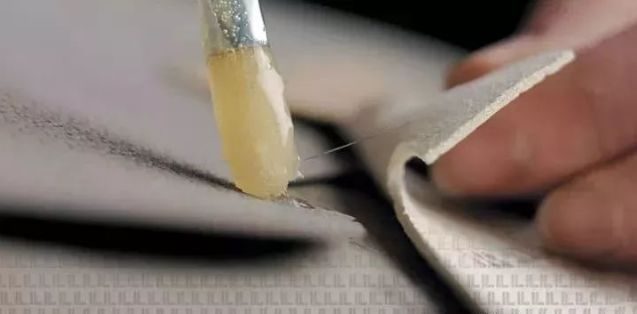
Select adhesive according to process method
(1) For the infusion process, solvent-free, low-viscosity adhesives are generally selected.
(2) For sealing or large-area bonding, processes such as scraping and dispensing are often used, and paste-like or paste-like adhesives are often selected.
(3) For bonding, sealing, and repairing precise and delicate contact surfaces, liquid adhesives are often selected.

Select adhesive according to the product usage environment
① Select different adhesives based on the product’s operating temperature. For room temperature use, most adhesives, such as hot melt adhesives and instant adhesives, are suitable. According to Coating Online, epoxy resin adhesive are suitable for use below 120°C; rubber adhesives are suitable for use below 80°C; and silicone adhesives are suitable for use below 200°C.
② Select adhesives based on the product’s natural operating environment. For example, weather resistance must be considered for outdoor environments such as heat, cold, humidity, and UV exposure. Silicone adhesives, epoxy adhesives, polyurethane adhesives, and modified silane adhesives are suitable.
③ Select adhesives based on the product’s chemical environment, such as those exposed to acids, alkalis, salts, oils, and gases.
④ Select adhesives based on the product’s physical environment, such as the forces, vibrations, and pressures at the bonding site.

Select adhesive according to special functional requirements
If you need bonding, sealing, conductivity, insulation, flame retardancy, heat insulation, thermal conductivity, leak prevention, etc., you should choose adhesives with certain functions.