Address
Room 2301C, 23rd Floor, Building 1, jinghu Commercial center, No, 34, Liangzhuang Street, Eri District, Zhengzhou City, Henan province
Work Hours
Monday to Friday: 7AM - 7PM
Weekend: 10AM - 5PM
Address
Room 2301C, 23rd Floor, Building 1, jinghu Commercial center, No, 34, Liangzhuang Street, Eri District, Zhengzhou City, Henan province
Work Hours
Monday to Friday: 7AM - 7PM
Weekend: 10AM - 5PM
Definition of Nylon Plastic
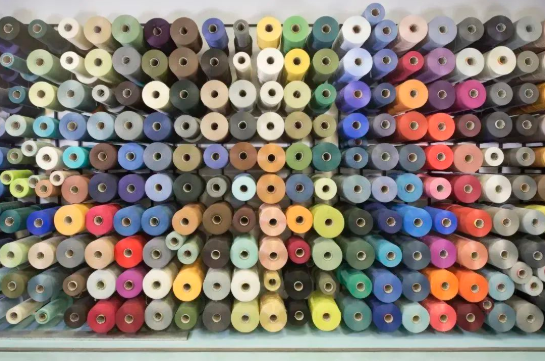
What is nylon plastic? Nylon, chemically known as polyamide (PA), is also known as polyurethane fiber, the world’s first synthetic fiber. It is a general term for thermoplastic resins containing repeating amide groups in their molecular backbone. Therefore, there are many types of nylon, not just one specific substance. These include aliphatic PA, aliphatic-aromatic PA, and aromatic PA. Aliphatic PAs are numerous, have high production volumes, and are widely used. Therefore, their name is determined by the specific number of carbon atoms in their synthetic monomers.
The history of nylon plastics
Research on synthetic polyamides dates back to 1928. In 1935, American scientist Carothers and his collaborators, while conducting theoretical research on polycondensation reactions, produced a high-molecular-weight linear polycondensate, polyhexamethylene adipamide (polyamide 66), in their laboratory from adipic acid and hexamethylenediamine.
From 1936 to 1937, DuPont, based on Carothers’s research, melt-spinned polyamide 66 fiber, naming it nylon. This was the first polyamide, and industrial production began in 1939. Separately, Schlack of Germany invented the synthesis of polycaprolactam (polyamide 6) from caprolactam in 1938, along with fiber production technology, which began industrial production in 1941.
After more than half a century of development, many polyamide products have emerged. Aliphatic polyamides (PA) include PA-6, PA-610, PA-612, PA-1010, PA-11, PA-12, and PA-46.
Aromatic polyamides include poly(p-phenylene terephthalamide) fiber, commonly known as aramid 1414 in my country, and poly(m-phenylene isophthalamide) fiber (known as aramid 1313 in my country).
Blended polyamides include poly(m-phenylene adipamide) (MXD16) and poly(hexamethylene terephthalamide) (polyamide 6T).
Characteristics of nylon plastic
Applications of nylon plastics
Nylon brush filaments, made by melting and drawing nylon, are characterized by their high toughness, excellent wear resistance, and strong resilience. They are widely used in:
Personal Care Industry: Such as toothbrush filaments, hair comb filaments, and makeup brush filaments;
Household Cleaning Industry: Such as vacuum cleaner filaments, clothes brush filaments, shoe brush filaments, and pot scrubber filaments;
Industrial Industry: Such as glass polishing filaments, escalator brush filaments, and roller brush filaments.