Address
Room 2301C, 23rd Floor, Building 1, jinghu Commercial center, No, 34, Liangzhuang Street, Eri District, Zhengzhou City, Henan province
Work Hours
Monday to Friday: 7AM - 7PM
Weekend: 10AM - 5PM
Address
Room 2301C, 23rd Floor, Building 1, jinghu Commercial center, No, 34, Liangzhuang Street, Eri District, Zhengzhou City, Henan province
Work Hours
Monday to Friday: 7AM - 7PM
Weekend: 10AM - 5PM

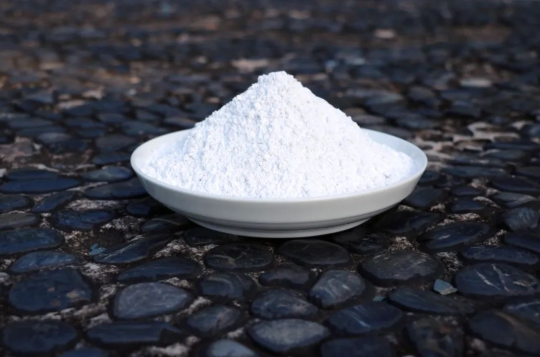
Titanium dioxide, currently recognized worldwide as a white pigment with the highest performance, is widely used in various industries, including cosmetics, coatings, plastics, chemical fibers, papermaking, rubber, and printing inks. The term “nano” refers to ultrafine particles with a diameter of less than 100 nm.
These ultrafine particles possess a large surface area, high surface activity, and excellent catalytic properties, combining the specific properties of both metals and non-metals. With the rapid development of modern science and technology, the application of nanomaterials is becoming increasingly widespread, and the requirements for them are also becoming increasingly demanding. Nano titanium dioxide, in particular, exhibits exceptional properties in light, electricity, and catalysis due to its significant volume effects, surface effects, optical properties, and color effects. As a new material, its application is expanding rapidly.
Chemical Industry
Catalysis is one of the key applications of nano-ultrafine particles. Their high surface area and high activity can significantly improve catalytic efficiency, and they are being researched and developed internationally as fourth-generation catalysts. Nano-titanium dioxide has high chemical activity, excellent heat resistance, and excellent chemical corrosion resistance, making it suitable for use as a high-performance catalyst, catalyst carrier, and absorbent.
Electronics industry
Nano-titanium dioxide is a key component of many electronic materials and can be used to create nano-sensitive materials and nano-ceramic functional materials. Due to their small size, large specific surface area, and high surface activity, nanoparticles are suitable for use as gas-sensing materials. Nano-titanium dioxide can be made into highly sensitive gas sensors. Nano-titanium dioxide can also be used in new energy batteries.
Research has shown that adding an appropriate amount of nano-titanium dioxide can improve the charge-discharge performance and cycle life of lithium batteries, making nano-titanium dioxide a promising material for future new energy batteries. Furthermore, because nano-ceramics can be deformed in a single step, researchers have used this process to create nano-titanium dioxide ceramics, which exhibit ultrafine grain sizes while retaining their properties.

Environmental protection
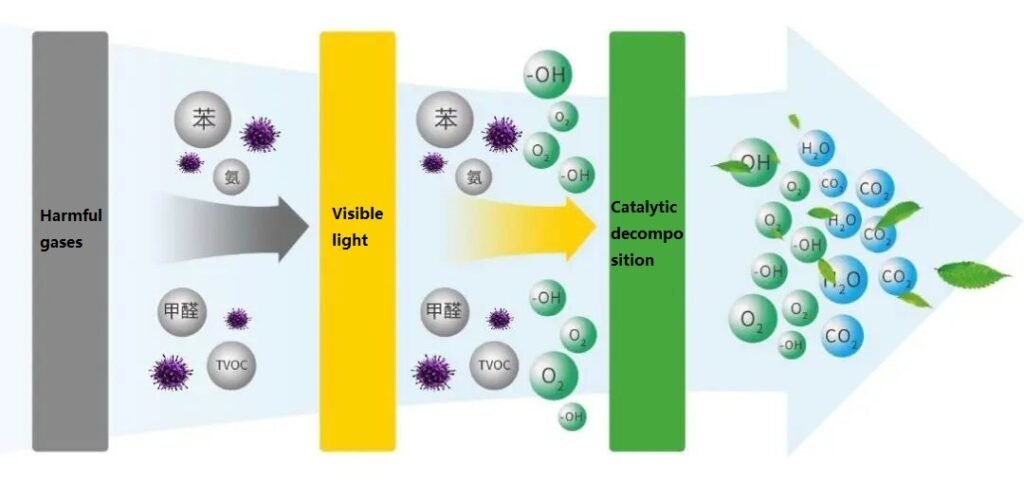
The photocatalytic effect of nano-titanium dioxide particles has broad environmental applications. Nuclear Technology Environment, based in London, UK, and Ontario, has developed a novel room-temperature photocatalytic technology that uses artificial light and nano-titanium dioxide catalysts to decompose polychlorinated biphenyls (PCBs) in industrial wastewater and contaminated groundwater. When contaminated water passes through the titanium dioxide coating network, it is exposed to low-dose ultraviolet light, triggering a reaction that generates highly active hydroxyl radicals, which rapidly decompose organic toxins into carbon dioxide and water.
In addition, nano-titanium dioxide materials can be used as photocatalysts to degrade dye pollutants emitted by the textile printing and dyeing and photography industries. With the development of society and the economy, people are increasingly prioritizing improvements in quality of life and health. Antibacterial, antiseptic, odor-removing, air purification, and environmental improvement are becoming increasingly sought-after technologies.
Cosmetics industry
Nano titanium dioxide has excellent UV shielding properties. Coupled with its transparency (it will not leave a white residue on the skin and can be applied thickly) and non-toxicity (it will not irritate the skin and cause inflammation), it has become an ideal raw material for sunscreen cosmetics.

Medicine, health and food processing
Nanostructures are not only strong but also inherently resistant to external impurities, making them less susceptible to binding. Furthermore, nanoparticles or small organic molecules are more easily absorbed by the human body, enhancing the efficacy of drugs. Therefore, nano-titanium dioxide has broad application prospects in the health and hygiene and food industries. Reports indicate the development of titanium dioxide thin-film ceramics with antibacterial and purification properties.
Nano-titanium dioxide is also widely used in the food industry, such as as a milk additive. It can also be used as a filler in plastics and as a raw material for high-grade paints and coatings.