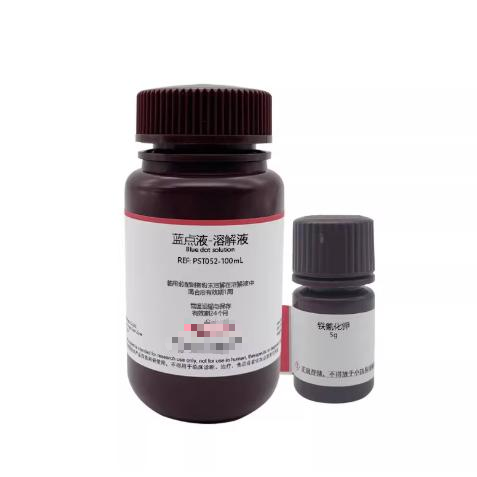
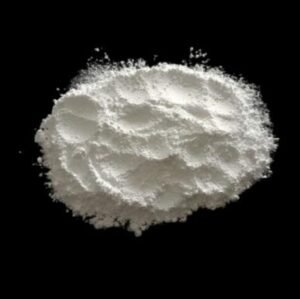
Preparation of Blue Dot Solution: Prepare the solution immediately before use by dissolving potassium ferrocyanide powder in the solution and shaking well. It is recommended to prepare the solution immediately before use. The solution is valid for 1-2 days after mixing. Testing methods should be based on relevant standards or your own company standards.
Scale up or down the preparation volume based on your needs: 10mL of solution + 0.5 g of powder.
Dispose of unused liquid promptly and keep it out of reach of children and the elderly.
The passive film is a protective oxide film formed chemically on the surface of austenitic stainless steel.
Blue spot solution is a test solution specifically used to test the quality of the passive film on austenitic stainless steel surfaces. The solution itself is brownish-yellow, and blue spots form when the passive film is damaged.
A cleaning system is a device or system consisting of multiple devices, components, and pipelines that are cleaned simultaneously.
Dropping blue dot liquid onto the surface of passivated austenitic stainless steel will destroy the passive film, causing the following reaction: 2H++Fe = Fe2++H2; 3Fe2++2[Fe(CN)6]3- = Fe3[Fe(CN)6]2↓. Use a stopwatch to record the number and duration of blue dots appearing within the area covered by the blue dot liquid to assess the quality of the passive film.
Test Temperature
Passivation film quality testing should be conducted at temperatures between 5°C and 35°C.
Test Surface Cleanliness
The selected test surface should meet the following requirements: The passivated metal surface should be visually clean and free of rust, welding slag, and other impurities.
Selecting Test Locations
After passivation, select representative horizontal surfaces for testing, such as different locations within the same equipment or different equipment within the same cleaning system.
Determining the Number of Test Points
After determining the test locations, select three to five test points for testing.
Handling Special Cases
This method should not be used directly for testing components and equipment that come into contact with special media such as food, beverages, and pharmaceuticals. Instead, a test piece made of the same material as the component or equipment being tested, after undergoing the same passivation process, can be used instead of the equipment to test the passivation film quality.
Procedure Reference: On-site Testing of Passivation Film Quality
Reference 1: Use a 0.5mL glass syringe to dispense 0.1mL of blue dot solution onto the selected metal surface. Start timing with a stopwatch and stop when eight blue dots appear within the area covered by the blue dot solution. [Refer to the previous instructions for preparing the blue dot solution.]
Note: In this test, the syringe needle is disposable; a new needle should be used for each test.
Reference 2: Use a disposable dropper to transfer a small amount to a beaker. Then, soak filter paper in the solution and apply it to the surface to be tested, or apply or drip the solution directly onto the surface to be tested. Observe for 30 seconds to observe any blue dots. If the surface passivation film is imperfect or contaminated with iron ions, a blue color will appear, indicating a failure. No blue dots indicate a pass.
Post-Test Surface Repair
After the test, wipe the test surface dry and use cotton wool to clean any remaining blue stains with a 20% acetic acid solution. Rinse thoroughly with distilled water, then apply a drop of 40% nitric acid solution to repair the passivation film. After 5 minutes, rinse thoroughly with distilled water.
Test Results and Report
The final test result is the average of the arithmetic mean values of each group of test points at different test locations, and a test report is issued.