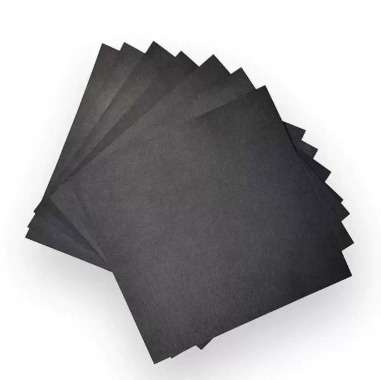
TGPH060H(W) weakly hydrophilic carbon paper
Characteristics: Mildly hydrophilic treatment, introducing a small number of oxygen-containing functional groups, minimally impacting mechanical properties and conductivity.
Suitable for: Minor water management needs, such as preliminary electrochemical testing.
TGPH060H(M) standard hydrophilic carbon paper
Characteristics: Moderately hydrophilic treatment, balancing hydrophilicity and mechanical properties.
Applications: Conventional electrochemical applications such as fuel cells and electrolyzers.
TGPH060H(S) Highly Hydrophilic Carbon Paper
Characteristics: Highly hydrophilic treatment significantly improves water affinity, but significantly affects mechanical properties and conductivity.
Suitable for environments with high humidity or where rapid moisture transfer is required.
TGPH060H(U) super hydrophilic carbon paper
Features: Extremely hydrophilic treatment provides exceptional hydrophilicity, with the greatest impact on mechanical properties and conductivity.
Applications: Special applications with extreme water management requirements, such as high temperature and humidity environments or extremely high humidity conditions.
Applications in In-Situ Growth Synthesis:
In-Situ Catalyst Growth: Hydrophilic carbon paper is used as a substrate for the growth of catalysts (e.g., metal nanoparticles such as platinum, palladium, and gold), particularly in fuel cells and electrolyzers. These catalysts grow directly on the carbon paper, improving catalyst utilization efficiency and electrode performance.
Electrode Material Synthesis: In battery technologies such as lithium-ion batteries and lithium-sulfur batteries, hydrophilic carbon paper (e.g., sulfides and carbon nanotubes) is used as a substrate for the in-situ growth of high-efficiency electrode materials, enhancing the battery’s energy storage and discharge performance.
Construction of Nanostructured Materials: The hydrophilic surface facilitates the construction of nanostructures such as nanowires and nanosheets in aqueous solutions. These structures are used in optoelectronic devices, sensors, catalyst supports, and other applications.
Biomaterial Synthesis: In biosensing and biomedical applications, hydrophilic carbon paper can be used to immobilize biomolecules such as enzymes and antibodies, leveraging its excellent water affinity to enhance the stability and functionality of biomaterials.
Advantages in In-Situ Growth Synthesis:
Optimized Water Management
Uniform Water Film Formation: The hydrophilicity ensures uniform distribution of the reaction medium on the carbon paper surface, reducing irregular aggregation and promoting uniform reaction.
Controlling Reaction Humidity: The ability to precisely control the humidity of the reaction environment is critical in many aqueous-based syntheses, impacting the yield and product quality of the synthesis process.
Enhancing the Reaction Interface
Improving Catalyst Adhesion: The hydrophilicity enhances the adhesion between the catalyst and the substrate, reducing catalyst shedding during use and improving the long-term stability of the material.
Enhancing Electrochemical Contact: In electrochemical reactions, hydrophilic carbon paper improves charge transfer efficiency and promotes material growth by improving the contact between the electrolyte and the electrode. Accelerating Nucleation: The hydrophilic surface promotes nucleation in solution, ensuring uniform and controlled material growth.
Influencing Growth Kinetics: By managing water molecules, hydrophilicity influences the growth kinetics of the material in aqueous solution, helping to form materials with specific morphologies or structures.
Environmentally Friendly
Flexibility and Adaptability: Customizable Hydrophilicity: Choose carbon paper with varying hydrophilicity to accommodate a variety of synthesis conditions, from low to high humidity.
Reduce Side Reactions: Provide a stable water environment, minimize side reactions, and improve reaction yield and product purity.