Address
Room 2301C, 23rd Floor, Building 1, jinghu Commercial center, No, 34, Liangzhuang Street, Eri District, Zhengzhou City, Henan province
Work Hours
Monday to Friday: 7AM - 7PM
Weekend: 10AM - 5PM
Address
Room 2301C, 23rd Floor, Building 1, jinghu Commercial center, No, 34, Liangzhuang Street, Eri District, Zhengzhou City, Henan province
Work Hours
Monday to Friday: 7AM - 7PM
Weekend: 10AM - 5PM


Terms and Definitions
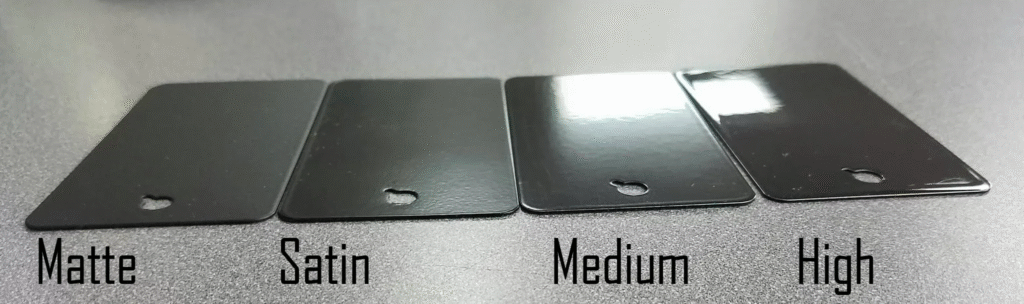
Gloss is the ability of a coating to reflect incident light in the same direction. The higher the gloss, the more light is reflected. A coating’s gloss is measured using a gloss meter and expressed as the percentage of the normal reflected light from a light beam striking the coating surface at a specified angle of incidence compared to the normal reflected light from a standard surface under the same conditions. Therefore, coating gloss is generally measured relative to the gloss of a standard plate.
High gloss can reflect the high decorativeness of the coated object, such as cars and airplanes; soft gloss meets the physiological needs of the human body, such as furniture and floors; electronic factories and hospitals mostly use matte paint to provide a quiet, comfortable and elegant environment; certain instrument components have special requirements for optical properties, and their surface coating is semi-gloss; building exterior wall coatings require low gloss to eliminate light pollution and cover up their own defects.
Gloss additives can increase or decrease the gloss of the coating according to different gloss requirements.
Factors affecting coating gloss
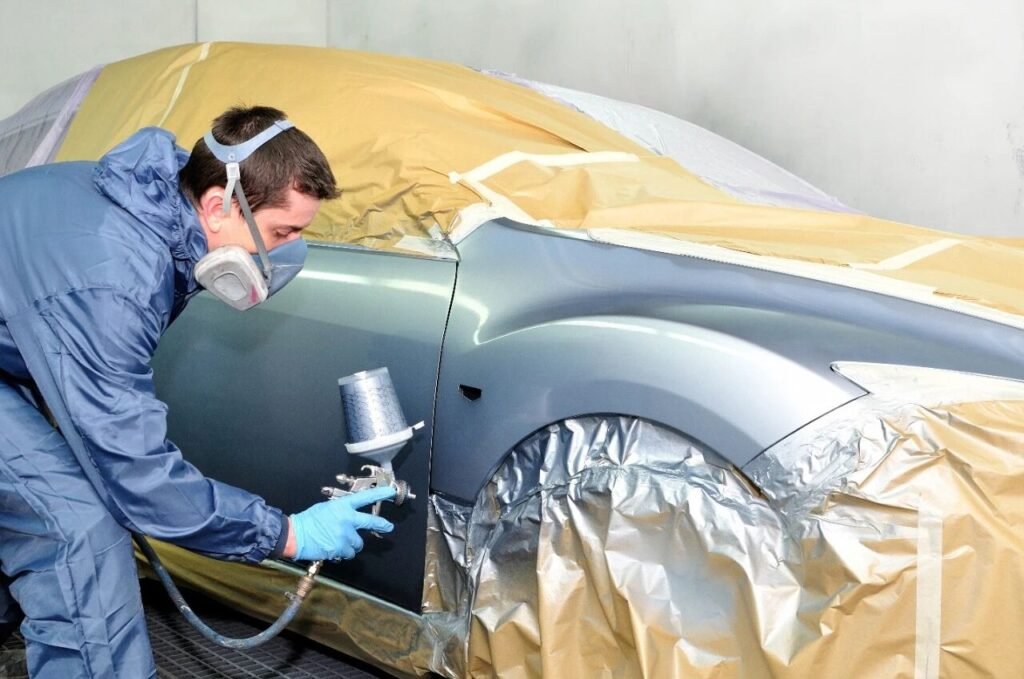
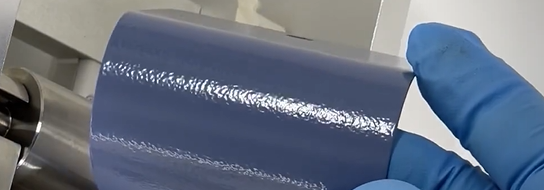
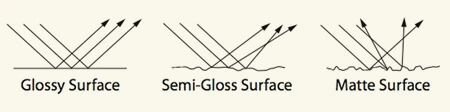
When light strikes a coating’s surface, a portion is reflected and scattered. The smoother the surface, the greater the reflected portion, resulting in a higher gloss value. A very rough surface, however, increases the scattered portion, resulting in a lower gloss. Therefore, a coating’s gloss is a reflection of its surface roughness, primarily influenced by factors such as pigment particle size and distribution, pigment dispersion, pigment volume concentration, and the film-forming process.
Research has shown that pigment particle size and distribution are important factors affecting coating gloss. Reducing pigment particle size can reduce coating roughness and improve gloss. A high-gloss surface is achieved when the average pigment particle diameter is less than 0.3 μm, and the matte effect is most pronounced when the particle size is between 3 and 5 μm. Adjusting the pigment dosage, particularly extender pigments, is a common method for controlling the surface gloss of paint films. In typical oil-based paints, the PVC of matte paint ranges from 52.5% to 71.5%, that of semi-gloss paints from 33% to 52.5%, and that of enamel paints from 20% to 30%. This is due to the resin’s ability to fully encapsulate the pigment and filler, resulting in a smooth coating film. Once the pigment type and dosage are determined, their dispersion within the paint will determine the light reflectance characteristics of the film. When pigment dispersion is effectively increased, the pigment’s aggregate size decreases, increasing the amount of binder absorbed, resulting in a smooth surface. Gloss increases with pigment dispersion. However, excessive dispersion, which causes pigment particles to absorb more binder, can result in a low-gloss film.
Types of gloss enhancers
Matting agents and gloss enhancers are important methods for adjusting the surface gloss of coatings. Gloss enhancers are primarily surfactants that enhance pigment dispersion, improve film leveling, and reduce surface tension. They primarily increase gloss by improving pigment dispersion and film appearance. Matting agents come in a variety of types, including metallic soaps, modified oil waxes, and functional fillers, and they work by increasing the roughness of the coating surface. Gloss enhancers used in coatings are primarily matting agents.
(1) Matting agent
Matting agents are substances that create surface roughness and significantly reduce the gloss of a paint film. Matting agents used in paints should meet the following basic requirements:
① The refractive index of the matting agent should be as close as possible to that of the resin so as not to affect the transparency of the clearcoat or the color of the basecoat;
② Good chemical stability, ensuring no impact on the storage and curing of the paint;
③ Good dispersibility and storage stability;
④ High matting properties can be achieved with a small addition.
Common Matting Agents and Their Uses: Matting agents commonly used in paints include metallic soaps, waxes, modified oil matting agents, and functional fillers.
1.Metal soap
Metallic soaps are a relatively early matting agent. Because they are incompatible with paint components, they are dispersed in the paint as very fine suspensions. During film formation, they spread across the paint surface, reducing light reflectivity and achieving matting.
Common metallic soap matting agents include aluminum, zinc, and calcium stearates; lead and magnesium soaps are less commonly used. The dosage of metallic soap matting agents is generally 5% to 20% of the paint base. Avoid excessive heating or grinding, which can affect the matting effect. Metallic soap matting agents also have thickening, anti-settling, and anti-sagging properties.
2.Wax
Wax is a simple, long-standing matting agent for coatings. After application, the wax precipitates from the paint as the solvent evaporates, forming fine crystals that float on the surface of the paint film, creating a rough, light-scattering surface and providing a matting effect.
Natural wax is rarely used as a matting agent anymore, replaced by semi-synthetic and synthetic waxes. Semi-synthetic waxes are modified natural waxes, such as micronized fatty acid amide wax and micronized polyethylene palm wax. Synthetic waxes are mostly oligomers, such as low-molecular-weight polyethylene wax, polypropylene wax, polytetrafluoroethylene, and their modified derivatives. These waxes not only offer strong matting properties but also improve coating hardness, water resistance, scratch resistance, and resistance to moisture and heat.
3.Modified Oils
Some drying oils used in matting agents (such as tung oil) can produce matte paint films. This is due to the highly reactive conjugated double bonds in tung oil. The different oxidative crosslinking rates on the underside of the film create an uneven surface, thus achieving a matte effect. To overcome the shortcomings of raw tung oil, it can be partially polymerized by adding a dilute natural rubber solution or other matting agents to the oil.
4.Functional fillers
Functional fillers include micronized synthetic silica, diatomaceous earth, magnesium silicate, and aluminum silicate. Micronized synthetic silica primarily includes micronized synthetic silica aerogel, micronized precipitated silica, and fumed silica.
Micronized synthetic silica aerogel offers high strength, abrasion resistance during dispersion, and a large pore volume, while minimally impacting the transparency and drying properties of the coating. Currently, these products are primarily produced by foreign companies. Micronized precipitated silica has a large domestic production volume, but its quality is relatively low and is primarily used in low-end coatings. When using these materials as matting agents, careful consideration should be given to matching particle size and film thickness to achieve a balanced matting effect and coating appearance. Over-grinding should also be avoided.
(2) Brightening agent
Brighteners can promote coating leveling and reduce surface roughness, thereby increasing coating gloss. Commonly used wetting and dispersing agents can promote pigment dispersion and prevent the aggregation of easily agglomerated pigments (such as carbon black), thereby improving coating gloss. High-boiling point true solvents or acrylate oligomers and butyl cellulose can improve coating leveling and increase coating gloss. Silicone oils or modified polydimethylsiloxanes can reduce the surface tension of the coating, improve the coating’s wetting of the substrate, avoid surface defects such as orange peel, and produce a high-gloss coating.