Address
Room 2301C, 23rd Floor, Building 1, jinghu Commercial center, No, 34, Liangzhuang Street, Eri District, Zhengzhou City, Henan province
Work Hours
Monday to Friday: 7AM - 7PM
Weekend: 10AM - 5PM
Address
Room 2301C, 23rd Floor, Building 1, jinghu Commercial center, No, 34, Liangzhuang Street, Eri District, Zhengzhou City, Henan province
Work Hours
Monday to Friday: 7AM - 7PM
Weekend: 10AM - 5PM

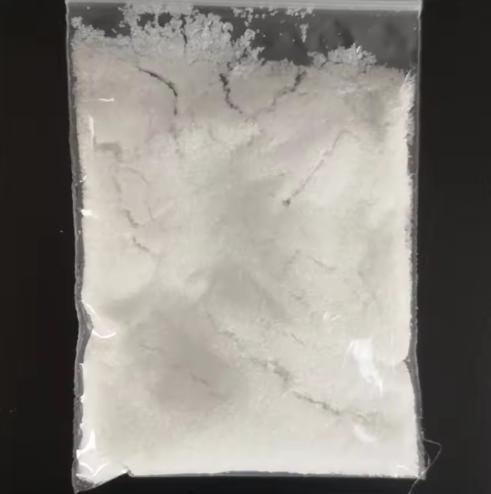
1,2,4-triazole and its derivatives are important structural moieties of many pharmaceutical drugs. Triazoles can also act as ligands to form coordination complexes with transition metal ions. Due to their electron-deficient nature, they exhibit excellent electron-transport and hole-blocking properties, making them promising organic materials in material science applications.
1,2,4-Triazole serves as a core raw material for the synthesis of triazole-based fungicides and plant growth regulators. It enables the synthesis of a wide range of broad-spectrum, highly effective, and low-toxicity fungicides—such as Triadimefon, Tebuconazole, Diniconazole, and Triadimenol—which are widely utilized to control fungal diseases, including powdery mildew and rust, in crops such as wheat, rice, and fruit trees.
In the pharmaceutical industry, 1,2,4-triazole acts as a key building block for the synthesis of various medicinal drugs. The well-known antifungal medication Fluconazole, for instance, incorporates the 1,2,4-triazole structural motif and is used for the treatment of deep-seated fungal infections.
Leveraging the coordination capabilities of 1,2,4-triazole, various metal-organic complexes can be synthesized; these materials hold promising potential for applications in fields such as fluorescence sensing and catalysis.
Furthermore, it can be utilized in the synthesis of dyes—such as Basic Yellow 25 and Basic Red 22—as well as employed as a rubber processing additive. In duplication systems, 1,2,4-triazole also finds application as a photoconductive material.
Technical Specifications:
| ITEMS | SPECIFICATION | RESULTS |
| Appearance | White crystal | Complies |
| Content by HPLC | 99.00%min | 99.02% |
| Moisture | 0.50%max | 0.31% |
| Melting range | 119-121℃ | 119.3-120℃ |
| Conclusion | In accordance with the in-house standard | |
Package:
1kg / 25kg bucket
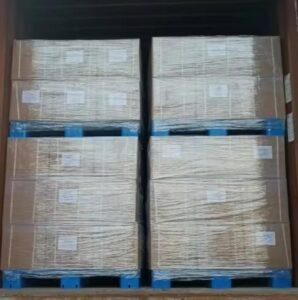
Palletized Shipping
Lead Time: 1-7 Days
Shipping Methods: Sea/Air/Express delivery