Address
Room 2301C, 23rd Floor, Building 1, jinghu Commercial center, No, 34, Liangzhuang Street, Eri District, Zhengzhou City, Henan province
Work Hours
Monday to Friday: 7AM - 7PM
Weekend: 10AM - 5PM
Address
Room 2301C, 23rd Floor, Building 1, jinghu Commercial center, No, 34, Liangzhuang Street, Eri District, Zhengzhou City, Henan province
Work Hours
Monday to Friday: 7AM - 7PM
Weekend: 10AM - 5PM

Waterborne coating additives are an important component of coating products. They can improve production processes, enhance product performance, and improve coating application performance. They play a crucial role in improving the performance of coatings and coating films. With increasing emphasis on environmental protection, waterborne coatings have begun to develop rapidly, and waterborne coating additives are receiving more and more attention from industry professionals.
Wetting and dispersing agents
Wetting and dispersing agents combine the effects of wetting and dispersing, and are often used to solve the problem of difficult pigment dispersion. They are surfactants that are both lipophilic and hydrophilic.
1.Wetting phenomenon
When a solid and a liquid come into contact, the original solid-gas interface disappears and a new solid-liquid interface is formed. This phenomenon is called wetting.
2.Wetting action and wetting agents
When a liquid wets pigment fillers and allows them to penetrate into the agglomerates and aggregates of the pigment fillers, adding a small amount of surfactant to the liquid facilitates wetting and penetration; this is called wetting. Surfactants that wet or accelerate the wetting of pigment fillers are called wetting agents. In water-based coatings, this liquid is water.
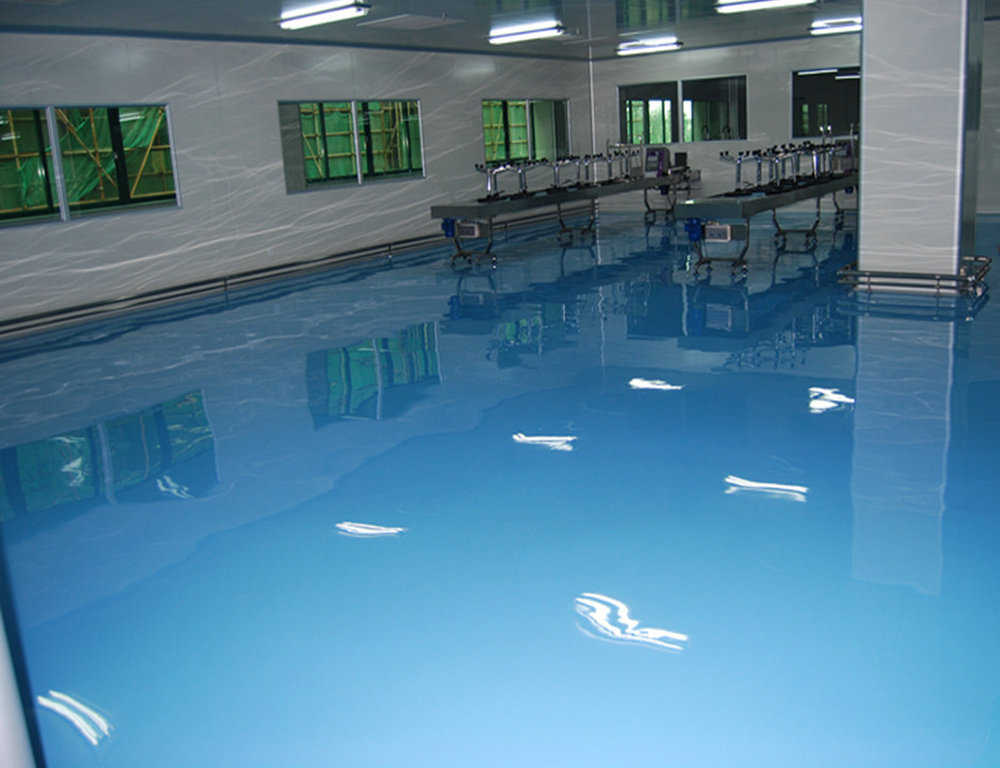
The surface properties of pigments and fillers, the type and amount of wetting and dispersing agents, and the efficiency of the dispersion equipment are the main factors affecting dispersion. The stability or aggregation of pigment and filler suspension dispersion systems depends on the interparticle forces, namely repulsive and attractive forces. Repulsive forces are the main factor for stability, while attractive forces are the main factor for aggregation.
Defoamer
Foam is generated when air enters a liquid containing surfactants under external force. The surfactants then oriented themselves at the gas-liquid interface. The hydrophobic groups face the air bubbles, while the hydrophilic groups face the water, resulting in a large number of bubbles.
The reasons for foam generation in coatings are as follows:
1) Air can be entrained into the paint during mechanical mixing during production.
2) Air can be introduced during the painting process, such as brushing, rolling, and high-pressure airless spraying.
3) Air can be introduced during the mixing of two-component paints before application.
4) Air bubbles can form when the substrate has many pores, as the air trapped in the paint is expelled, such as when painting porous wood or cement walls.
5) Air bubbles can be generated by chemical reactions, such as the reaction of polyisocyanates in two-component PU paints with trace amounts of water, producing carbon dioxide.
Foam is inherently unstable, and its defoaming involves three processes: bubble redistribution, film thinning, and film rupture. However, for a relatively stable foam system to naturally defoam through these three processes takes a long time, which is why defoamers are mostly used in production.
It is generally believed that defoamers reduce the local surface tension of the foam film, thus eliminating foam. Because of the low surface tension of the defoamer itself, it always penetrates the foam system in the form of particles, causing a localized reduction in the surface tension of the foam film. Since liquids with low surface tension always flow towards liquids with high surface tension, the film wall gradually thins and is strongly pulled by the surrounding film layers with high surface tension, creating a stress imbalance that ultimately leads to bubble rupture.
Currently, there are three main types of defoamers: mineral oil defoamers, silicone defoamers, and polymer defoamers that do not contain silicone.
Selection of defoamers
The choice of defoamer is influenced by many factors in paint formulation, which affect foaming and foam stabilization.
NO.1 Surface Tension: The surface tension of the coating has a significant impact on defoamers. The surface tension of the defoamer must be lower than that of the coating; otherwise, it will not have a defoaming or foam-suppressing effect. The surface tension of the coating is a variable factor, so when selecting a defoamer, the surface tension should be kept constant before taking this factor into account.
NO.2 The Influence of Other Additives Most surfactants used in coatings tend to be functionally incompatible with defoamers. In particular, emulsifiers, wetting and dispersing agents, leveling agents, and thickeners can affect the effectiveness of defoamers. Therefore, when using various additives in combination, it is essential to pay attention to the relationships between different additives and choose the optimal balance.
No.3 Baking Temperature When coatings are baked at high temperatures from room temperature, the viscosity will decrease momentarily, and bubbles can move to the surface. However, due to solvent evaporation, coating curing, and increased surface viscosity, the bubble film will become more stable and remain on the surface, resulting in pinholes and craters. Therefore, baking temperature, curing speed, and solvent evaporation rate also affect the effectiveness of defoamers.
No. 4. Coatings with high solids content, viscosity, and elasticity are very difficult to defoam. High-solids, thick-film coatings, high-viscosity, and high-elasticity coatings are particularly difficult to defoam. In these coatings, defoamers have difficulty diffusing, microbubbles grow into larger bubbles slowly, foam migrates less to the surface, and the foam film has high viscoelasticity, among many other factors that hinder defoaming. The foam in these coatings is quite difficult to eliminate; it is best to use a combination of defoamers and deaerators.
No. 5 Coating Methods and Application Temperature There are many coating methods, including brushing, rolling, curtain coating, troweling, high-pressure airless spraying, and screen printing. The degree of foaming varies depending on the coating method used. Brushing and rolling produce more foam than spraying and troweling. Screen printing with ink produces the most foam, and it is difficult to eliminate. Higher temperatures produce more foam than lower temperatures, but foam is easier to eliminate at higher temperatures.
Defoamer use :
1) Stir thoroughly before use to ensure even mixing.
2) Add the defoamer while the paint is being stirred.
3) Generally, dilution with water is not required before use; it can be added directly. Some varieties require dilution and should be prepared and used immediately.
4) The dosage should be appropriate. Excessive dosage can cause pinholes, edge shrinkage, poor brushability, and poor recoatability; insufficient dosage will result in poor defoaming effect. The optimal dosage should be determined.
5) It is best to add the defoamer in two stages: before grinding the pigment paste and after adding the emulsion for paint mixing. Generally, each addition is half the total amount, but this can be adjusted according to the foaming situation. A defoamer with good foam-suppressing effect can be used during the pigment paste grinding stage, while a defoamer with good foam-breaking effect can be used during the paint mixing stage. Experiments show that silicone defoamers are best added during the pigment paste grinding stage with as little water as possible to ensure thorough dispersion and minimize the dosage. Non-silicone defoamers are preferable for the paint mixing stage.
6) It takes at least 24 hours after the defoamer is added for the defoaming performance to reach a balance with edge shrinkage and pinholes. Therefore, coating performance testing must be carried out after 24 hours.