Address
Room 2301C, 23rd Floor, Building 1, jinghu Commercial center, No, 34, Liangzhuang Street, Eri District, Zhengzhou City, Henan province
Work Hours
Monday to Friday: 7AM - 7PM
Weekend: 10AM - 5PM
Address
Room 2301C, 23rd Floor, Building 1, jinghu Commercial center, No, 34, Liangzhuang Street, Eri District, Zhengzhou City, Henan province
Work Hours
Monday to Friday: 7AM - 7PM
Weekend: 10AM - 5PM

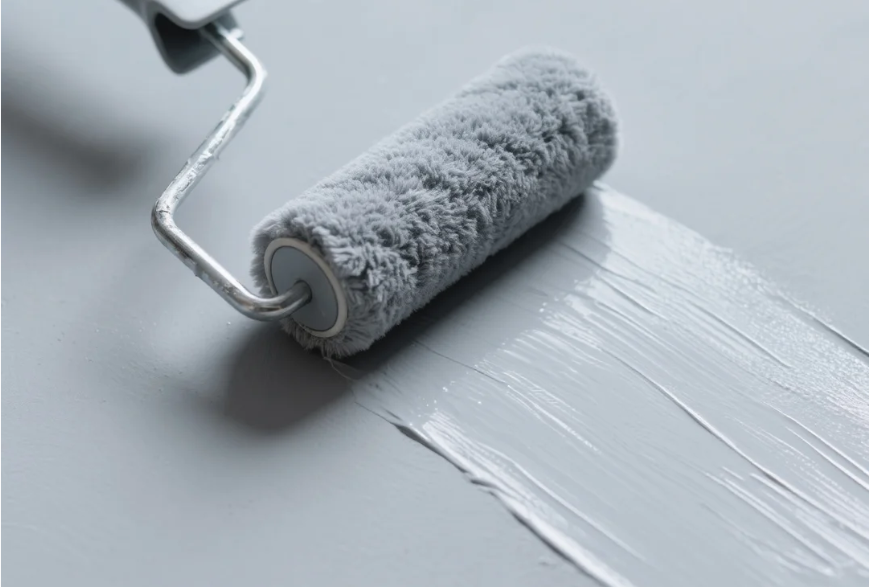
Sagging in water-based paint films is indeed a long-standing and difficult problem in the industry. It’s a pain point because its formation is highly complex, resulting from the coupled effects of multiple variables, including material formulation, application techniques, environmental factors, and equipment parameters. Deviations in any of these aspects can lead to this defect, severely impacting coating efficiency, appearance quality, and protective performance.
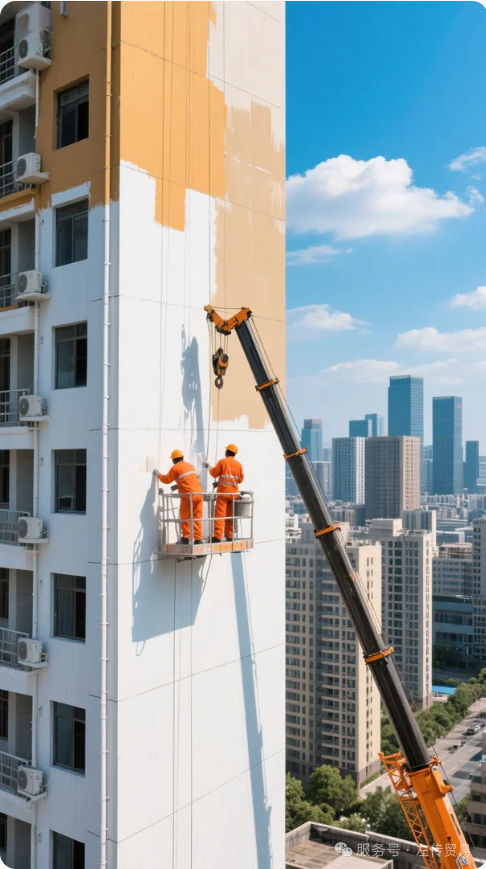
Sagging occurs when paint is applied to vertical or inclined surfaces, causing the wet paint film to move downwards due to gravity, resulting in uneven film thickness and defects such as tear marks and drooping. The causes can be attributed to three main aspects: the paint itself, the application technique, and the application environment.
Formula optimization and adjustment
Adding thixotropic rheology modifiers:
Fused silica: Forms a three-dimensional network through hydrogen bonds between particles, exhibiting extremely strong thixotropy and significant anti-sagging effects, but may affect leveling and gloss.
Polyamide wax: Forms a network structure through wax crystal filaments, providing excellent thixotropy and anti-sagging properties, especially suitable for thick-film coatings, with minimal impact on gloss.
Bentonite/organoclay: Also an effective thixotropic agent, offering high cost-effectiveness.
High-performance associative rheology modifiers are selected:
HEUR-type rheology modifiers: These modifiers associate with emulsion particles and pigments through hydrophobic groups, forming a reversible network structure. Their greatest advantages are high shear resistance and excellent leveling properties. During spraying, viscosity decreases, application is smooth, and the network structure is rapidly rebuilt once the shear force disappears, effectively preventing sagging and achieving a smooth paint film. It is key to solving the problem of “leveling versus sagging balance.”
Optimize thickener formulation:
ASE/HASE (provides medium to high shear viscosity at a low cost) + HEUR (provides leveling and anti-splatter properties) + thixotropic agent (such as polyamide wax, providing strong anti-sagging properties). Find the optimal ratio through experimentation.
Adjusting the formulation composition:
Strictly controlling the amount of additives: While ensuring wetting and dispersing effects, minimize the amount of wetting and dispersing agents used.
Optimize the solvent system:
Select a co-solvent with an appropriate evaporation rate to balance drying speed and film-forming properties. Adding a small amount of high-boiling-point solvent can be considered to delay surface drying and allow time for leveling, but this must be done in conjunction with an anti-sagging solution to avoid side effects.
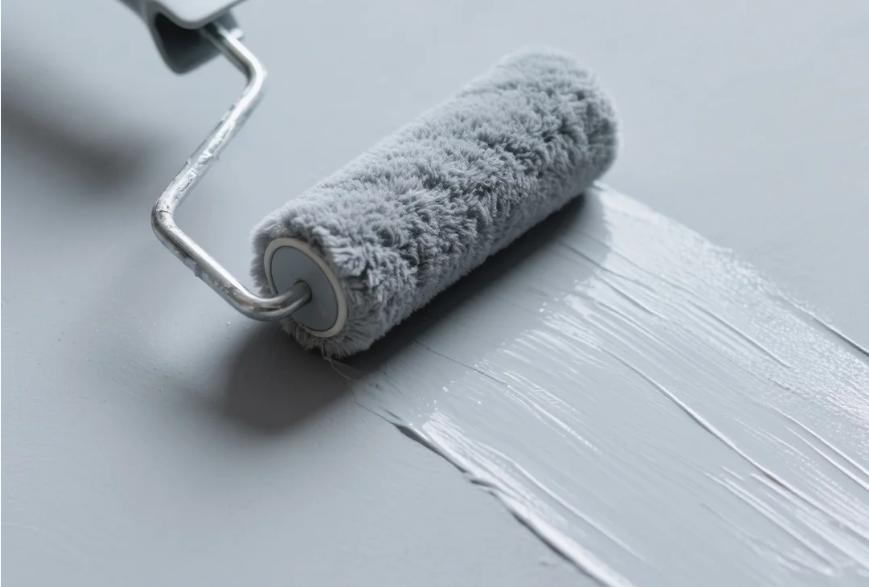
Standardized construction techniques
Control wet film thickness and adhere to the “multiple thin coats” principle:
Ensure each coat has a wet film thickness of 30-50 μm. Allow the paint to touch-dry before applying the next coat. This is the most effective and direct method to prevent sagging.
Improve spraying techniques:
Select the appropriate spray gun nozzle size based on the paint viscosity and required film thickness. Maintain proper air pressure, a stable spray gun movement speed (generally recommended at 50-60 cm/s), and a constant spray gun distance (usually 15-20 cm).
Strictly adhere to dilution ratios:
Dilute the paint according to the technical specifications. Never add excessive thinner. Use a viscosity cup (e.g., Ford Cup 4) to monitor the application viscosity and ensure it is within the recommended range.
Improve the construction environment
Increase ambient temperature: The ideal application temperature is typically 15-30℃. Heating equipment can be used to increase the spray booth temperature, accelerating moisture evaporation and paint film curing.
Reduce ambient humidity: The ideal relative humidity should be below 75%. In humid weather or areas, a dehumidifier should be used.