Address
Room 2301C, 23rd Floor, Building 1, jinghu Commercial center, No, 34, Liangzhuang Street, Eri District, Zhengzhou City, Henan province
Work Hours
Monday to Friday: 7AM - 7PM
Weekend: 10AM - 5PM
Address
Room 2301C, 23rd Floor, Building 1, jinghu Commercial center, No, 34, Liangzhuang Street, Eri District, Zhengzhou City, Henan province
Work Hours
Monday to Friday: 7AM - 7PM
Weekend: 10AM - 5PM

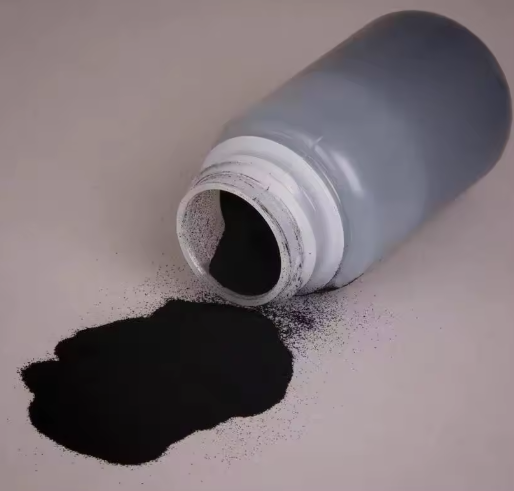
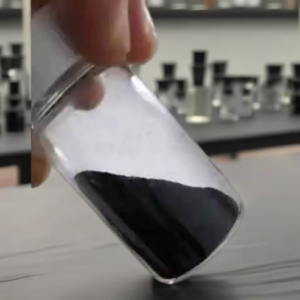
Palladium on carbon—commonly abbreviated as Pd/C—is a catalyst consisting of metallic palladium supported on an activated carbon carrier. It typically appears as a black powder or granular solid; while stable under ambient conditions, it is prone to spontaneous combustion in humid air. As a highly efficient and selective hydrogenation catalyst, palladium on carbon plays a pivotal role in the chemical industry, finding widespread application in fields such as petrochemicals, pharmaceutical synthesis, fragrance manufacturing, and environmental remediation.
In the petrochemical sector, palladium-on-carbon catalysts are primarily employed in hydrorefining processes. By utilizing these catalysts, 4-CBA can be selectively reduced to *p*-methylbenzoic acid, thereby facilitating its separation from the reaction system and enhancing product purity. Furthermore, palladium-on-carbon is widely utilized in processes such as fuel desulfurization and olefin purification, aiding in the removal of harmful substances from petroleum products.
In the fields of pharmaceuticals and fine chemicals, it is extensively used in the synthesis of antibiotics (such as Amoxicillin), anticancer drugs (such as Paclitaxel), and fragrances (such as Citronellol). Its high selectivity enables it to reduce specific functional groups within complex molecular frameworks without affecting other sensitive groups; this capability offers significant advantages for the synthesis of structurally intricate drug molecules.
Palladium-on-carbon also plays a crucial role in environmental remediation. By leveraging its catalytic reduction properties, it can be used to treat wastewater containing toxic pollutants—such as nitrobenzene and chlorinated organic compounds—converting them into harmless substances.
In the purification of automotive exhaust, although palladium is not as widely utilized as platinum or rhodium, it remains a vital component of catalytic converters, where it catalyzes the oxidation of carbon monoxide and hydrocarbons.
Technical Specifications:
|
Palladium carbon catalyst
|
Palladium content (%)
|
1.0±0.02
|
3.0±0.02
|
5.0±0.02
|
|
Index name
|
Φ1.5~5.0
|
Φ1.5~5.0
|
Φ1.5~5.0
|
|
|
Abrasion rate (%)
|
≤ 0.25
|
≤ 0.25
|
≤ 0.25
|
|
|
Bulk density (g/ml)
|
≥ 0.65
|
≥ 0.65
|
≥ 0.65
|
|
|
Static water absorption (%)
|
≥ 20.0
|
≥ 20.0
|
≥ 20.0
|
|
|
Static normal hexane absorption (%)
|
≥ 12.0
|
≥ 12.0
|
≥ 12.0
|
|
|
Specific surface area (m2/g)
|
≥ 100
|
≥ 100
|
≥ 100
|
|
|
Compressive strength point contact strength (N/grain)
|
≥ 50
|
≥ 55
|
≥ 55
|
|
|
Variation coefficient of resistance to crushing
|
≤ 0.3
|
≤ 0.3
|
≤ 0.3
|
|
|
Granularity (%)
|
≥ 96
|
≥ 96
|
≥ 96
|
|
|
Water content of packed product (%)
|
≤ 1.5
|
≤ 1.5
|
≤ 1.5
|
Package:
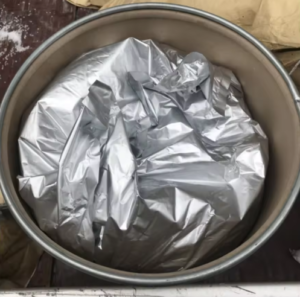
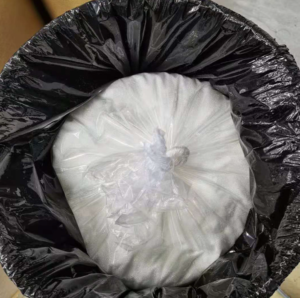
1kg / 25kg Bucket
Palletized Shipping
Lead Time: 1-7 Days
Shipping Methods: Sea/Air/Express delivery