Address
Room 2301C, 23rd Floor, Building 1, jinghu Commercial center, No, 34, Liangzhuang Street, Eri District, Zhengzhou City, Henan province
Work Hours
Monday to Friday: 7AM - 7PM
Weekend: 10AM - 5PM
Address
Room 2301C, 23rd Floor, Building 1, jinghu Commercial center, No, 34, Liangzhuang Street, Eri District, Zhengzhou City, Henan province
Work Hours
Monday to Friday: 7AM - 7PM
Weekend: 10AM - 5PM

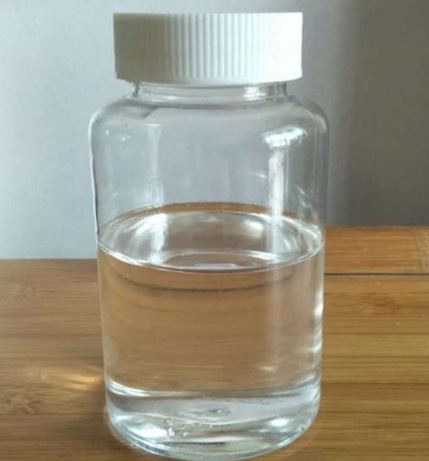
Silane coupling agents are a class of organosilicon compounds featuring two groups with distinct properties within their molecular structure, enabling them to act as “molecular bridges” between inorganic and organic materials. One end of the molecule contains hydrolyzable groups capable of forming chemical bonds with hydroxyl groups on the surfaces of inorganic materials such as glass, metal, and ceramics; the other end features organic functional groups that can undergo chemical reactions or physical entanglement with organic polymers like resins and rubber. Thanks to this unique structure, silane coupling agents significantly enhance interfacial bonding between materials with vastly different properties, thereby substantially improving the mechanical strength, water resistance, weatherability, and electrical performance of composite materials. First developed by Union Carbide in the 1940s—initially for use in glass fiber-reinforced plastics—silane coupling agents are now widely applied across diverse fields, including rubber, coatings, adhesives, sealants, electronic packaging, and new energy.
Basic Information
Name: Silane Coupling Agent
Synonyms: Silane treatment agent, primer
Fields of Application: Materials science, chemical industry, electronics, new energy
Originator/Discoverer/Inventor: Union Carbide Corporation (USA)
Time of Origin: 1940s
Technological Evolution and Application Expansion
From the 1950s to the 1960s, advancements in organosilicon synthesis technology led to an expanding range of silane coupling agents. Researchers developed various types—such as amino-silanes, epoxy-silanes, and methacryloxy-silanes—while applications gradually extended from the initial use in glass fiber-reinforced plastics to traditional chemical sectors like rubber compounding, coatings, and adhesives. Entering the 21st century, the global demand for high-performance materials—driven particularly by the rise of high-tech industries such as new energy vehicles, photovoltaics, and semiconductors—has triggered a sharp increase in the market need for high-purity, eco-friendly, and functionalized silane coupling agents. Today, China has emerged as a major global producer and consumer of silane coupling agents, boasting a number of internationally competitive enterprises that are driving the industry toward high-end and specialized development.
Molecular structure
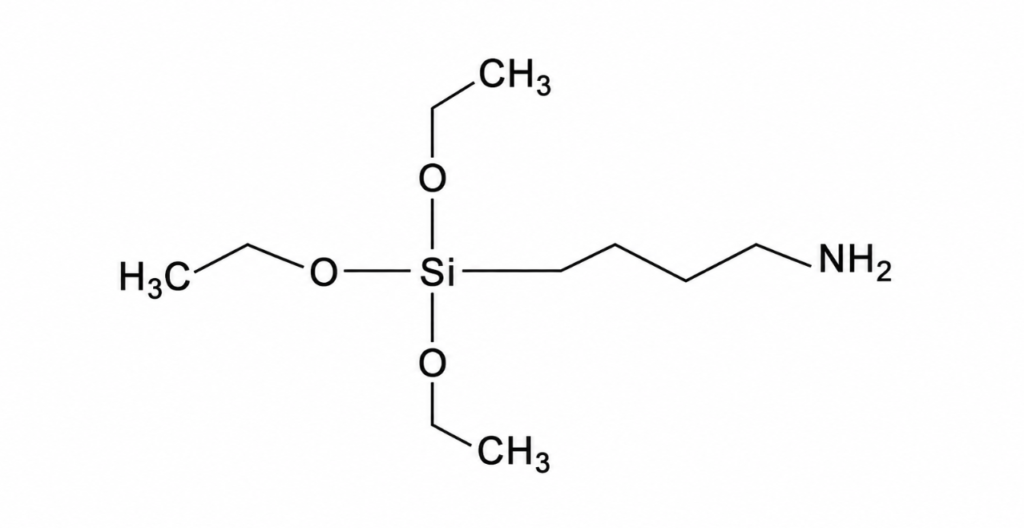
The molecular structure of a silane coupling agent is generally represented as Y–R–Si–X₃. This structure can be thought of as a “molecular bridge”, with two different functional ends.
One end is the “inorganic-reactive” end, consisting of hydrolyzable groups X, which are typically alkoxy groups (such as methoxy or ethoxy), chlorine atoms, or alkoxyethyl groups. In the presence of water, these groups hydrolyze to form silanol groups (Si–OH), which subsequently react with hydroxyl groups on the surfaces of inorganic materials to form strong covalent bonds.
The other end is the “organic-reactive” end, consisting of an organofunctional group Y. Common functional groups include amino, epoxy, methacryloxy, and vinyl groups. This end can chemically react with organic polymers or become physically entangled with the polymer matrix, thereby creating a strong and durable bond between inorganic substrates and organic materials.
Main types
Based on the type of organofunctional group (Y), silane coupling agents can be classified into the following categories. Each category has its own specific applications.
| Type | Representative Products | Suitable Systems | Key Features |
| Amino Silanes | KH-550, A-1100 | Epoxy resins, phenolic resins, polyurethane | General-purpose; reacts with a wide range of resins. Commonly used for glass fiber treatment to significantly improve the strength of composite materials. |
| Epoxy Silanes | KH-560, A-187 | Epoxy resins, unsaturated polyester | Excellent water resistance and strong adhesion. Commonly used in composites and coatings requiring high moisture resistance. |
| Methacryloxy Silanes | KH-570, A-174 | Unsaturated polyester, acrylic resins | Contains vinyl functionality; suitable for reactions with unsaturated polyester and other resins containing carbon–carbon double bonds. Widely used in UV-curable systems. |
| Vinyl Silanes | A-151, A-171 | Polyethylene, silicone rubber | Commonly used for crosslinking polyethylene cables and improving adhesion to silicone rubber, while enhancing heat resistance and durability. |
| Sulfur-Containing Silanes | Si-69, Si-75 | Silica-filled rubber compounds | Designed for the rubber industry. Forms chemical bonds between rubber and silica, significantly reducing tire rolling resistance. A key material for green tires. |
Mechanism of Action
The mechanism of action of silane coupling agents at the interface primarily involves the chemical bonding theory and the physical adsorption theory; typically, it is the result of the combined action of multiple mechanisms.
Chemical Bond Theory
This is the primary theory explaining the mechanism of silane coupling agents. It posits that a silane coupling agent acts as a bridge, firmly anchored to the inorganic material at one end and tightly bonded to the organic material at the other. Specifically, the hydrolyzable groups of the silane coupling agent undergo hydrolysis on the surface of the inorganic material to form silanol groups; these then react via condensation with hydroxyl groups on the inorganic surface to form covalent bonds (such as Si-O-Si or Si-O-M). Simultaneously, the organic functional group at the other end undergoes a chemical reaction or physical entanglement with the organic polymer, thereby establishing a “molecular bridge” between the inorganic and organic phases. This firmly connects two materials with vastly different properties, enabling effective load transfer and preventing delamination or debonding.
Physical Adsorption Theory
In addition to chemical bonding, physical interactions cannot be overlooked. Silane coupling agents typically possess low surface tension and excellent wettability, allowing them to rapidly spread across the surface of inorganic materials and displace surface water films and air, thereby improving the wetting of the inorganic surface by the organic resin. This superior wettability facilitates physical adsorption and bonding at the interface, enabling the resin to better penetrate the interstices of the inorganic filler and enhancing the compactness of the composite material.
Preparation Methods
Hydrosilylation
Hydrosilylation is currently the mainstream industrial process for producing silane coupling agents. This method employs a transition metal catalyst (such as a platinum catalyst) to facilitate an addition reaction between a hydrosilane and an organic compound containing an unsaturated bond (such as a double bond). Key advantages of this method include relatively mild reaction conditions, high selectivity, and excellent atom economy; it yields products of high purity and consistent quality. Highly suitable for large-scale industrial production, it is the preferred method for synthesizing silane coupling agents containing unsaturated functional groups.
Grignard Reagent Method
The Grignard reagent method is a significant technique for synthesizing specific silane coupling agents, particularly those with complex structures or sensitive functional groups. Typically, a halogenated hydrocarbon bearing the desired functional group is reacted with metallic magnesium to form a Grignard reagent, which is subsequently reacted with a hydrosilane or an alkoxysilane. While highly versatile, this method involves multiple steps and relatively high costs, and places stringent demands on equipment and operating conditions; consequently, it is primarily used for laboratory synthesis or the production of specialty products in small batches.
Application Areas
Composite Materials
The most classic application of silane coupling agents is in glass fiber-reinforced plastics (FRP). During the manufacturing of glass fiber-reinforced composites, the surface of the glass fibers typically requires treatment with a coupling agent. Silane coupling agents significantly enhance the interfacial bonding strength between the glass fibers and the resin matrix, thereby substantially improving the composite’s tensile strength, flexural strength, and interlaminar shear strength. Additionally, they are widely used for the surface treatment of mineral fillers such as calcium carbonate and talc; this improves the fillers’ dispersion and compatibility within the resin, enhancing both the processing characteristics of the composite and the mechanical properties of the final product.
Adhesives and Sealants
In the adhesives and sealants industry, silane coupling agents primarily serve as adhesion promoters. Most organic adhesives exhibit poor adhesion to inorganic substrates like glass, ceramics, and metals—often suffering from bond failure in humid environments—but the addition of silane coupling agents effectively resolves this issue. For instance, in silicone sealants, vinyl silane coupling agents act not only as critical cross-linking agents but also significantly boost bond strength and aging resistance.
Coatings and Pigments
Silane coupling agents play two main roles in the coatings industry: first, as adhesion promoters, they enhance the coating’s bond to substrates such as metals and plastics while improving water resistance, scrub resistance, and chemical corrosion resistance; second, as pigment dispersants, they improve the dispersion of inorganic pigments (such as titanium dioxide and iron oxide) within organic paint bases, preventing pigment settling, reducing coating viscosity, and increasing both production efficiency and coating gloss.
Electronics and New Energy
In the fields of electronic packaging and semiconductor manufacturing, silane coupling agents are used to increase the bonding strength between chips and substrates, enhance the reliability of epoxy molding compounds (EMC), and prevent delamination. In the new energy sector, driven by the growth of the electric vehicle and photovoltaic industries, silane coupling agents are widely utilized in binders and sealants for lithium-ion batteries, as well as in encapsulation materials for photovoltaic modules. It meets rigorous requirements—such as resistance to electrolyte corrosion, tolerance of high- and low-temperature cycling, and high insulation performance—thereby ensuring the safety and stability of new energy equipment.
Selection and Safety
Selection Principles
The selection of silane coupling agents is primarily based on the following principles:
Type of organic resin: The corresponding functional group should be selected based on the resin’s reactivity. For example, amino- or epoxy-functional silanes are typically chosen for epoxy resins because they can react with epoxy groups; methacryloxy- or epoxy-functional silanes are selected for unsaturated polyesters because they can react with double bonds.
Properties of the inorganic substrate: Silane coupling agents are most effective on substrates with high silicon content (such as glass fiber and silica); they are relatively less effective on fillers containing metal oxides like calcium or magnesium (such as calcium carbonate) and usually require the use of additional treatment agents.
Application environment: For materials used in humid or aqueous environments, silane coupling agents with good hydrolytic stability and high water resistance—such as epoxy- or amino-functional silanes—should be selected.
Safety and Storage
Toxicity and Protection: Most silane coupling agents possess a certain degree of toxicity and irritancy. Contact with skin or eyes can cause pain, redness, swelling, and burns, while inhaling vapors may lead to respiratory irritation and coughing. Therefore, protective gloves, goggles, and masks should be worn during handling to avoid direct skin contact and vapor inhalation.
Storage Conditions: Silane coupling agents are highly sensitive to moisture and readily undergo hydrolysis—rendering them ineffective—upon contact with water. Consequently, they must be stored in tightly sealed containers in a cool, dry, and well-ventilated area, away from sources of ignition and oxidizing agents. Once opened, the product should be used promptly and resealed to prevent deterioration caused by moisture absorption.