Address
Room 2301C, 23rd Floor, Building 1, jinghu Commercial center, No, 34, Liangzhuang Street, Eri District, Zhengzhou City, Henan province
Work Hours
Monday to Friday: 7AM - 7PM
Weekend: 10AM - 5PM
Address
Room 2301C, 23rd Floor, Building 1, jinghu Commercial center, No, 34, Liangzhuang Street, Eri District, Zhengzhou City, Henan province
Work Hours
Monday to Friday: 7AM - 7PM
Weekend: 10AM - 5PM

In the English countryside of Cornwall, Reverend William Gregor lived a quiet yet fulfilling life. As a pastor, his daily routine was filled with preaching, prayer, and caring for his parishioners. However, Reverend Gregor harbored another secret: he was a passionate geologist. When not fulfilling his religious duties, he was always busy exploring the natural world, especially the minerals hidden underground.

One spring day in 1791, Reverend Gregor was walking outdoors when he stumbled upon some unusual black magnetite. These ore were unlike anything he had ever seen before: heavy and hard, with a mysterious shimmering light. As a keen geologist, he decided to investigate further.
Returning to his study, Reverend Gregor placed the minerals on his desk and began his chemical experiments. Using his rudimentary chemical laboratory equipment, he meticulously analyzed the minerals. He dissolved, heated, and filtered the minerals, attempting to uncover their secrets. During these chemical reactions, Reverend Gregor noticed a residue that couldn’t be explained by the known elements at the time. As a priest and amateur geologist, his intuition told him this might be a sign of a new element. However, due to the limitations of chemical analysis techniques at the time, he was unable to fully isolate the element.
Despite this, Pastor Gregor didn’t give up. He recorded his findings in his journal and shared them with local scholars and geologists. His story and discovery sparked the interest of other scientists, and although he didn’t live to see the element’s final confirmation, his work laid the foundation for the later discovery of titanium.
In 1800, Swedish chemist Jöns Jacob Berzelius independently discovered titanium while studying a similar ore and named the new element after the Titans in Greek mythology. Berzelius’s discovery was recognized by the scientific community, and Pastor Gregor’s name is remembered for his contributions to science.
Over time, the scientific community gradually recognized the applications of titanium. In 1916, Norwegian chemist Christian Branstetter invented a method for extracting titanium dioxide from ilmenite. Branstetter’s discovery marked the beginning of a new era. The titanium dioxide he extracted, now known as titanium dioxide, quickly became a favorite of the industrial world due to its remarkable properties.
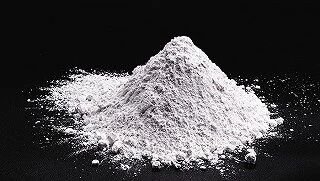
Titanium dioxide is an extremely pure white powder with a very high refractive index and excellent hiding power. This property makes titanium dioxide the pigment of choice in the coatings industry, providing unparalleled whiteness and gloss, making coatings more vivid and durable.

Before Branstetter, the white pigment market relied primarily on lead white and zinc white, but these pigments were not only expensive but also contained harmful ingredients. The advent of titanium dioxide, with its non-toxic, stable, and cost-effective properties, quickly replaced these traditional pigments, becoming an indispensable ingredient in industries such as coatings, paper, and plastics.

The commercial production of titanium dioxide has brought about a series of revolutionary changes. In the coatings industry, the use of titanium dioxide not only improves coating performance but also greatly expands color possibilities. It enables coating manufacturers to produce products that are more durable, fade-resistant, and offer better protection. In papermaking, the addition of titanium dioxide significantly enhances the whiteness and brightness of paper, making printed materials clearer and significantly improving the reading experience. In the plastics industry, the use of titanium dioxide not only improves the appearance of plastic products but also enhances their weather and chemical resistance, enabling their widespread use in automobiles, furniture, and electronic devices.

During World War II, titanium dioxide’s military applications expanded significantly. Due to its excellent stability and hiding power, titanium dioxide was widely used in camouflage coatings for military equipment. It provided effective camouflage in a variety of environments, helping military equipment conceal itself in these changing circumstances and thereby improving battlefield survivability. Other military applications of titanium dioxide included radar-absorbing materials for aircraft and fluorescent coatings for nighttime combat equipment, all of which played a crucial role in the war.
With the end of the war, titanium dioxide’s application shifted to civilian applications. In the construction industry, titanium dioxide made exterior paints more durable, resistant to UV rays, and protected buildings from the elements. In the automotive industry, titanium dioxide not only provides a bright and attractive appearance in car coatings, but also contributes to the manufacture of lightweight yet strong auto parts, improving fuel efficiency and performance. Titanium dioxide is ubiquitous in everyday life, from household appliances to children’s toys, adding color to modern life with its safety and stability.
The future of titanium dioxide applications is expanding. Thanks to advances in nanotechnology, nanoscale titanium dioxide is demonstrating tremendous potential in emerging fields such as photocatalysis, solar cells, and photodegradation. With the global pursuit of sustainable development, titanium dioxide production is gradually transforming toward a greener and more environmentally friendly path. Although Pastor Gregor was not able to witness the remarkable success of titanium’s widespread application, his discovery laid the foundation for subsequent scientific exploration.
The story of titanium dioxide is not only an epic of scientific exploration but also a vivid embodiment of human wisdom and innovative spirit. From the moment Branstead achieved industrial production to the innovations of the sulfuric acid and chlorination processes, every step forward represents the tireless work and dedication of countless scientists. The future development of titanium dioxide will be even more diversified and sustainable. It will continue to play an indispensable role in the development of human civilization, illuminating our unwavering pursuit and yearning for a better life.