Address
Room 2301C, 23rd Floor, Building 1, jinghu Commercial center, No, 34, Liangzhuang Street, Eri District, Zhengzhou City, Henan province
Work Hours
Monday to Friday: 7AM - 7PM
Weekend: 10AM - 5PM
Address
Room 2301C, 23rd Floor, Building 1, jinghu Commercial center, No, 34, Liangzhuang Street, Eri District, Zhengzhou City, Henan province
Work Hours
Monday to Friday: 7AM - 7PM
Weekend: 10AM - 5PM

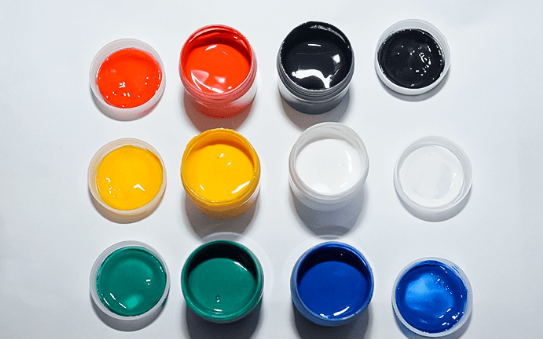
As a high-quality white pigment and additive, titanium dioxide offers exceptional performance characteristics, including high hiding power, excellent dispersibility, and superior lightfastness, heat resistance, alkali resistance, and weather resistance. It is widely used in coatings, plastics, inks, papermaking, cosmetics, and other fields.
Titanium dioxide, its main component, has two crystal structures: anatase and rutile. Due to its high hiding power and whiteness, titanium dioxide is used as a white pigment in industry, imparting excellent hiding power and color to finished products. Its chemical stability, excellent weather and heat resistance, and its ability to withstand various climate and temperature fluctuations make titanium dioxide an irreplaceable choice in ink formulations.
Application Features
1). Improve the whiteness and hiding power of ink
Titanium dioxide, with its high refractive index and excellent light-scattering properties, enables inks to fully reflect light under illumination, resulting in a brilliant white color. In printed materials requiring high whiteness, such as newspapers and magazines, titanium dioxide can significantly enhance visual quality and aesthetics. Furthermore, its strong hiding power effectively conceals the underlying color of the paper, enhancing the clarity of printed designs.
2). Enhance the wear resistance and weather resistance of ink
Titanium dioxide has high hardness, good chemical and thermal stability, making inks containing it exceptionally resistant to abrasion and weathering. In outdoor advertising, signage, packaging printing, and other fields, inks are often exposed to harsh environments such as wind, rain, and sun. The addition of titanium dioxide can significantly improve the ink’s weather resistance, effectively mitigating color fading and wear caused by factors such as light, humidity, and temperature.
3). Improve the drying and adhesion of ink
Titanium dioxide has a large surface area and strong surface activity, which enables it to accelerate drying and enhance adhesion in inks. During the printing process, titanium dioxide interacts with binders, additives, and other ingredients to promote rapid drying of the ink and improve printing efficiency. Furthermore, titanium dioxide can closely bond with the paper surface, improving ink adhesion and preventing ink shedding or cracking.
4). Adjust the gloss and rheology of ink
The tinting power of titanium dioxide (TiO2) depends primarily on its ability to scatter visible light, a property directly linked to the tinting power of inks. The greater the scattering coefficient, the stronger the TiO2’s tinting power. Furthermore, the refractive index of TiO2 is a crucial factor in determining its tinting power: the higher the refractive index, the stronger the tinting power. Among white pigments, TiO2 has the highest refractive index, with rutile TiO2 having a higher refractive index than anatase. Therefore, to ensure optimal tinting results, TiO2 with both strong scattering power and a high refractive index should be preferred.
By finely controlling the particle size and dosage of TiO2, we can effectively control the gloss of inks, achieving a variety of effects from matte to glossy. Furthermore, the addition of TiO2 positively impacts the rheological properties of inks, improving their stability and printability.
Modern industry is increasingly prioritizing environmental protection and safety. Titanium dioxide, as a non-toxic and odorless material, aligns with this trend. It contains no harmful heavy metal ions or radioactive substances, making it harmless to the human body. Due to its stable chemical properties, titanium dioxide is less likely to react with other substances, reducing the risk of ink deterioration or the generation of harmful substances during use.
Application formula recommendation
1).Paper ink
Formula example: 50% titanium dioxide, 25% pigment, 15% resin, and 10% additive are mixed to obtain good printability and high gloss.
2). Plastic ink
Formula example: A mixture of 40% titanium dioxide, 30% pigment, 20% resin, and 10% additives can produce printed products with high hiding power and strong adhesion to plastic surfaces. Furthermore, the addition of plasticizers can further enhance the ink’s wettability and adhesion to plastic films, improving printing quality and effectiveness.
3).Metallic ink
Formula example: A mixture of 60% titanium dioxide, 20% pigment, 15% resin, and 5% additives can improve the corrosion resistance and weather resistance of printed materials.
The role of titanium dioxide in inks cannot be ignored. In today’s highly competitive printing market, selecting high-quality titanium dioxide is a key factor in ensuring the quality of printed products. In recent years, titanium dioxide prices have seen strong growth. With the continuous advancement of technology, the application of titanium dioxide in inks will continue to expand and improve, bringing more possibilities to the printing industry.