Address
Room 2301C, 23rd Floor, Building 1, jinghu Commercial center, No, 34, Liangzhuang Street, Eri District, Zhengzhou City, Henan province
Work Hours
Monday to Friday: 7AM - 7PM
Weekend: 10AM - 5PM
Address
Room 2301C, 23rd Floor, Building 1, jinghu Commercial center, No, 34, Liangzhuang Street, Eri District, Zhengzhou City, Henan province
Work Hours
Monday to Friday: 7AM - 7PM
Weekend: 10AM - 5PM

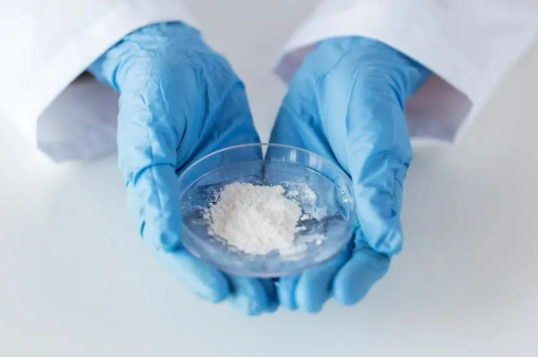
Plastic products are widely used across various industries in my country. The plastics industry is the second-largest user of titanium dioxide and plays an irreplaceable role in numerous sectors, including electronics, information networks, and biomedicine. China leads the world in plastics production and is the world’s largest plastics market. Industry data indicates that China’s total plastics production reached 74.885 million tons in 2023, a year-on-year increase of 3%.
Plastics using titanium dioxide include polypropylene, PVC, and polystyrene. In most thermosetting and thermoplastic products, titanium dioxide is the primary colorant, typically containing between 0.5% and 10%. Some specialized plastics use higher amounts of titanium dioxide, with its proportion in the masterbatch reaching 40% to 70%.
Application of titanium dioxide in plastic products
In addition to its high hiding power, chroma, and excellent properties when mixed with other pigments, titanium dioxide can also improve the heat resistance, light resistance, and weather resistance of plastic products, protect them from UV rays, and enhance their mechanical strength and electrical properties. It is suitable for almost all thermosetting and thermoplastic plastics, polyolefins (primarily low-density polyethylene), polystyrene, ABS (acrylonitrile-butadiene-styrene copolymer), polyvinyl chloride, etc. It can be mixed with resin powders or mixed with liquids containing plasticizers. Some titanium dioxide is first made into masterbatch in the factory before use.
Therefore, the key performance benefits of titanium dioxide for plastics lie in its fine particle size and uniform particle size distribution, which enhances short-wavelength reflectivity and contributes to the production of superior plastic products. Furthermore, titanium dioxide pigments must possess excellent heat resistance and high dispersibility. Therefore, titanium dioxide for plastics is generally categorized into inorganically coated and organically coated titanium dioxide. As with coatings, rutile titanium dioxide is preferred for outdoor plastics, although other anatase-based titanium dioxides are also acceptable.
Plastic products’ requirements for titanium dioxide
Hiding power: Titanium dioxide with good hiding power produces lighter and thinner plastic products.
Whiteness: Determines the appearance of light-colored or white plastic products.
Dispersibility: Impacts the production cost of plastic products. Poorly dispersed titanium dioxide can affect the smoothness and glossiness of plastic products.
Weather resistance: Plastic products used outdoors, such as plastic doors and windows, must ensure the weather resistance of titanium dioxide.
Titanium dioxide particle size for plastics
Typically, the particle size of titanium dioxide for coatings is 0.2-0.4 μm, while the particle size for plastics is 0.15-0.3 μm. This creates a blue undertone, which helps mask most yellowish resins or those prone to yellowing. However, due to its smaller particle size and poor durability, titanium dioxide for plastics cannot be used in coatings.
Conventional titanium dioxide for plastics generally does not undergo inorganic surface treatment, but generally does undergo organic surface treatment (polyols, silanes, or siloxanes). This is because when inorganically coated titanium dioxide, such as hydrated alumina, is used in plastics, its adsorption equilibrium water content is around 1% at a relative humidity of 60%. When the plastic is extruded at high temperatures, this water evaporates, causing pores to appear on the smooth plastic surface. Furthermore, titanium dioxide for plastics is generally mixed in a low-polarity resin through shearing. Titanium dioxide with an organic surface treatment disperses relatively well under appropriate mechanical shear forces.
Because plastics have much thicker coatings than paints and inks, they don’t require a high pigment volume concentration. Furthermore, due to its high hiding power and strong tinting strength, the typical usage is only 3% to 5%. It’s used in almost all thermosetting and thermoplastic plastics. It can be mixed with either dry resin powder or liquid containing plasticizers. Some applications also involve processing titanium dioxide into masterbatches.
As the application range of plastic products expands, many exterior plastic products, such as plastic doors and windows, building materials, and other plastic products, have high requirements for outdoor weather resistance. In addition to the use of rutile titanium dioxide, surface treatment is also required. Surface treatment generally does not add zinc, but only silicon, aluminum, zirconium, etc. Silicon has a hydrophilic dehumidification effect, which can prevent the formation of pores in the plastic due to high-temperature evaporation of water during extrusion. However, the dosage of these surface treatment agents is generally not too high.