Address
Room 2301C, 23rd Floor, Building 1, jinghu Commercial center, No, 34, Liangzhuang Street, Eri District, Zhengzhou City, Henan province
Work Hours
Monday to Friday: 7AM - 7PM
Weekend: 10AM - 5PM
Address
Room 2301C, 23rd Floor, Building 1, jinghu Commercial center, No, 34, Liangzhuang Street, Eri District, Zhengzhou City, Henan province
Work Hours
Monday to Friday: 7AM - 7PM
Weekend: 10AM - 5PM

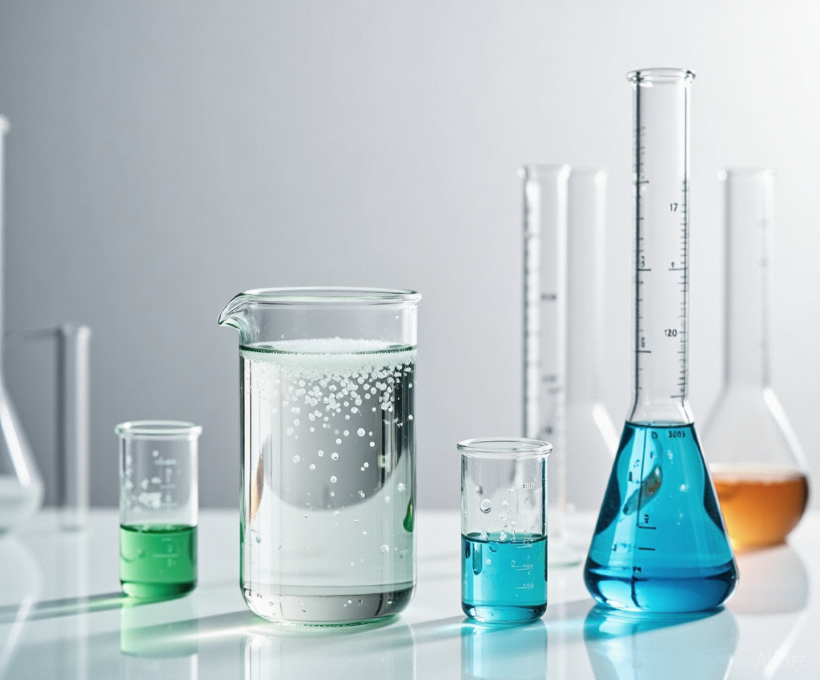
As people’s needs continue to rise, the performance requirements for coatings are becoming increasingly stringent. To improve certain aspects of coating performance, additives are needed to meet these requirements. It can be said that modern coatings would not exist without high-quality, efficient additives.
From a production and application perspective, water-based coatings, which adhere to environmentally friendly standards, present more serious issues with defoaming and defoaming, thickening, flow and leveling, and corrosion protection. Therefore, water-based coatings rely more heavily on additives than solvent-based coatings, and the required additive varieties and quality requirements are more extensive and stringent. Common additives for industrial coatings include defoamers, thickeners, wetting agents, dispersants, leveling agents, and special-function additives.
Foam is a stable dispersion formed by air in a liquid medium. When surfactants are mixed into the liquid, stable foam will be formed. Paints are not a single component. The many ingredients in the formula will inevitably bring some surfactants, which will cause stable foam to be produced in the paint. Therefore, defoaming agent is one of the additives that must be used in water-based paint.
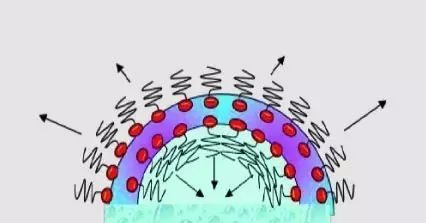
The foaming and defoaming process involves three steps: the generation of bubbles within the liquid; their rise within the liquid phase and migration to the liquid surface; and their collapse at the liquid surface. As can be seen from the bubble formation and stabilization process, the defoaming process involves preventing air from mixing into the liquid, accelerating the coalescence and growth of the bubbles, and their rise to the liquid surface, thereby promoting their rapid collapse.
The process of reducing and preventing bubble generation is called foam suppression, while the coalescence and rise of bubbles to the liquid surface is called degassing. The collapse of bubbles at the liquid surface is considered defoaming or foam breaking. Therefore, defoamers are categorized as defoamers, deaerators, and defoaming agents, collectively referred to as defoamers.
From the defoaming mechanism and application requirements of defoamers, we can know that defoamers should have the following characteristics:
Defoamers are generally divided into:
① Mineral oils – Offer excellent defoaming performance and long-lasting defoaming effects, good compatibility, and resistance to cratering.
② Silicones – Strong defoaming performance without affecting system gloss. Low concentrations are used and are essentially non-toxic to humans and the environment.
③ Polymers – Offer long-lasting defoaming performance, excellent results, fast defoaming, and excellent thermal stability.
Due to the complexity and variability of coating formulations, choosing the right defoamer is very important for the performance of the coating, such as storage stability and workability. It should also be noted that the selection of the defoamer must also consider the compatibility with the corresponding emulsification system and resin system.