Address
Room 2301C, 23rd Floor, Building 1, jinghu Commercial center, No, 34, Liangzhuang Street, Eri District, Zhengzhou City, Henan province
Work Hours
Monday to Friday: 7AM - 7PM
Weekend: 10AM - 5PM
Address
Room 2301C, 23rd Floor, Building 1, jinghu Commercial center, No, 34, Liangzhuang Street, Eri District, Zhengzhou City, Henan province
Work Hours
Monday to Friday: 7AM - 7PM
Weekend: 10AM - 5PM

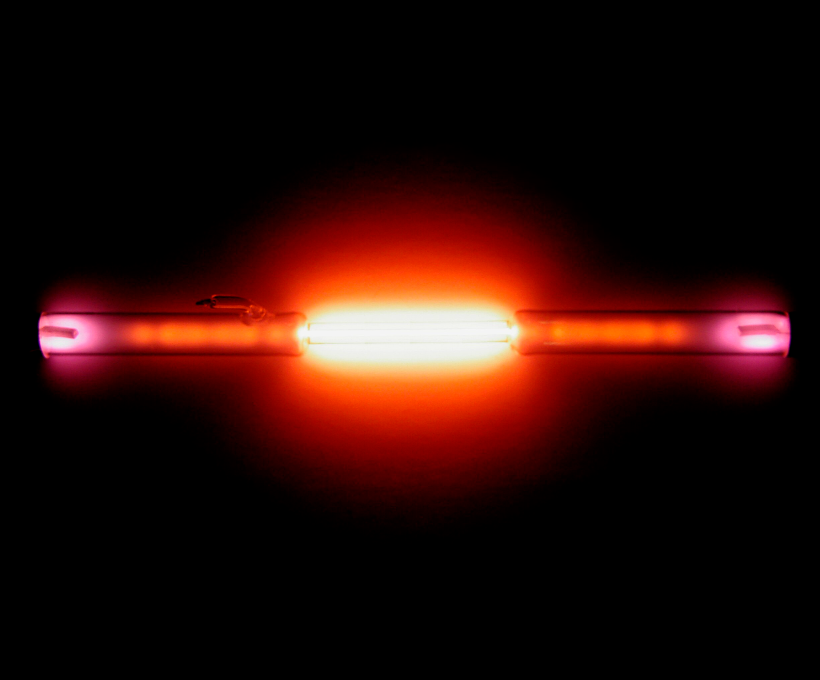
The discovery of helium is an interesting story, involving both astronomy and chemistry. Helium was first observed in the solar spectrum, and this discovery can be divided into several key stages.
Phase One:
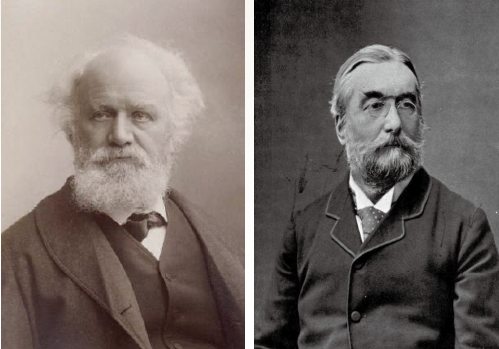
Observations of the Solar Spectrum In 1868, astronomers Jules Janssen and Norman Lockyer independently observed a solar eclipse in the solar corona. They observed an unknown yellow spectral line in the solar spectrum, with a wavelength of 587.49 nm. This line could not be matched to the spectrum of any known element. Lockyer later named this element “helium,” after the Greek sun god Helios.
They used a tool called a spectrometer to observe the solar spectrum. A spectrometer breaks light into its different colors, with each element having its own unique spectral line. While observing the solar spectrum, they discovered a yellow line that did not match any known element’s spectral line.
Imagine each element as having its own unique spectral line, like a fingerprint. When Janssen and Lockyer observed the sun, they were like cosmic detectives, discovering a mysterious “fingerprint”—the first clue to helium.
Phase Two:
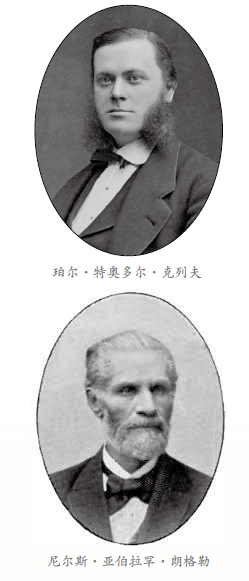
The Discovery of Helium on Earth. In 1895, Swedish chemists Per Teodor Cleve and Nils Abraham Langlet discovered helium by heating uranium ore and observing the gas released.
The process was like a treasure hunt within an ore. When the scientists heated this special ore, it was like opening a hidden treasure chest, releasing helium—a valuable element never before found on Earth.
Phase Three:
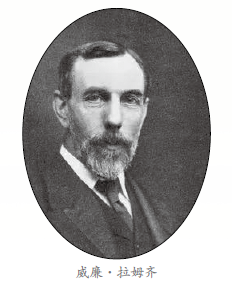
William Ramsay, a Scottish chemist with a keen interest in the study of gases, was a key figure in this phase.
In 1895, while researching a new element, argon, Ramsay accidentally discovered helium in pitchblende (a uranium-containing ore). Through chemical analysis and collaboration with Lockyer, he confirmed that the gas he discovered was the helium previously observed in the solar spectrum. Ramsay was awarded the 1904 Nobel Prize in Chemistry for his discovery of the noble gases (argon, neon, krypton, xenon, and radon) and his research into their physical and chemical properties.
Ramsay’s discovery solved a scientific mystery. While processing pitchblende in his laboratory, he discovered a new gas. Through careful experiments and comparisons, he realized that this new gas was the helium previously observed in the solar spectrum. This surprising discovery proved that helium existed not only in the Sun but also on Earth.
This discovery had significant implications for the study of helium. It not only confirmed the existence of helium on Earth but also revealed its distribution relative to other elements in Earth’s atmosphere. This discovery also spurred further research into the role of helium in geochemistry.
The identification of helium in Earth’s atmosphere was achieved through chemical analysis of minerals on Earth, providing crucial evidence for its existence and distribution and deepening our understanding of the composition of Earth’s atmosphere. The discovery of helium is a story of exploration that spans astronomy and chemistry. It began with a mysterious yellow streak in the solar spectrum, progressed through chemical discoveries in minerals, and ultimately led to its identification as a new element. This story demonstrates the wonders of scientific discovery and the importance of collaboration across diverse fields.
Phase Four:
The Discovery of Helium Isotopes. The existence of helium-3 was discovered through the study of nuclear reactions and a deeper understanding of isotope theory. This understanding progressed through several key steps:
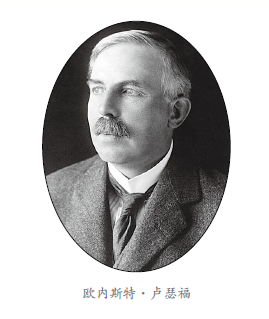
First, the development of isotope theory. In the early 20th century, as research on radioactive elements deepened, scientists such as Frederick Soddy and Ernest Rutherford began to recognize that certain elements exist in different mass forms, known as isotopes. This theory laid the foundation for understanding isotopes of light elements like helium-3.
Second, the study of particle accelerators and nuclear reactions. In the 1930s, scientists began using particle accelerators to study nuclear reactions. Through experiments, they were able to produce and observe the products of various nuclear reactions, including different isotopes of light elements. During these experiments, scientists noticed that some nuclear reactions produced a lighter helium isotope, helium-3, which was different from helium-4.
Third, the specific identification of helium-3. With the development of spectroscopy and mass spectrometry, scientists could more precisely distinguish and identify different isotopes. Helium-3 is distinguished from helium-4 by its unique mass and nuclear magnetic properties. Through meticulous analysis of these nuclear reaction products, scientists were able to confirm the existence of helium-3 and begin to study its properties and behavior.
Fourth, its contribution to astrophysics. In the mid-to-late 20th century, as space exploration and studies of the solar wind and cosmic rays progressed, astrophysicists also observed the presence of helium-3. These discoveries further confirmed the natural occurrence of helium-3 in the solar system and advanced our understanding of its behavior in the celestial environment.