Address
Room 2301C, 23rd Floor, Building 1, jinghu Commercial center, No, 34, Liangzhuang Street, Eri District, Zhengzhou City, Henan province
Work Hours
Monday to Friday: 7AM - 7PM
Weekend: 10AM - 5PM
Address
Room 2301C, 23rd Floor, Building 1, jinghu Commercial center, No, 34, Liangzhuang Street, Eri District, Zhengzhou City, Henan province
Work Hours
Monday to Friday: 7AM - 7PM
Weekend: 10AM - 5PM


Defoaming agent application areas
Coatings, papermaking, textiles, fermentation, sewage treatment, printing and dyeing, washing, metal cleaning, oil extraction and refining, emulsion polymerization, etc.

The meaning and form of bubbles
Foam refers to the fine dispersion of air in a liquid phase.
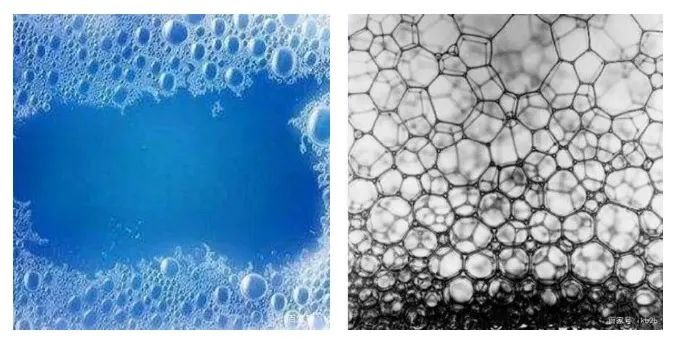

Foam structure
In pure water, foam cannot survive in the liquid for a long time due to the high surface tension between air and bubbles. In water containing surfactants, foam is relatively stable.
The factors that stabilize foam are as follows:
(1) electrostatic repulsion
(2) steric hindrance
(3) surface viscosity
(4) surface elasticity

Main ingredients of defoaming agent
Carrier (75%-90%): Oil, water, solvent, modified polysiloxane. These deliver the active ingredient (hydrophobic particles) to the surface and disperse it there, preventing the formation of surfactants.
Hydrophobic particles (5%-10%): Waxes, silica, and metal soaps absorb surfactant molecules into a thin bilayer.
Emulsifier (0-5%): Various surfactants adjust the defoamer’s emulsifying ability and improve its compatibility.
Other (0-2%): Biocides, thickeners, protective gels, etc., prevent contamination, adjust viscosity, and prevent separation.

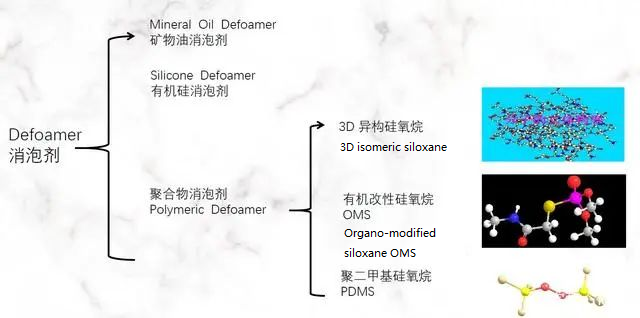
Defoamer Classification