Address
Room 2301C, 23rd Floor, Building 1, jinghu Commercial center, No, 34, Liangzhuang Street, Eri District, Zhengzhou City, Henan province
Work Hours
Monday to Friday: 7AM - 7PM
Weekend: 10AM - 5PM
Address
Room 2301C, 23rd Floor, Building 1, jinghu Commercial center, No, 34, Liangzhuang Street, Eri District, Zhengzhou City, Henan province
Work Hours
Monday to Friday: 7AM - 7PM
Weekend: 10AM - 5PM

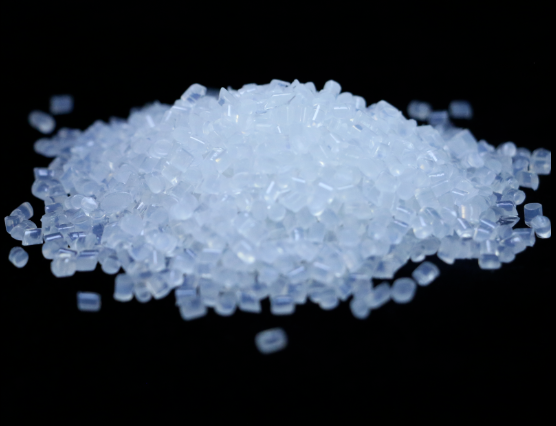
Nylon (polyamide) is a generic term for thermoplastic resins with repeating amide groups in their main molecular chain. It is the most produced and consumed of the five major engineering plastics. Its English name, Polyamide (PA), is widely used in engineering plastics, synthetic fibers, plastic films, coatings, and adhesives due to its high strength, toughness, wear resistance, and impact resistance. It is the most produced and consumed of the five major engineering plastics.
Since the birth of the first member, nylon 66 (PA66), more than 80 years have passed. Currently, there are dozens of varieties developed, such as PA6, PA11, PA12, PA46, PA610, PA612, MXD6, PA6T, PA9T, PA1212, PPTA, etc., which have become one of the most important synthetic material varieties in people’s production and life.
There are so many types and varieties of nylon. In order to have a basic understanding of various nylons as a whole, the following content will introduce the types and classification methods of nylon in detail.
1.Classification by chemical structure (mainstream classification method)
1) Aliphatic nylon
Common varieties: PA6 (nylon 6), PA66 (nylon 66), PA46 (nylon 46), PA56 (nylon 56), PA610 (nylon 610), PA612 (nylon 612), PA1010 (nylon 1010), PA11 (nylon 11), PA12 (nylon 12), etc.
Features: Wide variety, high production volume, suitable for both fiber and plastic applications, excellent wear and heat resistance (for example, PA66 has a melting point of 250-260°C).
Note: PA6 and PA66 dominate, accounting for over 80% of total nylon production; PA6 is polymerized from a single monomer, caprolactam, while PA66 is a copolymer of hexamethylenediamine and adipic acid.
2) Semi-aromatic Nylon (Aliphatic-Aromatic)
Common varieties: PA4T, PA6T, PA9T, PA10T, MXD6 (barrier resin), etc.
Features: Excellent high-temperature resistance (long-term operating temperature > 150°C), suitable for high-temperature electronic components and automotive engine parts.
3) Aromatic Nylon (Fully Aromatic)
Common varieties: PA1313 (trade name Nomex), PA1414 (trade name Kevlar).
Features: High strength and heat resistance, primarily used as a specialty fiber in the military and aerospace industries (such as bulletproof materials).
2.Classification by application characteristics (special nylon)
1) High-Temperature Nylon
Representative grades: PA46, PA4T, PA6T, PA9T, PA10T, PPA (polyphthalamide)
Applications: Automotive engine parts, electronic connectors.
2) Long-chain nylon
Representative varieties: PA11, PA12, PA610, PA1010, PA1012, PA1212, etc. (methylene group number ≥10 in the molecule).
Features: Low water absorption, low-temperature resistance, and dimensional stability. Used in automotive fuel pipes and precision machinery parts.
3) Transparent Nylon
Representative Varieties: PA TMDT, PA CM12, PA6/66 Copolymer, etc.
Features: Light transmittance >90%, used in food packaging, optical instruments, and medical viewing windows.
4) Nylon Elastomers
Representative Variety: Polyether Block Amide (PEBA).
Features: High elasticity and resilience, used in sports shoes, silent gears, and medical catheters.
5) Bio-based Nylon
Representative products: Bio-based PA5X series, recycled nylon 11 (derived from castor oil).
Features: Low-carbon and environmentally friendly, with customizable performance.
3.Other categories
Named according to the number of carbon atoms in each monomer: for example, PA510 (sebacic acid + pentamethylenediamine) and PA1,6 (synthesized using dinitrile acid catalysis).
Modified nylons: include reinforced nylon (glass-filled), flame-retardant nylon, conductive nylon, and toughened nylon, all of which enhance performance through blending or additives.
Industrial model classifications: for example, Nylon 11 Carbon Fiber (carbon fiber reinforced) and Nylon 12 Glass-filled (glass-filled).
The above are the various classifications of nylon. Among them, high-temperature nylon, transparent nylon and bio-based nylon are important specialty nylons. The specific types of these three types of nylon are introduced below:
4.High temperature nylon
High-temperature nylon generally refers to nylon materials with long-term use temperatures exceeding 150°C (or even higher). They have significantly improved heat resistance, strength retention, and dimensional stability compared to standard nylon (such as PA6 and PA66). The main types include:
1) Aliphatic High-Temperature Nylons
Features: Represented by PA46 (polybutylene adipamide), it is formed by the polycondensation of butylene adipamide and adipic acid. It features high crystallinity (approximately 70%), rapid crystallization, and a high melting point (295°C). Its heat deflection temperature (HDT) is 160°C when unreinforced, rising to 290°C when reinforced with glass fiber, and its long-term operating temperature reaches 163°C. Its molecular chain is highly symmetrical, resulting in excellent heat resistance and mechanical properties, but it also has high water absorption and poor dimensional stability.
Representative brand: DSM’s Stanyl.
2) Semi-aromatic Nylon
Features: Formed by the copolymerization of aromatic diacids (such as terephthalic acid) and aliphatic diamines, it combines heat resistance with excellent processability.
Representative Variety: PPA (Polyphthalamide / Semi-aromatic Nylon)
PPA is a broad category of nylons containing aromatic rings (usually derived from terephthalic acid or isophthalic acid) in their molecular chains. Strictly speaking, PA4T, PA6T, PA9T, PA10T, and MXD6 all fall under the PPA umbrella. They share characteristics such as high melting points, high glass transition temperatures, low water absorption, excellent dimensional stability, and heat resistance.
The main PPA subcategories are as follows:
PA6T (Poly(hexamethylene terephthalamide))
Features: Produced by the polycondensation of hexamethylenediamine and terephthalic acid. Its melting point is as high as 370°C (theoretical), but pure PA6T is difficult to melt-process. Practical applications rely on copolymers, such as PA6T/66 and PA6T/6I. The introduction of other monomers (such as adipic acid and isophthalic acid) lowers the melting point and improves processability, while maintaining excellent heat resistance (HDT exceeding 290°C), high rigidity, high strength, extremely low water absorption, excellent chemical resistance (especially hydrolysis and ethylene glycol resistance), and dimensional stability.
Representative brands: DuPont’s Zytel® HTN, Solvay’s Amodel®, BASF’s Ultramid® Advanced T, and Kingfa’s reinforced grades.
PA9T (Poly(nonanediamine terephthalamide))
Features: Produced by the polycondensation of nonanediamine (usually derived from castor oil) and terephthalic acid. Melting point: approximately 306°C. Its outstanding advantage is its extremely low water absorption (similar to PPS), resulting in minimal dimensional and performance changes after water absorption. It offers excellent heat resistance, chemical resistance (especially resistance to fuels and coolants), wear resistance, and dimensional stability. It also has a wide processing window.
Representative brand: Kuraray’s Genestar®.
PA10T (Polybutylene Terephthalamide)
Features: Produced by the polycondensation of decanediamine (usually derived from castor oil) and terephthalic acid. Its performance lies between that of PA6T and PA9T. It offers excellent heat resistance, with lower water absorption than PA6T but higher than PA9T. It possesses excellent overall performance, particularly toughness superior to that of PA6T copolymers. Some grades are halogen-free and flame-retardant.
Representative Brands: Domestic companies such as Kingfa Technology and Xinhecheng manufacture and develop PA10T.
PA4T (Polybutylene terephthalamide)
Features: Produced by the polycondensation of butanediamine and terephthalic acid. It has a very high melting point (theoretical value >430°C) and also requires copolymerization modification (such as PA4T/6I and PA4T/66) to achieve processability. It has one of the highest heat resistances among commercially available PPAs (HDT can reach over 290°C). It has a low density and excellent strength, stiffness, dimensional stability, and chemical resistance (especially hydrolysis resistance). However, it is relatively expensive.
Representative brand: DSM’s ForTii® (primarily based on PA4T).
3)Other Semi-Aromatic Nylons
PA MXD6 (Poly(m-xylylenediamine adipamide))
Features: Produced by the polycondensation of m-xylylenediamine and adipic acid. While its melting point is not as high as PPA (approximately 243°C), its glass transition temperature (GTT) is as high as 85-100°C, making its stiffness and dimensional stability at high temperatures far superior to those of PA6 and PA66. It offers excellent gas barrier properties (especially oxygen barrier properties), high stiffness, good heat resistance, and dimensional stability. Its water absorption is lower than that of PA6/66.
Representative brands: Mitsubishi Chemical’s Reny®, Solvay’s Ixef®.
PHA (polyparaben-amide) – A More Special Ultra-High-Temperature Nylon
Features: A liquid crystal polymer formed by the polymerization of para-aminobenzoic acid or para-hydroxybenzoic acid, it also contains amide bonds in its molecular structure and is sometimes classified as an ultra-high-performance nylon. Its heat resistance far exceeds that of all the above types, with an HDT exceeding 300°C and a melting point exceeding 400°C. It exhibits exceptional strength, rigidity, dimensional stability, flame retardancy, and chemical resistance. However, it is difficult to process and extremely expensive.
Representative brands: Solvay’s Ixef® (some grades), DuPont’s Zytel® LCP (although often classified as LCP, its structure is similar).
4)Fully aromatic nylon
Synthesized entirely from aromatic monomers, such as DuPont’s PPTA (trade name Kevlar®), offers exceptional heat resistance (maintains strength for 200 hours at 280°C), but is difficult to process and injection mold. It is primarily used in high-performance fibers.
5) Cycloaliphatic nylons
For example, PA6C (poly(hexamethylenediamine) cyclohexamethylenediamine) can be copolymerized with other polyamides for fiber production and exhibits excellent heat resistance.
Major industrialized varieties: PA46, PA6T, PA9T, and PA10T are core varieties already in large-scale industrialization.
Emerging varieties: PA4T, PA12T, and PA5T have emerged since 2000, further expanding their application areas.
5.Transparent nylon
Transparent nylon is a specialty polyamide material that achieves high light transmittance (typically >90%) by disrupting the regularity of its molecular chains (reducing crystallinity). Based on the chemical structure of the monomers in the molecular chain, it can be divided into the following three categories:
1) Aliphatic Transparent Nylon
Made from the copolymerization of aliphatic dibasic acids and aliphatic diamines, transparency is achieved by introducing alicyclic rings or pendant groups to disrupt crystallinity. Features: Good flexibility, excellent low-temperature resistance, and high biocompatibility, but relatively low heat resistance.
Representative polymers and manufacturers’ products:
PACM12 (Evonik TROGAMID® CX series): Composed of the cyclic aliphatic diamine PACM and dodecanedioic acid, it boasts a light transmittance of 92% and superior scratch resistance to PC.
PA6/12 (Emans Grilon® C series): Low crystallinity, used for household containers and e-cigarette components.
PA11/12 (Arkema Rilsan® Clear series): With a biobased content of up to 65% and a low density (1.01 g/cm³), it is suitable for lightweight eyeglass frames.
2) Semi-aromatic Transparent Nylon
Made from the copolymerization of aliphatic diamines and aromatic dibasic acids (or vice versa), it is currently the most mature and widely used type in industrial production. Features: The aromatic ring improves heat resistance (long-term operating temperature >150°C) and dimensional stability, while reducing water absorption.
Representative polymers and manufacturers’ products:
PA TMDT (Evonik TROGAMID® T series): The earliest commercially available transparent nylon (1960), containing aromatic rings and high-temperature resistance, but discontinued.
PA MACM12 (Emans Grilamid® TR90): An amorphous structure, ultra-light “plastic titanium” frame material, resistant to short-term heat exposure up to 350°C.
PA6I/6T (DuPont Zytel® 330NC): High barrier properties, used in food packaging.
3) Aromatic Transparent Nylon
Produced by copolymerizing aromatic dibasic acids and aromatic diamines, the backbone contains a high proportion of rigid aromatic rings.
Features: High crystallinity, excellent heat resistance (>280°C), and solvent resistance. However, due to its high melting point and processing difficulties, industrial mass production has yet to be achieved.
Representative polymers: Laboratory synthesized products, such as fully aromatic nylon made from 2-amino-6-(4-aminophenyl)-6-methylheptane and diphenyl isophthalate as monomers.
6.Bio-based nylon
Bio-based nylon (bio-based polyamide) is a polyamide material synthesized by using renewable biomass resources (such as castor oil, glucose, starch, etc.) instead of petroleum raw materials. It has both low-carbon and environmental protection and high performance characteristics.
The production of bio-based nylon relies on two main technologies:
Sugar Route
Raw Materials: Glucose, cellulose, starch, and other sugars.
Process: Conversion to nylon monomers through microbial fermentation.
For example: Pentamethylenediamine (PA56 core monomer): Produced from lysine using lysine decarboxylase.
Caprolactam (PA6 monomer): Produced from lysine via fermentation of sugarcane/glucose, followed by chemical conversion.
Representative Products: PA56 (Yipin Biotechnology), PA510 (Kaisai Biotechnology), etc.
Plant Oil Route
Raw Materials: Natural oils such as castor oil and oleic acid.
Process: Produced through chemical cracking or transesterification.
For example: ω-Undecanoic Acid (PA11 monomer): Produced from castor oil by cracking undecenoic acid, which is then synthesized into monomers.
Sebacic Acid (PA610/1010 monomer): Produced from castor oil by alkaline cracking.
Representative Products: PA11 (Arkema), PA1010 (Kingfa Technology), etc.