Address
Room 2301C, 23rd Floor, Building 1, jinghu Commercial center, No, 34, Liangzhuang Street, Eri District, Zhengzhou City, Henan province
Work Hours
Monday to Friday: 7AM - 7PM
Weekend: 10AM - 5PM
Address
Room 2301C, 23rd Floor, Building 1, jinghu Commercial center, No, 34, Liangzhuang Street, Eri District, Zhengzhou City, Henan province
Work Hours
Monday to Friday: 7AM - 7PM
Weekend: 10AM - 5PM

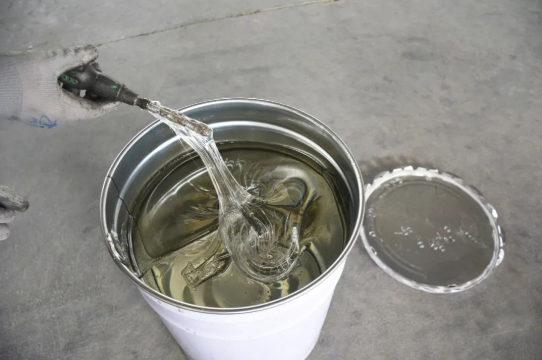
When learning about epoxy resin adhesives, pay attention to their curing time, which varies depending on the type and is affected by temperature, operating methods, and environment.
What changes occur in epoxy resin adhesives before and after curing?
Before curing, the epoxy resin adhesive Agent A and Agent B have different colors. Generally speaking, Agent A is mostly light yellow, while Agent B is black or brown.
After curing, Agent A and Agent B are thoroughly mixed and solidified, forming a brown or black solid.
This solid is a film that is glossy and elastic, and performs a variety of functions.
How long does it take for epoxy adhesives to cure at different temperatures?
At around 80°C, curing takes two to three hours.
At around 100°C, curing takes one to two hours.
At 150°C, curing is complete in one hour.
In short, the higher the temperature, the shorter the curing time.
When using this material in industries such as new energy, military, medical, aviation, shipbuilding, electronics, automotive, instrumentation, power supplies, and high-speed rail, strict control of the product’s curing time is crucial. When choosing a supplier, we recommend partnering with a reputable brand for greater assurance of quality and service.
What is the strength of epoxy resin adhesive after curing?
Whether curing at high or room temperature, a film forms. After curing, the epoxy resin adhesive’s adhesion and strength improve, while also retaining a certain degree of toughness.
This acts as a protective film, protecting against moisture, water, dust, acid, alkali, and high temperatures, making it suitable for long-term use.
Due to the curing properties of epoxy resin adhesives, they can be used in many high-end fields. They are not only resistant to impact and pressure, but also resistant to aging, thus extending their service life.