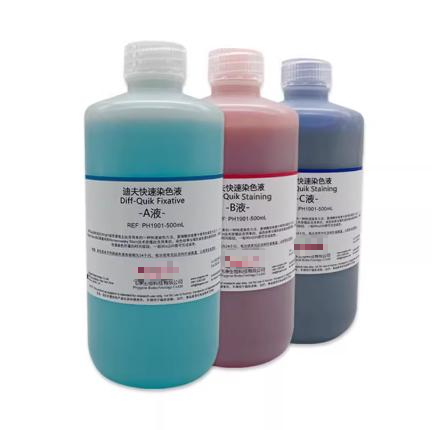
Diff-Quik staining is a rapid staining method developed from Wright staining and is commonly used in cytology. Similar to Wright stain, it is a modification of Romanowsky stain technology. The staining results are very similar to those of Wright stain, but Diff-Quik staining requires significantly less time, typically completing the staining within 90 seconds.
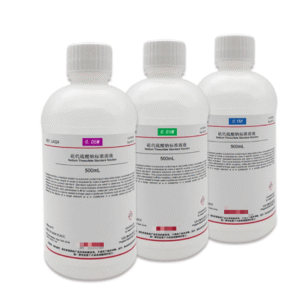
Reagent components
| Components |
3 x 100 mL |
3 x 250 mL |
3 x 500 mL |
| Solution A |
100mL |
250mL |
500mL |
| Solution B |
100mL |
250mL |
500mL |
| Solution C |
100mL |
250mL |
500mL |
Sample Requirements:
1. Blood Cell Smear Staining: Fresh whole blood or EDTA-K2 anticoagulated blood is required.
2. Vaginal Discharge (Vaginal Discharge) Smear Staining: Fresh specimens must be fixed with flame or alcohol as soon as possible after leaving the body to prevent cell deformation.
3. Bone Marrow Smear Staining: After preparation, the smear should be quickly shaken or fanned dry in air to prevent cell shrinkage and deformation or hemolysis due to humidity. Never use high temperatures or fire.
4. Exfoliated cell smear staining: Collect the specimen and make a smear. The smear can be fixed using either natural drying or wet mount fixative (the specific operation should be based on the standard operating requirements corresponding to the different specimens and the fixative used). Generally, if wet mount fixation is used, the effect will be better if the specimen is soaked for a slightly longer time. If wet mount fixative is used to fix the specimen, the fixative should be filtered and replaced frequently after use to prevent cross-contamination of cells.
Usage Guide: Using a fresh blood smear as an example:
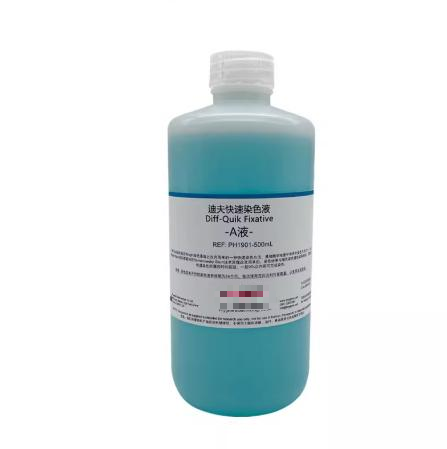
1. Dispense appropriate amounts of Dif’s Reagent Solution A, Solution B, and Solution C into a staining jar or beaker.
2. Immerse the prepared slide in Solution A for 1-2 seconds, remove, then insert again for 1-2 seconds, then remove again. Repeat this process 5 times (place the slide upright on filter paper to absorb any excess fixative).
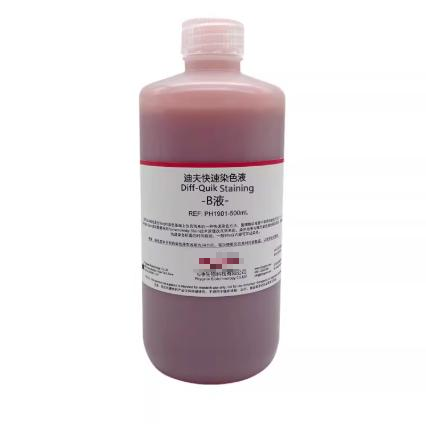
3. Immerse the slide in Solution B (red stain) for 1-2 seconds, then remove, repeating this process 3-5 times (then rinse the slide with deionized or sterile water to remove any excess Solution B). This will prevent the accumulation of impurities.
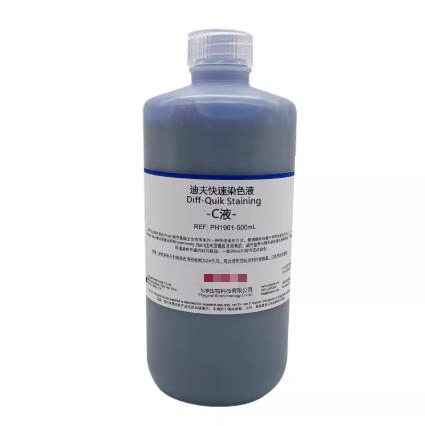
4. Immerse the slide in Solution C (blue stain) for 1-2 seconds, then remove, repeating this process 4-5 times (then rinse any excess Solution C with deionized or sterile water).
5. Allow the slide to dry and observe under a low-power microscope or an oil immersion lens at high magnification. Note: After the slides are dried, observe them under a microscope. If strong or light staining is required, the number of repeated immersion and removal can be increased or decreased. If the overall color of the slides is purple or blue, the number of times the slides are stained with Dif C solution can be reduced to adjust the light staining.
Precautions
1. To enhance eosinophil (Red) staining, increase the number of dips and withdrawals during staining with Solution B. To enhance basophil (Blue) staining, increase the number of dips and withdrawals during staining with Solution C.
2. Blood or bone marrow smears should be uniform in thickness to avoid affecting the staining effect.
3. Exfoliated cell smears can be fixed by natural drying or fixative.
4. The staining solution can be reused, but not repeated frequently. It is best to refresh it once a week. If there is any precipitate, filter it before use.
5. If the staining is too dark, decolorize it with methanol or alcohol. It is best not to restain.
6. pH affects staining. Slides should be clean and free of acid or alkali contamination to avoid affecting the staining effect.
7. For your safety and health, please wear a lab coat and disposable gloves when handling.
Storage: Transport and store at room temperature. The original unopened packaging of the dye solution has a shelf life of 24 months. The bottle cap should be tightened immediately after each use to prevent evaporation or deterioration.