Address
Room 2301C, 23rd Floor, Building 1, jinghu Commercial center, No, 34, Liangzhuang Street, Eri District, Zhengzhou City, Henan province
Work Hours
Monday to Friday: 7AM - 7PM
Weekend: 10AM - 5PM
Address
Room 2301C, 23rd Floor, Building 1, jinghu Commercial center, No, 34, Liangzhuang Street, Eri District, Zhengzhou City, Henan province
Work Hours
Monday to Friday: 7AM - 7PM
Weekend: 10AM - 5PM

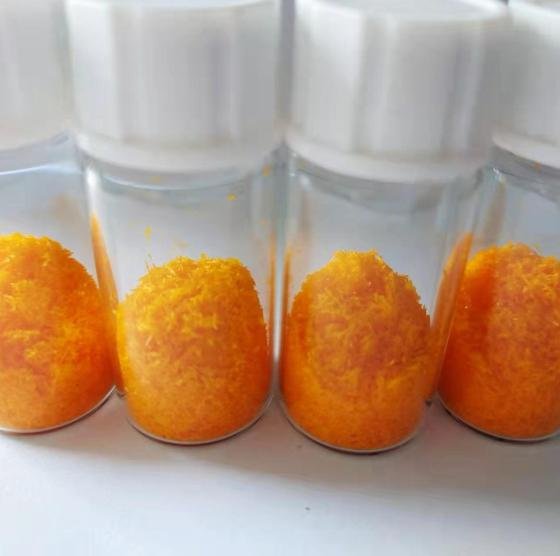
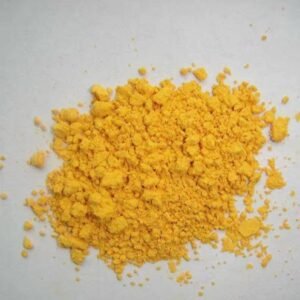
Tetrachloroauric acid typically exists in the form of a trihydrate (HAuCl₄·3H₂O) or a tetrahydrate (HAuCl₄·4H₂O), appearing as an orange-yellow or golden-yellow crystalline powder. As an important gold compound, tetrachloroauric acid is the primary product formed when gold is dissolved in aqua regia; in aqueous solution, it dissociates into tetrachloroaurate ions and hydrogen ions.
In the electronics industry, it serves as a primary constituent of gold-plating baths and is widely utilized for the gold plating of semiconductor integrated circuit lead frames, printed circuit boards (PCBs), electronic connectors, and other electrical contact components. By employing tetrachloroauric acid solutions—via either electrochemical deposition (electroplating) or chemical deposition (electroless gold plating)—it is possible to form a uniform, dense, and high-purity gold coating on the surface of a substrate. This gold coating significantly enhances the electrical conductivity, oxidation resistance, and wear resistance of electronic components, thereby ensuring the stability of signal transmission.
In the field of analytical chemistry, tetrachloroauric acid is frequently employed as an analytical reagent. Given its reactivity with specific substances, it is utilized for the analytical detection of trace alkali metals, such as rubidium and cesium.
It serves as a key precursor for the synthesis of gold nanomaterials. By selecting specific reducing agents and reaction conditions, the reduction of tetrachloroauric acid yields gold nanoparticles of various sizes and morphologies—including gold nanospheres, gold nanorods, and gold nanowires.
Additionally, tetrachloroauric acid is used in the production of specialized inks, as well as for imparting red coloration to glass and ceramics.
Technical Specifications:
|
ITEMS |
SPECIFICATION |
|
Appearance |
Yellow crystals |
|
Gold content |
48.1% |
|
Pt |
<0.001 |
|
Pd |
<0.001 |
|
Rh |
<0.001 |
|
Ir |
<0.005 |
|
Ag |
<0.002 |
|
Cu |
<0.005 |
|
Ni |
<0.005 |
|
Fe |
<0.005 |
|
Pb |
<0.005 |
|
Al |
<0.005 |
|
Sb |
<0.005 |
|
Bi |
<0.005 |
|
Total impurities content |
≤0.05 |
Package:
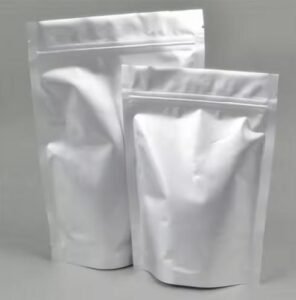
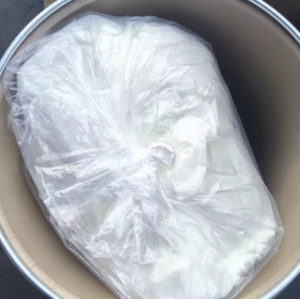
1kg /100g Bag
Palletized Shipping
Lead Time: 1-7 Days
Shipping Methods: Sea/Air/Express delivery