Address
Room 2301C, 23rd Floor, Building 1, jinghu Commercial center, No, 34, Liangzhuang Street, Eri District, Zhengzhou City, Henan province
Work Hours
Monday to Friday: 7AM - 7PM
Weekend: 10AM - 5PM
Address
Room 2301C, 23rd Floor, Building 1, jinghu Commercial center, No, 34, Liangzhuang Street, Eri District, Zhengzhou City, Henan province
Work Hours
Monday to Friday: 7AM - 7PM
Weekend: 10AM - 5PM

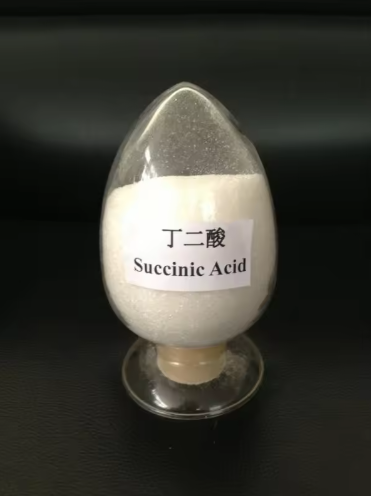
Succinic acid is a naturally occurring dicarboxylic acid organic compound. It was first discovered in the 15th century by the mineralogist Arnold von Villanova through the dry distillation of amber; it was named for its acidic nature and its association with amber. In nature, succinic acid is widely distributed in animal and plant tissues, microorganisms, and fossilized amber.
Its primary application lies in the synthesis of polybutylene succinate (PBS)—a plastic possessing excellent biodegradability—which is utilized in the production of packaging materials, agricultural films, disposable tableware, and similar items, thereby contributing to the reduction of “white pollution.” Furthermore, succinic acid can be hydrogenated to yield 1,4-butanediol (BDO), which subsequently serves as a precursor for the production of polymeric materials such as tetrahydrofuran (THF) and polyurethanes.
In the food industry, succinic acid functions as an acidity regulator, chelating agent, and antioxidant synergist; it is employed to adjust food pH levels, enhance flavor, and extend product shelf life.
In the pharmaceutical sector, succinic acid serves as a crucial intermediate in the synthesis of Vitamin A, Vitamin B, sulfonamide drugs, and antibiotics (such as erythromycin succinate).
In agriculture, succinic acid acts as a plant growth regulator, stimulating crop growth and enhancing plant resistance to environmental stress.
In the field of daily chemical products, succinic acid is utilized in the manufacture of surfactants, detergents, lubricants, and cosmetic ingredients; for instance, succinic acid esters are incorporated into skincare products to function as emulsifiers, thickeners, and humectants.
|
Item
|
Specification
|
|
Product Name
|
succinic acid
|
|
Appearance
|
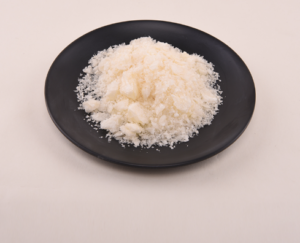
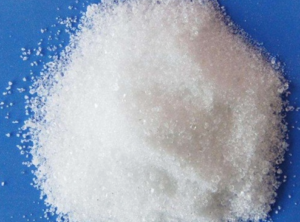
White to light yellow powder
|
|
Assay (W/W dry basis)
|
≥99.0%
|
|
Residue on ignition
|
<0.5%
|
|
Water (W/W by KF)
|
≤1.0%
|
|
PH value
|
5~9
|
|
Arsenic
|
≤2ppm
|
|
Heavy metals
|
≤10ppm
|
|
Sulfated ash
|
≤0.5%
|
|
Solubility
|
Easily dissolve in tetrahydrofuran and hot ethanol
|
Package:
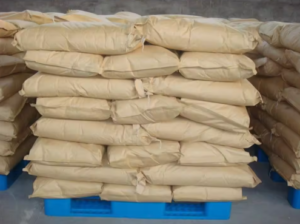
1kg / 25kg bag
Palletized Shipping
Lead Time: 1-7 Days
Shipping Methods: Sea/Air/Express delivery