Calomel Electrode Instructions:
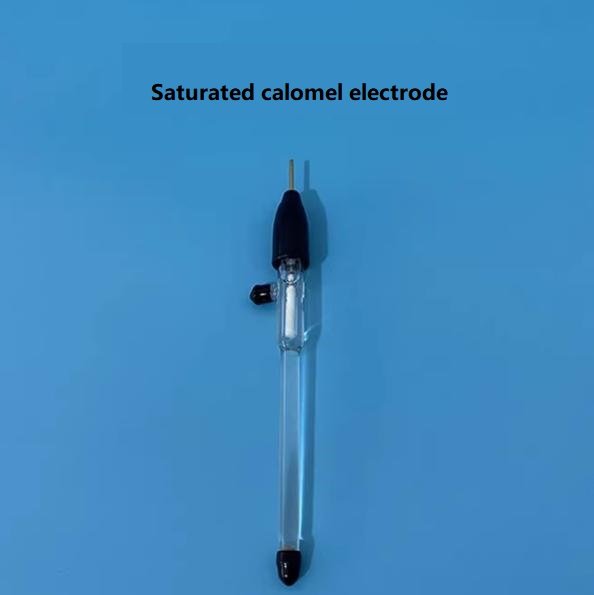
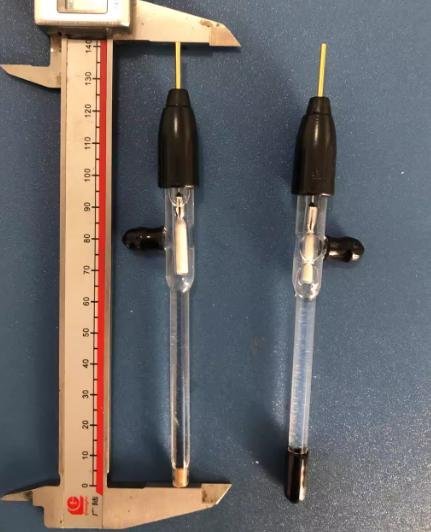
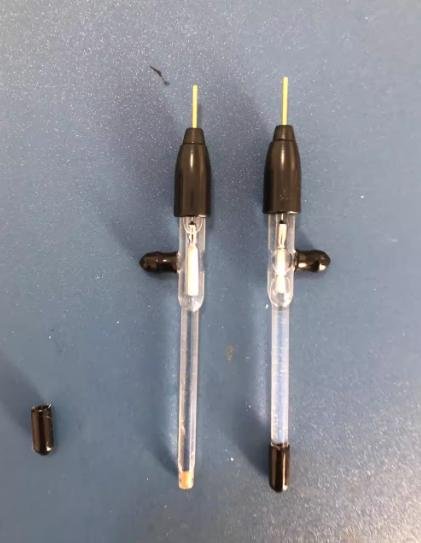
1. When using a calomel electrode, first remove the rubber caps on the sides and ends to allow gravity to maintain a constant flow rate between the salt bridge solution and the measured solution.
2. The potassium chloride solution in the electrode must be free of bubbles, and a small amount of potassium chloride crystals should remain in the solution.
3. During measurements, the salt bridge solution level at the calomel electrode should be slightly higher than the measured solution level to prevent back diffusion of the measured solution into the calomel electrode.
4. Because the calomel electrode has a large negative temperature coefficient and thermal hysteresis, temperature fluctuations should be avoided during measurements. Accurate measurements require a constant temperature.
5. If contamination of the measured solution is detected on the calomel electrode junction, scrape off any deposits immediately.
6. Calomel electrodes should generally not be used in environments above 70°C.
7. Any potassium chloride solution or crystals on the electrode surface should be removed immediately.
8. Because photolysis of the calomel electrode causes potential changes, care should be taken to protect from light during use and storage.
9. The double salt bridge saturated calomel electrode (model 217) with an outer sleeve can be used as a standard saturated calomel electrode by removing the outer sleeve. When measuring samples susceptible to interference from K or Cl₂, the outer sleeve should be filled with another appropriate solution. For example: 0.1 M LiAc when measuring K with a potassium electrode; 0.1 M KNO₃ when measuring Cl₂ with a chloride electrode; 1 M KNO₃ when measuring S₂ with a sulfur electrode, etc.