Product Overview:
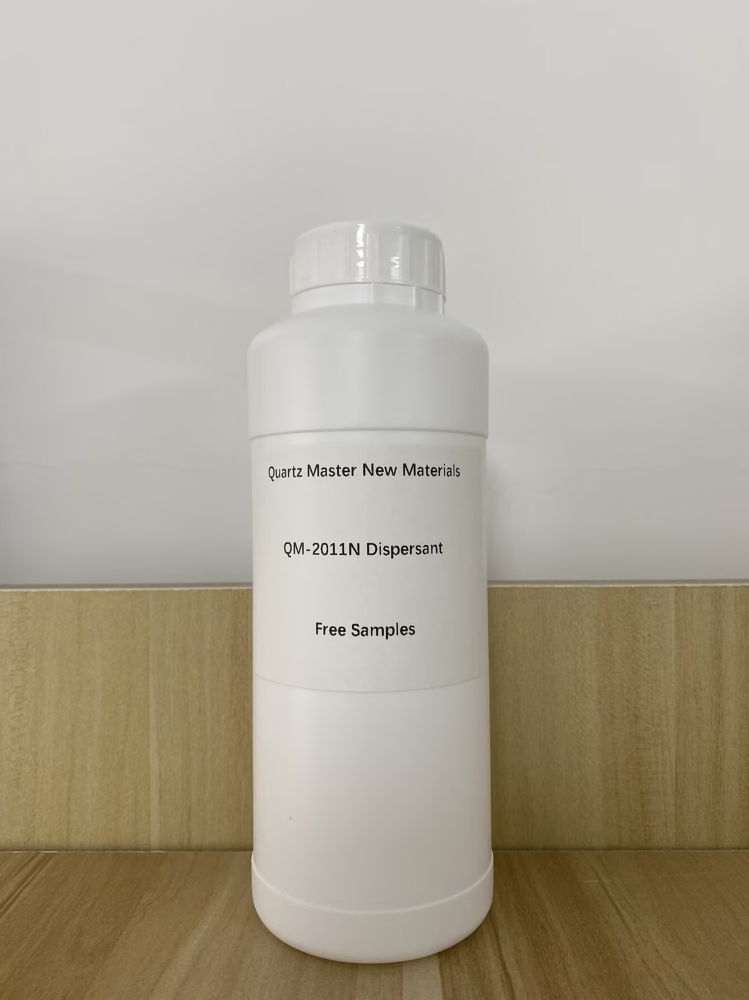
QM-2011N is a polymeric superdispersant containing acidic groups. It possesses not only excellent wetting properties but also outstanding anti-settling capabilities. It exhibits excellent viscosity reduction and dispersion capabilities for inorganic pigments and fillers, especially titanium dioxide. It can be used in grinding high-titanium dioxide content color pastes and provides strong anti-flocculation and anti-reagglomeration properties to the ground color paste, significantly increasing its storage stability. QM-2011N offers a high cost-performance ratio.
Physicochemical Parameters:
Ingredients: Polymer solution containing acidic groups
Appearance: Pale yellow to colorless transparent solution
Active content: 50%
Solvent: Xylene
Acid value: 25~35 mgKOH/g
Product Characteristics:
Suitable for various polar systems, especially effective in medium to high polarity systems, it can significantly improve the wetting and dispersion ability of the base material to pigments and fillers, reduce system viscosity, enhance fluidity, and shorten grinding and dispersion time;
The pigment-attracting group is an acidic compound, so in coil coating systems, it will not react with acid catalysts and affect the performance of the coating;
With a high molecular weight, it possesses excellent wetting properties. Compared to small molecule wetting and dispersing agents, it has superior anti-reagglomeration capabilities;
It offers excellent cost-effectiveness and is suitable for coil coatings and mid-to-low-end application systems.
Application Systems:
Suitable for solvent-based coatings such as two-component polyurethane, alkyd, acrylic, polyester, and amino baking paints.
Recommended Dosage:
Titanium dioxide: 3-4%
Inorganic pigments: 5-10%
Matting agent: 10-20%
Packaging and Storage:
25 kg/drum. The product should be stored in a cool, well-ventilated place. The shelf life is 24 months from the date of manufacture when unopened.
Crystallization may occur at temperatures below 10°C, but this does not affect the product’s performance after heating to a liquid state.