Address
Room 2301C, 23rd Floor, Building 1, jinghu Commercial center, No, 34, Liangzhuang Street, Eri District, Zhengzhou City, Henan province
Work Hours
Monday to Friday: 7AM - 7PM
Weekend: 10AM - 5PM
Address
Room 2301C, 23rd Floor, Building 1, jinghu Commercial center, No, 34, Liangzhuang Street, Eri District, Zhengzhou City, Henan province
Work Hours
Monday to Friday: 7AM - 7PM
Weekend: 10AM - 5PM

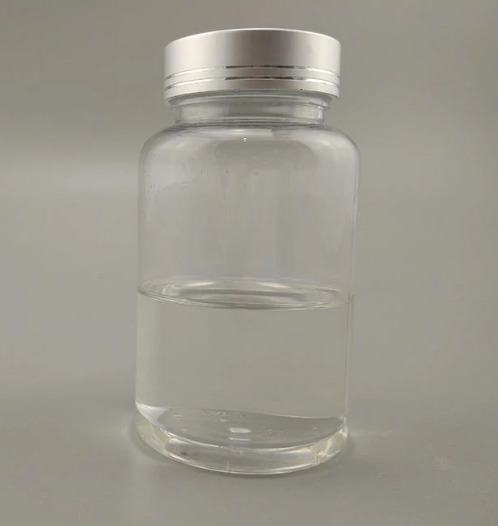
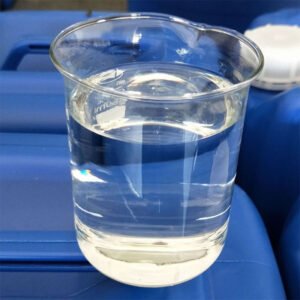
Trimethoxysilane, with the chemical formula HSi(OCH₃)₃, is an important organosilicon intermediate. Its molecular structure contains both active silicon-hydrogen bonds (Si-H) and hydrolyzable methoxy groups (OCH₃), giving it unique reactivity. Industrially, trimethoxysilane is mainly produced by the direct reaction of silicon powder with methanol catalyzed by a copper catalyst, or by the alcoholysis of trichlorosilane.
As a key raw material for the synthesis of silane coupling agents, trimethoxysilane is widely used in the preparation of silane coupling agents with functional groups such as vinyl, epoxy, and methacryloxy, such as KH-560 and KH-570. These products play an important role in interface modification in glass fiber reinforced plastics, coatings, and adhesives. In addition, trimethoxysilane is also used as a primer in electronic packaging materials and in the preparation of aerogels, improving the adhesive strength and hydrophobicity of materials. Due to its flammability and inhalation toxicity, strict safety regulations must be followed during storage and use.
Preparation method
Direct synthesis is currently the main industrial production process, characterized by high atom economy and environmental friendliness. This method uses metallic silicon powder and methanol as raw materials, reacting under high temperature and pressure or gas-phase conditions in the presence of a copper-based catalyst (such as copper powder, cuprous chloride, or copper oxide). The reaction equation is: Si + 3CH₃OH → HSi(OCH₃)₃ + H₂↑. This process is typically carried out in a fixed-bed or fluidized-bed reactor, with yield and selectivity improved by controlling the reaction temperature (approximately 200-260℃), pressure, and methanol flow rate. The reaction products require distillation purification to remove unreacted methanol, the byproduct tetramethoxysilane, and other impurities.
Trimethoxysilanes are key intermediates in the synthesis of various high-performance silane coupling agents. Utilizing their high reactivity through silane-hydrogen bonds, various organic functional groups can be introduced via hydrosilylation reactions. For example, reaction with allyl glycidyl ether can prepare epoxy coupling agents (such as KH-560), used to improve the adhesion of epoxy adhesives, coatings, and composites; reaction with allyl methacrylate can prepare methacryloxy coupling agents (such as KH-570), commonly used in photosensitive resins and UV-curable coatings; reaction with vinyl monomers can prepare vinyl coupling agents, used for crosslinking modification of polyethylene, significantly improving the material’s heat resistance and mechanical strength.
In the field of electronic packaging, trimethoxysilanes and their hydrolysis products can be used as primers. They can undergo condensation reactions with hydroxyl groups on the surface of inorganic substrates (such as aluminum, ceramics, and glass) to form chemical bonds, thereby significantly improving the adhesion between organic packaging materials (such as epoxy molding compounds and potting compounds) and metal leads, preventing delamination and debonding, and ensuring the reliability of electronic components.
Trimethoxysilanes are also used as precursors or modifiers for aerogels. They can be copolymerized with raw materials such as tetraethyl orthosilicate (TEOS) or directly hydrolyzed and condensed. Introducing trimethoxysilanes can introduce methyl groups into the aerogel backbone, thereby improving the hydrophobicity and thermal stability of the aerogel. For example, by adjusting the ratio of trimethoxysilane to solvent, polymethylsilsesquioxane (PMSQ) aerogels with high transparency, low density, and excellent thermal insulation properties can be prepared for thermal management of electronic devices and building insulation.
Technical Specifications:
| CAS | 2487-90-3 |
| Melting point | −115 °C(lit.) |
| Boiling point | 81 °C(lit.) |
| Density | 0.96 g/mL at 25 °C(lit.) |
| Vapor density | >1 (vs air) |
| Vapor pressure | <7.2 mm Hg ( 20 °C) |
| Refractive index | n20/D 1.358(lit.) |
| Storage temp. | Flammables area |
| Specific Gravity | 0.86 |
Package:
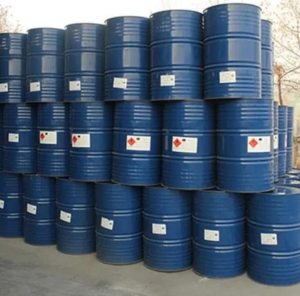
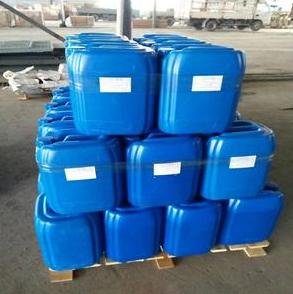
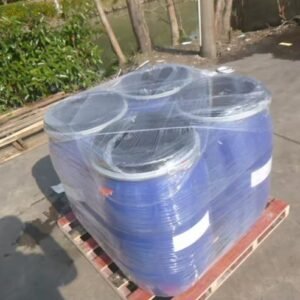
1Kg / 200Kg Bucket
Palletized Shipping
Lead Time: 1-7 Days
Shipping Methods: Sea/Air/Express delivery