Address
Room 2301C, 23rd Floor, Building 1, jinghu Commercial center, No, 34, Liangzhuang Street, Eri District, Zhengzhou City, Henan province
Work Hours
Monday to Friday: 7AM - 7PM
Weekend: 10AM - 5PM
Address
Room 2301C, 23rd Floor, Building 1, jinghu Commercial center, No, 34, Liangzhuang Street, Eri District, Zhengzhou City, Henan province
Work Hours
Monday to Friday: 7AM - 7PM
Weekend: 10AM - 5PM

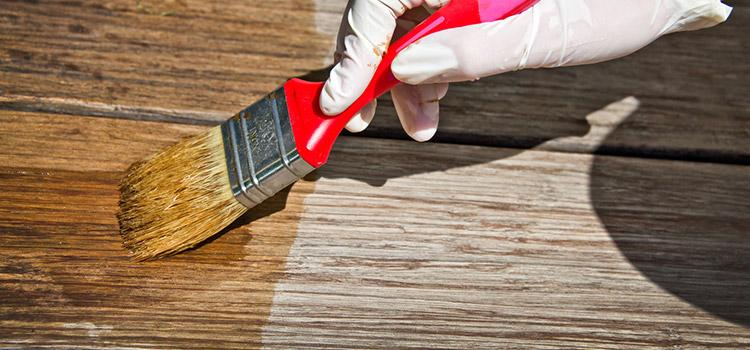
The hiding power of coatings has always been a fundamental requirement and key performance characteristic of coatings, generally measured according to GB/T 1726-1979 (1989), “Determination of Hiding Power of Coatings.” The ability of a colored, opaque coating to evenly cover the underlying surface is called the coating’s hiding power. Darker colors generally have greater hiding power than lighter ones. During coating application, a slight exposure of the underlying surface may occur, often due to insufficient hiding power. Many factors influence a coating’s hiding power, which are detailed below.
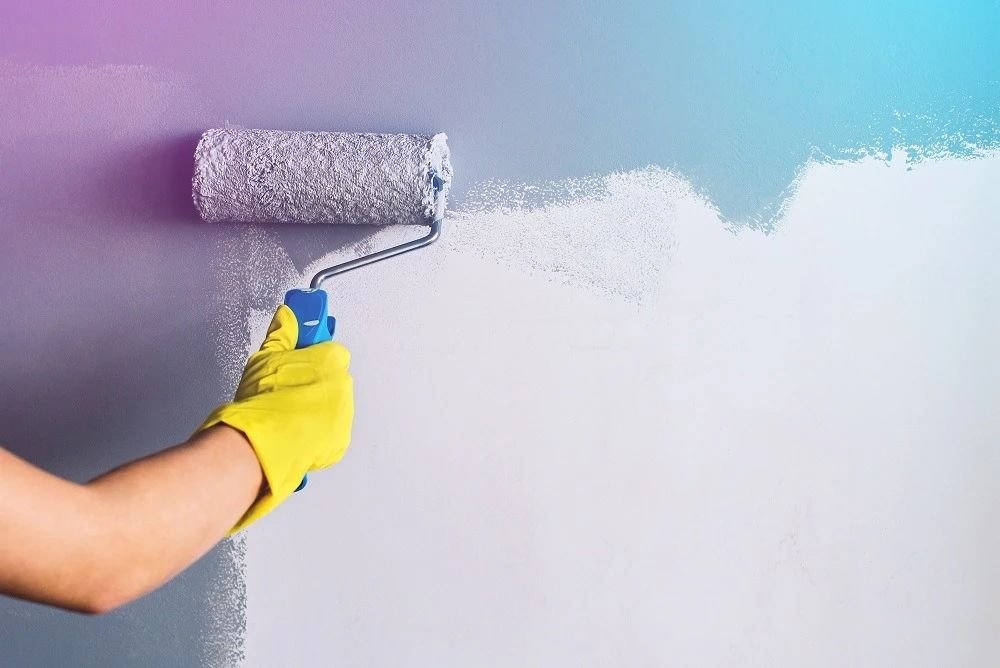
1.Factors affecting the hiding power of coatings
1). Paint Refractive Index
The refractive index also determines the hiding power of a paint, with higher refractive indices providing greater hiding power. If the refractive index of a paint is the same as that of the base, the paint will appear transparent within the film and have no hiding effect. The greater the difference between the refractive index of the paint and the base, the greater the paint’s hiding power.
2). Paint Pigment-to-Binder Ratio
The ratio of pigment to binder in a paint also defines the ratio of film-forming components. Less pigment and more resin result in a smoother film, while more pigment provides better hiding power. However, the difference should be minimal.
3). Coating Light Absorption
The hiding power of a coating also depends on its ability to absorb light incident on it.
4). Paint Formula Design
If insufficient hiding pigment is used during paint formulation, the coating will lack hiding power. Generally speaking, the base resin and pigment are selected based on the paint’s intended use. The solvent is then chosen based on the application requirements and the base. Additives and other additives are then considered to create a preliminary formula. The amount and relative proportions of each component in the paint significantly influence its performance. Even a single incorrectly selected component can lead to poor performance.
5).Coating Crystal Structure
The stronger the coating’s crystal structure, the stronger its hiding power. For example, rutile titanium dioxide and anatase titanium dioxide have different crystal structures and thus different hiding power.
6). Paint Dispersion
All other conditions being equal, a paint’s hiding power depends on its dispersion. The higher the dispersion, the stronger the hiding power. However, this relationship has a limit. When the size of the paint particles becomes equal to half the wavelength of light, the hiding power reaches its limit. Light passes through the particles without being refracted, and the particles appear transparent.
7). Coating Process
Coating film thickness directly affects hiding power. If the coating is too thin, poor hiding power can occur. Excessively thick coatings increase paint usage and coating costs.
The above are factors that affect the hiding power of paint. The following are methods to improve the hiding power.
2.Methods to improve hiding power
Coatings that reach a certain thickness have better leveling properties, are less likely to develop particle problems, and exhibit better physical and mechanical properties.