Address
Room 2301C, 23rd Floor, Building 1, jinghu Commercial center, No, 34, Liangzhuang Street, Eri District, Zhengzhou City, Henan province
Work Hours
Monday to Friday: 7AM - 7PM
Weekend: 10AM - 5PM
Address
Room 2301C, 23rd Floor, Building 1, jinghu Commercial center, No, 34, Liangzhuang Street, Eri District, Zhengzhou City, Henan province
Work Hours
Monday to Friday: 7AM - 7PM
Weekend: 10AM - 5PM

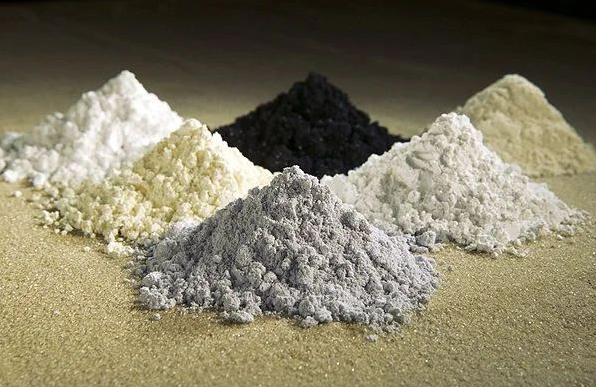
Rare earth elements, known as the “vitamin of industry” and the “mother of new materials,” are core raw materials for modern high-tech, national defense, and new energy. Their unique physical and chemical properties make them indispensable in numerous key industries, making them a focal point in global economic and geopolitical competition.

The importance of rare earths
1.New energy field
Rare earth magnets are widely used in motors, sensors, hard disk drives, and other fields. In electric vehicles, the drive motors require permanent magnets with high magnetic energy products to improve energy efficiency and power density. Wind turbines also rely on magnets for efficient power conversion. Rare earth magnets have become core components in high-end manufacturing, including electric vehicles, wind turbines, and robotics.

2.Defense field
Rare earth permanent magnets have demonstrated exceptional performance in the military industry, with applications in guidance systems, radar, and sonar equipment. The guidance systems of precision-guided weapons require high-performance materials to ensure accuracy and reliability. Coatings, which absorb radar waves, are used in stealth fighters and ships. For example, the radar-absorbing coatings on stealth fighters utilize the unique properties to reduce radar detection.
3.High-end manufacturing field
Ions of rare earth elements such as europium and terbium, when excited by ultraviolet light, can emit visible light of specific wavelengths and are widely used in phosphors, LED lighting, and displays. Elements neodymium and ytterbium are core materials for solid-state lasers and fiber lasers, while lanthanum and cerium are used for semiconductor polishing. Erbium is used for signal amplification in fiber-optic communications, supporting the development of 5G optical transmission networks and fiber-optic communication backbones. For example, phosphors in LED lighting rely on elements for efficient light conversion, while signal amplifiers in fiber-optic communications rely on elements like erbium to ensure stable signal transmission.
In short, rare earths play a key role in new energy, national defense, high-end manufacturing, and other fields. The development and utilization of resources is directly related to national security and the transition to a green economy, and they are irreplaceable strategic resources.

China’s rare earth reserves and production capacity
Resources are widely but unevenly distributed globally. China is the world’s richest country in resources, with approximately 44 million tons of rare earth oxides, accounting for 40% of the global total. Vietnam has approximately 22 million tons (20%), Brazil has approximately 21 million tons (19%), and Russia has approximately 10 million tons (9%). Smaller reserves are also found in India, Australia, and the United States. In my country, light are concentrated in Inner Mongolia and Sichuan, while heavy rare earths such as dysprosium and terbium are found in Jiangxi and Fujian, accounting for over 80% of the world’s reserves.

China is the world’s largest producer of rare earths. By 2023, China’s production reached 210,000 tons, accounting for nearly 70% of global production. Its smelting and separation capacity accounted for 92.3% of the world’s total, demonstrating leading technology. China Group and Northern form a “duopoly” controlling 85% of domestic mining quotas and 90% of smelting capacity. Shenghe Resources is improving resource utilization and supply stability through resource recycling, international cooperation, global expansion, and overseas resource development.
Summary:
Rare earths, as a strategically important resource, play an indispensable role in global economic and technological development. Our country not only holds a dominant position in mining but also possesses a complete industry chain, possessing a comprehensive suite of technologies and production capacity, from ore mining, beneficiation, smelting and separation, to deep processing.
As global demand for continues to grow, China, as a major resource country, must fully leverage its advantages, actively participate in international cooperation, promote the global development of the rare earth industry, maintain its dominant position in international competition, and make greater contributions to national economic security and global scientific and technological progress.