Address
Room 2301C, 23rd Floor, Building 1, jinghu Commercial center, No, 34, Liangzhuang Street, Eri District, Zhengzhou City, Henan province
Work Hours
Monday to Friday: 7AM - 7PM
Weekend: 10AM - 5PM
Address
Room 2301C, 23rd Floor, Building 1, jinghu Commercial center, No, 34, Liangzhuang Street, Eri District, Zhengzhou City, Henan province
Work Hours
Monday to Friday: 7AM - 7PM
Weekend: 10AM - 5PM

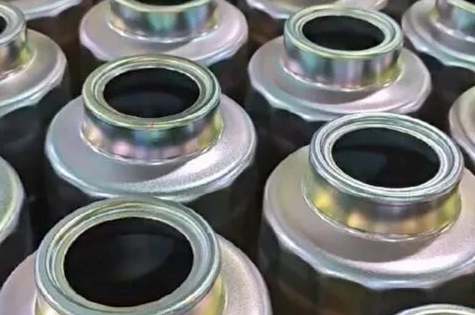
What is Passivation?
Traditional passivation is a process involving the formation of a thin conversion film on a metal surface through the use of an aqueous solution containing chromic acid, chromates, and mineral acids. The chemical reaction between the metal and the solution induces the dissolution of the metal and results in the formation of a protective film on the metal surface, which contains complexed chromium and metal compounds. Chromium-based conversion films can be applied to a wide variety of metals.
Why do galvanized workpieces require passivation treatment?
If a galvanized workpiece is not subjected to passivation treatment and is subsequently stored in a humid, poorly ventilated environment, its surface zinc layer will corrode rapidly. A white substance will appear on the workpiece’s surface—a phenomenon we collectively refer to as “white rust.” This constitutes the most intuitive method for visually identifying, with the naked eye, whether a galvanized component has undergone corrosion.
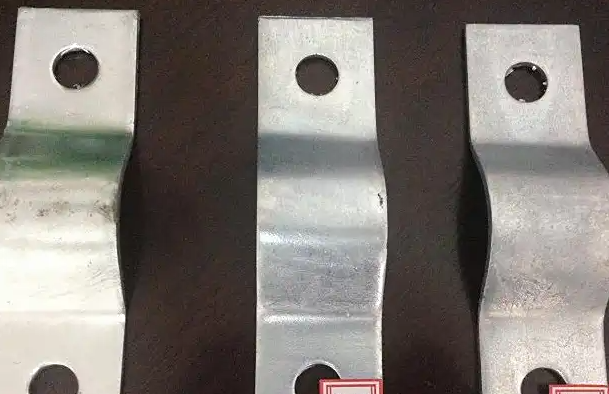
Causes of White Rust Formation: Since zinc is a reactive metal, it reacts with moisture in the air to form zinc hydroxide. Subsequently, the zinc hydroxide further reacts with carbon dioxide to produce a dense, adherent layer of basic zinc carbonate—a corrosion product that forms a protective film on the workpiece surface, thereby offering a certain degree of protection. However, when workpieces are stockpiled in large quantities, the metal surfaces cannot be fully covered by this protective film; this leads to localized electrochemical reactions and the consequent formation of white rust.
Simply put, when workpieces that have not undergone passivation treatment are stored in a humid, poorly ventilated environment, their zinc plating is susceptible to corrosion.
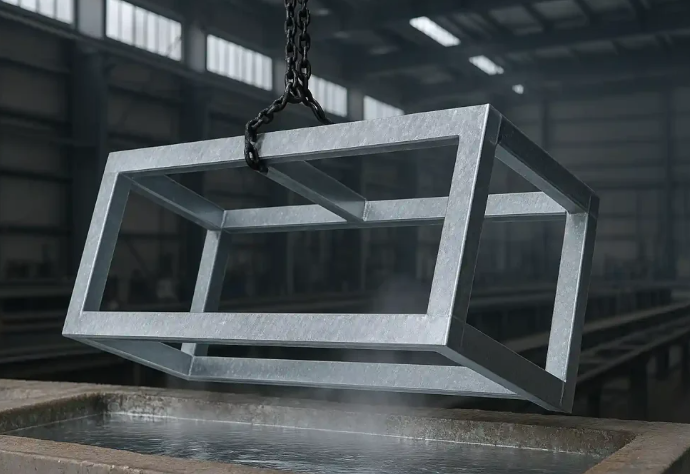
Passivation treatment, a form of chemical conversion coating, operates on the principle of shifting a metal surface from an active state to a passive state, thereby retarding the dissolution of the metal. The actual process of passivation relies on electrochemical reactions occurring at the metal surface. This process involves an anodic dissolution step, during which the metal surface undergoes oxidation; concurrently, an accompanying cathodic process reduces certain ions within the passivating agent, generating lower-valence ions that, together with the metal’s corrosion products, constitute the surface passivation film.
In short, the passivation of galvanized parts serves to protect the zinc plating—and that of its alloys—during storage and transport. Passivating agents are widely utilized to enhance the corrosion resistance of zinc and zinc-alloy coatings on materials such as galvanized steel sheets, structural components, and fasteners.
Why choose a chrome-free passivator?
Since its emergence in the mid-1930s, the passivation process has become the most widely used surface post-treatment method for galvanized products. However, with growing concerns regarding environmental pollution, the use of chromium-based passivation processes has faced increasing restrictions.
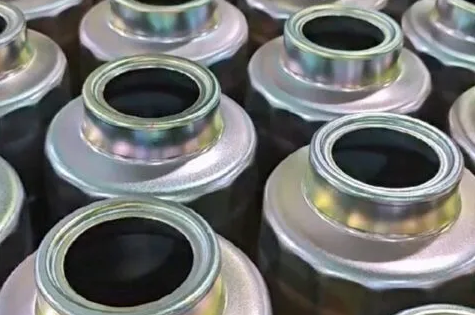
In recent years, the market application of chrome-free passivators has steadily expanded, gradually establishing them as the mainstream product for zinc plating passivation. The reasons for this are twofold: on one hand, compared to chrome-containing passivators, chrome-free alternatives are more environmentally friendly; on the other hand, having undergone years of market validation and technical refinement, chrome-free passivators now fully satisfy customer requirements regarding corrosion resistance, aesthetic appearance, and process compatibility. For the vast number of zinc plating enterprises, chrome-free passivators represent an ideal choice.