Address
Room 2301C, 23rd Floor, Building 1, jinghu Commercial center, No, 34, Liangzhuang Street, Eri District, Zhengzhou City, Henan province
Work Hours
Monday to Friday: 7AM - 7PM
Weekend: 10AM - 5PM
Address
Room 2301C, 23rd Floor, Building 1, jinghu Commercial center, No, 34, Liangzhuang Street, Eri District, Zhengzhou City, Henan province
Work Hours
Monday to Friday: 7AM - 7PM
Weekend: 10AM - 5PM

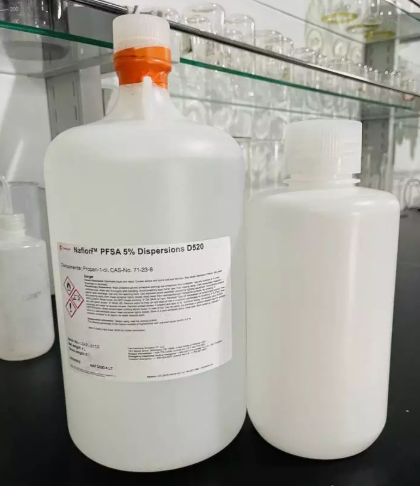
Nafon PFSA dispersion composition and performance parameters (by model)
| Property | D520/D521 | D2020/D2021 |
| Polymer Content (wt%) | 5.0~5.4 | 20.0-22.0 |
| Water Content (wt%) | 45+-3 | 34+-2 |
| VOC Content (wt%) | 50+-3 | 46+-2 |
| 1-Propanol Content (wt%) | 48+-3 | 44+-2 |
| Ethanol Content (wt%) | <4 | <2 |
| Mixed Ethers and Other VOCs | <1 | <1 |
| Specific Gravity | 0.92-0.94 | 1.01-1.03 |
| Available Acid Capacity (meq/g) | >1.00/>0.92 | >1.00/>0.92 |
| Total Acid Capacity (meq/g) | 1.03-1.12/0.95-1.03 | 1.03-1.12/0.95-1.03 |
| Viscosity (cP @ 25°C, 40 sec-1) | 10-40 | 50-500 |
Note: 1 cP = 1 mPa·s; some parameters vary slightly between models, such as the acid capacity of D520 and D521.
Equivalent Mass Introduction
| Equivalent Weight (EW) | Number of -SO3H functional groups per gram of polymer | Properties |
| EW 1000 | High (high acid group density) | Higher proton conductivity, greater water absorption, and greater flexibility |
| EW 1100 | Low (low acid group density) | More stable structure, greater chemical resistance, and less dimensional change |
The “equivalent mass” of Nafion® refers to the mass of the polymer backbone per mole of sulfonic acid functional groups (g/mol).
Summary of comparison of different equivalent masses
| Performance Parameters | EW 1000 | EW 1100 |
| Proton Conductivity | High | Slightly Low |
| Water Absorption | High, prone to expansion | Lower, better dimensional stability |
| Mechanical Strength | Slightly lower, more susceptible to water damage | Stronger, more rigid structure |
| Durability/Chemical Stability | Slightly lower | Excellent, suitable for long-life systems |
| Flexibility | Softer | Stiffer |
| Suitable for applications | High-performance catalytic layers, electrode inks, high-humidity environments | Water electrolysis, sensor membranes, and equipment requiring high stability |
D520 5% 4mg resin/100ul 1000 equivalents
D521 5% 4mg resin/100ul 1100 equivalents
D2020 20% 16mg resin/100ul 1000 equivalents
D2021 20% 16mg resin/100ul 1100 equivalents
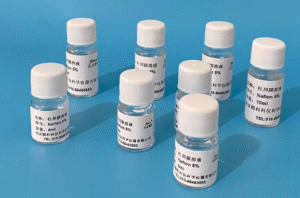
We offer Nafion solutions in a variety of capacities. Small capacities like 2ml, 3ml, and 5ml are suitable for small-scale trials or detailed experiments; medium capacities like 10ml, 15ml, and 25ml are ideal for routine experiments and small-scale applications; and larger capacities like 30ml, 40ml, and 50ml are available for applications with limited volume requirements. Models include D520, D521, D2020, and D2021. Whether you’re conducting scientific research or industrial production, you can find a capacity that meets your needs.
Product Application
| Applications | Recommended EW | Recommended Models | Description |
| Fuel Cell (PEMFC) | EW 1000 | D520/D2020 | High proton conductivity, suitable for catalyst layer binders and membrane preparation. |
| Water Electrolysis System | EW 1100 | D521/D2021 | For applications requiring high dimensional stability and chemical resistance: 1100 EW is recommended. |
| Ion-Selective Membrane/Sensor | EW 1100 | D521/D2021 | Excellent stability, suitable for microstructures or equipment requiring high reproducibility. |
| Supercapacitor Redox Battery | EW 1000 | D520/D2020 | Proton exchange efficiency is critical, so 1000 EW is recommended due to its higher acid group density. |
| Composite Membrane R&D | As needed | All models | Adjustable polymer concentration/viscosity, suitable for coating and layering in various material systems. |
Storage and Packaging Information
Storage Temperature: 0°C to 32°C (Do Not Freeze)
Storage Environment: Dry, away from light. A constant-temperature storage cabinet is recommended.
Recommended Containers: Glass bottles, plastic barrels, stainless steel containers
Precautions: Stir thoroughly before use to ensure uniform mixing.
Packaging Size: 1ml/bottle – 20L/bottle
Safe Handling Instructions:
Nafion dispersions contain flammable solvents (such as propanol and ethanol). Ensure adequate ventilation and prevent static electricity buildup when handling.
It is recommended to wear gloves and goggles to avoid prolonged skin contact.
Do not use for medical purposes, such as permanent implants in the human body.
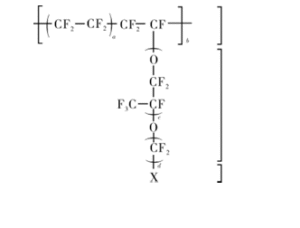
Perfluorosulfonic acid resin (Nafion-H) is the strongest known solid superacid. Its EW value (ion exchange equivalent) often reflects its performance, making it a commonly used solid acid catalyst. Its solutions also have good catalytic activity and selectivity for many reactions. Perfluorosulfonic acid resin can also be prepared into membranes. The well-known DuPont perfluorosulfonic acid ion exchange membrane is prepared by the melt extrusion casting method.
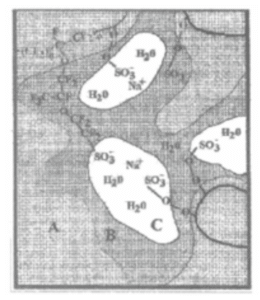
Preparation of Nafion solution
Due to the special properties of Nafion polymer, its solubility in water is very low (even very fine powder is difficult to dissolve), so it requires the addition of an organic solvent and a certain temperature to dissolve and form a stable solution. The method is usually to add perfluorosulfonic acid resin (Nafion resin) in small portions to a mixture of water and alcohol at 60°C, and then stir it to dissolve into a stable solution.
General Applications of Nafion Solutions
Nafion solutions are primarily used in the preparation of fuel cell electrodes, proton exchange membranes, electrolyte membranes, catalyst coating membranes, membrane surface hydrophilic treatments, and binders for electrochemical sensor electrode catalysts. Nafion polymers possess unique fluoride ion exchange properties, making them suitable for use as electrolytes to enhance the efficiency of electrochemical reactions.
Perfluorosulfonic acid resin solutions can be used with metal oxides to form composite membranes, a popular research application. These membranes can further promote the development of chemically stable proton exchange membrane (PEM) fuel cells.
Applying them to the surfaces of various electrode films for modification is also a common research application. For example, they can alter the hydrophobicity of PTFE membranes and improve the detection performance and sensitivity of surface markers on biosensor electrodes.
High-concentration Nafion solutions possess a certain viscosity and good electrical conductivity, making them suitable for bonding many electrode catalytic materials.