Address
Room 2301C, 23rd Floor, Building 1, jinghu Commercial center, No, 34, Liangzhuang Street, Eri District, Zhengzhou City, Henan province
Work Hours
Monday to Friday: 7AM - 7PM
Weekend: 10AM - 5PM
Address
Room 2301C, 23rd Floor, Building 1, jinghu Commercial center, No, 34, Liangzhuang Street, Eri District, Zhengzhou City, Henan province
Work Hours
Monday to Friday: 7AM - 7PM
Weekend: 10AM - 5PM

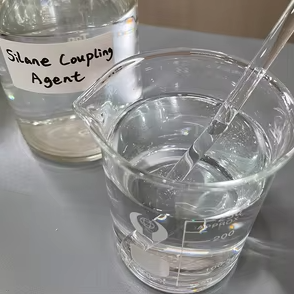
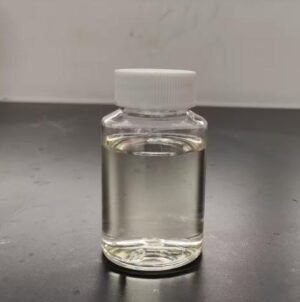
Chloropropyltriethoxysilane—chemically known as 3-chloropropyltriethoxysilane—is a vital organosilicon intermediate. This substance typically appears as a colorless to pale yellow transparent liquid characterized by a distinctive odor. Its molecular structure incorporates both readily hydrolyzable ethoxy groups and chemically reactive chloropropyl groups; this dual functionality endows it with affinity for both inorganic and organic materials, enabling it to serve as a “bridge” between inorganic substrates and organic polymer matrices.
Industrially, chloropropyltriethoxysilane is primarily synthesized via the hydrosilylation reaction between trichlorosilane and allyl chloride. It serves as a key raw material for the synthesis of various high-performance silane coupling agents—such as Si-69, a rubber additive widely utilized in the tire industry. It finds extensive application across diverse sectors, including rubber, plastics, coatings, adhesives, and composite materials, where it is primarily employed to enhance the interfacial adhesion between inorganic fillers and organic resins, thereby significantly improving the mechanical strength, weather resistance, and service life of the final products.
Comparable Products:
Dow Corning Z-6376
Evonik: CPETO
Shinetsu: KBE-703
Chloropropyltriethoxysilane serves as a crucial modifying additive in the rubber and plastics industries. In the rubber industry, it acts as a key raw material for the synthesis of bis-[3-(triethoxysilyl)propyl] tetrasulfide (Si-69). As a highly efficient coupling agent, Si-69 significantly enhances the bonding strength between inorganic fillers—particularly precipitated silica—and rubber molecules. Consequently, it substantially improves the abrasion resistance, tear strength, and aging resistance of rubber products such as tires, hoses, and conveyor belts, thereby extending their service life. In the fields of plastics and composite materials, it is utilized to treat inorganic fillers—such as glass fibers and calcium carbonate—improving their dispersibility and compatibility within resin matrices like epoxy, polyester, and polyurethane. This, in turn, boosts the mechanical strength, heat resistance, and water resistance of the resulting composite materials.
As a versatile organosilicon intermediate, chloropropyltriethoxysilane also finds extensive application in the fine chemical industry. It can be further synthesized into a variety of high-performance silane coupling agents—such as γ-aminopropyltriethoxysilane (KH-550)—which are used to enhance the adhesion and corrosion resistance of coatings applied to metal surfaces. Furthermore, it can be employed in the synthesis of organosilicon compounds containing quaternary ammonium cations; these compounds serve as finishing agents for textiles, offering excellent mildew-proofing, deodorizing, and antistatic properties. In the realms of microelectronics and optics, it also functions as a precursor for the synthesis of silicon dioxide (SiO₂), utilized in the production of optical glass, optical fibers, and coatings for semiconductor materials.
Technical Specifications:
|
Items
|
Specifications
|
|
Appearance
|
Colorless liquid
|
|
Purity
|
≥98%
|
|
Color(Co-Pt)
|
≤20
|
|
Water
|
≤0.5%
|
Package:
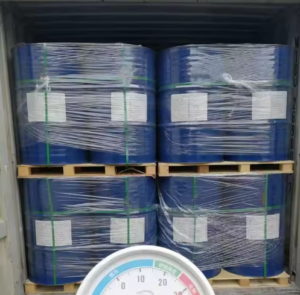
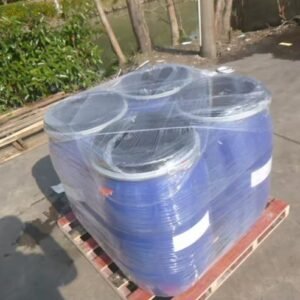
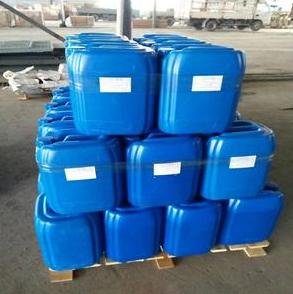
1kg / 200kg bucket
Palletized Shipping
Lead Time: 1-7 Days
Shipping Methods: Sea/Air/Express delivery