Address
Room 2301C, 23rd Floor, Building 1, jinghu Commercial center, No, 34, Liangzhuang Street, Eri District, Zhengzhou City, Henan province
Work Hours
Monday to Friday: 7AM - 7PM
Weekend: 10AM - 5PM
Address
Room 2301C, 23rd Floor, Building 1, jinghu Commercial center, No, 34, Liangzhuang Street, Eri District, Zhengzhou City, Henan province
Work Hours
Monday to Friday: 7AM - 7PM
Weekend: 10AM - 5PM

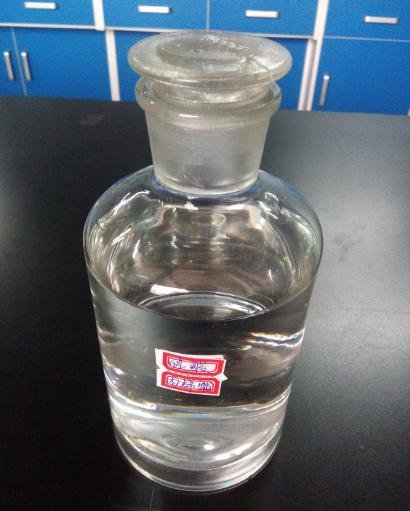
Propylene carbonate (PC), with the chemical formula C₄H₆O₃, is a colorless, odorless, flammable, polar organic solvent. It possesses a high dielectric constant and solubility, is miscible with water and many organic solvents, and exhibits extremely high solubility for carbon dioxide. As an important fine chemical product, propylene carbonate is widely used in lithium battery electrolytes, gas separation, organic synthesis, and textile printing and dyeing. Industrially, its main preparation method involves the cycloaddition reaction of propylene oxide with carbon dioxide, a process consistent with green chemistry principles. Although propylene carbonate is a low-toxicity chemical, its potential irritation to skin and eyes should still be considered during use, and appropriate safety precautions should be taken.
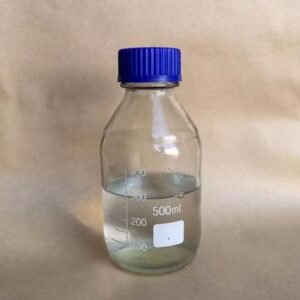
Propylene carbonate is an important cyclic carbonate solvent in lithium-ion battery electrolytes. It possesses a high dielectric constant, effectively dissolves lithium salts (such as LiPF₆), and provides high ionic conductivity. Although propylene carbonate has poor compatibility with graphite anodes and is prone to co-intercalation, it still has wide applications in sodium-ion batteries, low-temperature electrolytes, and supercapacitors. Furthermore, its performance in graphite batteries can be improved by adding specific film-forming additives.
Propylene carbonate is an excellent physical absorbent, widely used in the separation and purification of natural gas, synthetic ammonia feedstock gas, and carbon dioxide. It has high solubility for carbon dioxide and hydrogen sulfide, but low solubility for inert gases such as hydrogen and nitrogen. This process is simple to operate, has low energy consumption, and minimal solvent loss, making it particularly suitable for handling high-pressure, high-carbon dioxide-content gases.
As a highly polar solvent, propylene carbonate is used as a reaction medium in organic synthesis, possessing advantages such as strong solubility, high boiling point, and low volatility. It can replace traditional toxic solvents such as halogenated hydrocarbons and benzene in the production of coatings, inks, adhesives, and cleaning agents. In the textile printing and dyeing industry, it helps improve the solubility and dispersibility of dyes.
Propylene carbonate is an important intermediate in the synthesis of high molecular weight materials such as dimethyl carbonate and polycarbonate. Through transesterification, it can be converted into dimethyl carbonate, an important green chemical raw material. In addition, it can also be used as a spinning solvent, an oily solvent, and an extractant for olefins and aromatics.
Technical Specifications:
| Test Description | Unit of Measure | Specification | Test Result |
| Appearance | Colorless or light yellow liquid | pass | |
| Content | weight % | ≥99.70 | 99.75 |
| Moisture | weight % | ≤0.05 | 0.01 |
| Color, Pt-Co | APHA Color | ≤10 | 5 |
| Specific gravity 20℃ | g/cm3 | 1.20±0.005 | 1.205 |
Package:
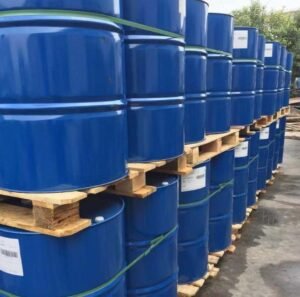
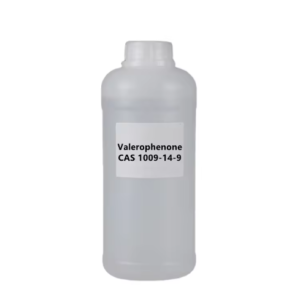
1kg / 200kg Bucket
Palletized Shipping
Lead Time: 1-7 Days
Shipping Methods: Sea/Air/Express delivery