Address
Room 2301C, 23rd Floor, Building 1, jinghu Commercial center, No, 34, Liangzhuang Street, Eri District, Zhengzhou City, Henan province
Work Hours
Monday to Friday: 7AM - 7PM
Weekend: 10AM - 5PM
Address
Room 2301C, 23rd Floor, Building 1, jinghu Commercial center, No, 34, Liangzhuang Street, Eri District, Zhengzhou City, Henan province
Work Hours
Monday to Friday: 7AM - 7PM
Weekend: 10AM - 5PM

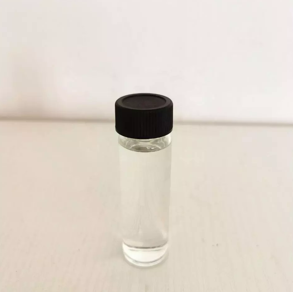
Isobutyltriethoxysilane (chemical formula: (CH₃)₂CHCH₂Si(OC₂H₅)₃) is an organosilicon compound. As a small-molecule organosilane, it possesses excellent penetrative capabilities, allowing it to permeate the capillary pores of concrete and chemically react with the substrate to form a dense, continuous, and hydrophobic protective layer. Acting like an invisible protective film, this layer effectively prevents the ingress of moisture, chloride ions, and other corrosive agents into the concrete structure, thereby significantly enhancing the concrete’s durability and service life.
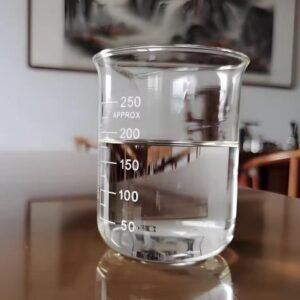
At room temperature, it is a colorless, transparent liquid that exhibits a distinctive “lotus leaf effect,” causing water droplets to bead up and roll off the surface rather than penetrating it. This substance is widely used to protect concrete structures exposed to harsh environments—such as seaport terminals, cross-sea bridges, and highways—making it a crucial material for ensuring infrastructure safety.
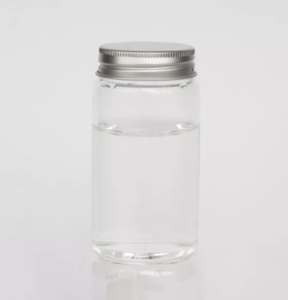
Concrete surfaces treated with isobutyltriethoxysilane exhibit extremely low surface tension and a “lotus effect,” causing water droplets to roll off and effectively blocking the ingress of corrosive agents such as liquid water, chloride ions, and carbon dioxide. It significantly reduces water absorption—by over 90%—and drastically lowers chloride ion uptake, thereby effectively preventing rebar corrosion and concrete carbonation.
Treated concrete surfaces retain their original breathability, allowing internal moisture and gases to escape and preventing blistering or spalling caused by moisture accumulation. The treatment does not alter the concrete’s appearance or color and offers excellent resistance to weathering, UV radiation, and chemical corrosion, maintaining stability over the long term in harsh environments such as marine atmospheres, salt spray, and areas exposed to de-icing agents. Additionally, it is highly compatible with most construction materials.
In harbor and bridge engineering, it is used on structures such as port terminals and cross-sea or cross-river bridges to protect concrete from seawater and salt spray erosion.
In highway engineering, it is applied to concrete pavements, guardrails, and curbs to withstand rainwater erosion and corrosion from de-icing salts.
It is also utilized in hydraulic and building construction—including dams, aqueducts, canals, basements, parking garage floors, and exposed concrete structures—to prevent water seepage, freeze-thaw damage, and rebar corrosion. In industrial facilities such as sewage treatment plants, landfills, and power plants, it effectively protects against chemical corrosion.
Technical Specifications:
| Index | Result |
| Appearance | Colorless clear liquid |
| Content,wt% | ≥99.0 |
| Molecular Weight | 220.38 |
Package:
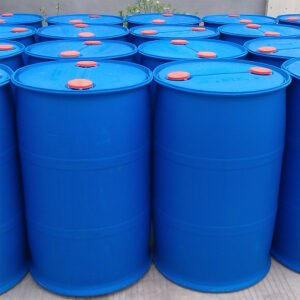
1Kg / 200Kg Bucket
Palletized Shipping
Lead Time: 1-7 Days
Shipping Methods: Sea/Air/Express delivery