Address
Room 2301C, 23rd Floor, Building 1, jinghu Commercial center, No, 34, Liangzhuang Street, Eri District, Zhengzhou City, Henan province
Work Hours
Monday to Friday: 7AM - 7PM
Weekend: 10AM - 5PM
Address
Room 2301C, 23rd Floor, Building 1, jinghu Commercial center, No, 34, Liangzhuang Street, Eri District, Zhengzhou City, Henan province
Work Hours
Monday to Friday: 7AM - 7PM
Weekend: 10AM - 5PM

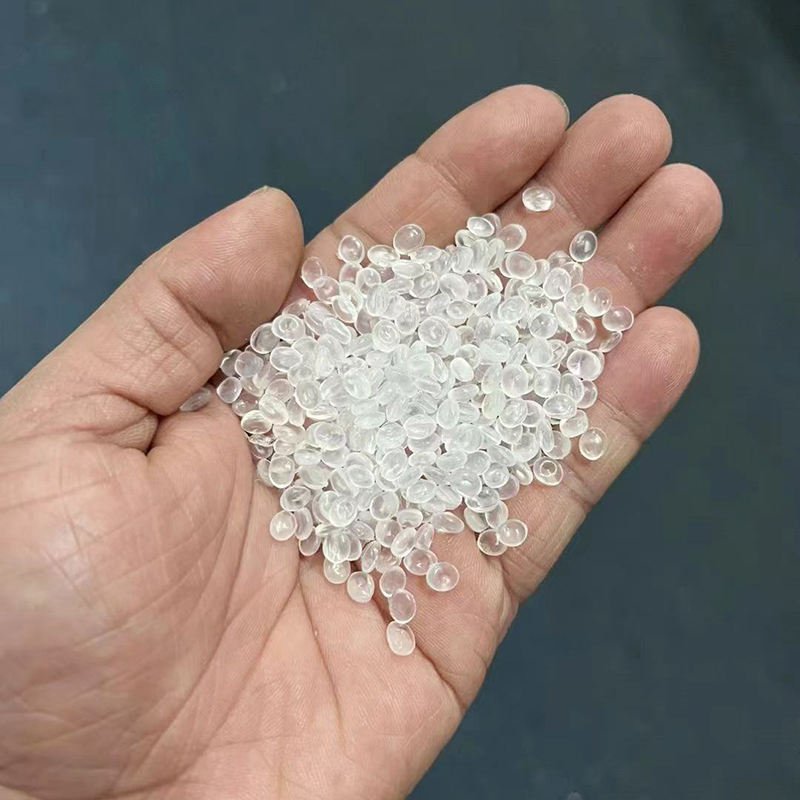
When the vinyl acetate content in ethylene-vinyl acetate copolymer is below 20%, it can be used as a plastic. EVA has excellent low-temperature resistance, with a relatively low thermal decomposition temperature of approximately 230℃. As the molecular weight increases, the softening point of EVA rises, processability and surface gloss of molded parts decrease, but strength increases, and impact toughness and resistance to environmental stress cracking improve. EVA’s chemical resistance and oil resistance are slightly inferior to PE and PVC, and this change becomes more pronounced with increasing vinyl acetate content.
EVA’s performance improvements over PE are mainly in elasticity, flexibility, gloss, and air permeability. Additionally, its resistance to environmental stress cracking is improved, and its compatibility with fillers is increased. Adding more reinforcing fillers can help avoid or reduce the decrease in EVA’s mechanical properties compared to PE. EVA can also be modified for new applications. Modification can be considered from two main aspects: first, using EVA as the main graft for other monomers; second, partially alcoholyzing EVA.
EVA resin is an ethylene-vinyl acetate copolymer, typically containing 5%–40% vinyl acetate (VA). Compared to polyethylene, EVA, due to the introduction of vinyl acetate monomers into its molecular chain, exhibits reduced crystallinity and improved flexibility, impact resistance, filler compatibility, and heat-sealing properties. It is widely used in foamed shoe materials, functional greenhouse films, packaging films, hot melt adhesives, wires and cables, and toys. Generally, the performance of EVA resin depends primarily on the vinyl acetate content in its molecular chain.
Shoe materials are the most significant application area for EVA resin in my country. In EVA resin used in shoe materials, the vinyl acetate content is typically 15%–22%. Because EVA resin blends and foams possess properties such as softness, good elasticity, and chemical resistance, they are widely used in the soles and lining materials of mid-to-high-end hiking shoes, mountaineering shoes, slippers, and sandals. Additionally, this material is used in sound insulation panels, gymnastics mats, and sealing materials.
The main use of EVA film is in the production of functional greenhouse films. Functional greenhouse films possess high weather resistance, anti-fogging properties, and heat insulation. Because polyethylene is non-polar, even with the addition of a certain amount of anti-fogging agent, its anti-fogging performance only lasts for about two months. However, greenhouse films made with the addition of a certain amount of EVA resin not only have higher light transmittance but also significantly improved anti-fogging performance, generally exceeding four months. In addition, EVA can also be used to produce packaging films, medical films, laminated films, and casting films.
With the continuous development of computer and network engineering, and for reasons of computer room security, halogen-free flame-retardant cables and silane cross-linked cables are increasingly used. Due to the good filler compatibility and cross-linking properties of EVA resin, it is widely used in halogen-free flame-retardant cables, semiconductor shielded cables, and two-step silane cross-linked cables. Furthermore, EVA resin is also used to make the sheaths of some special cables. The vinyl acetate content of EVA resin used in wires and cables is generally between 12% and 24%.
EVA emulsion is short for vinyl acetate-ethylene copolymer emulsion. It is a polymer emulsion made by copolymerizing vinyl acetate and ethylene monomers with other auxiliary materials through emulsion polymerization. EVA emulsion has permanent flexibility. EVA emulsion can be regarded as an internally plasticized product of polyvinyl acetate emulsion. Because it introduces ethylene molecular chains into the polyvinyl acetate molecule, it causes discontinuity of acetyl groups, increases the rotational freedom of the polymer chain, reduces steric hindrance, makes the polymer backbone more flexible, and prevents plasticizer migration, thus ensuring the permanent flexibility of the product.
Technical Specifications:
| Basis | EVA |
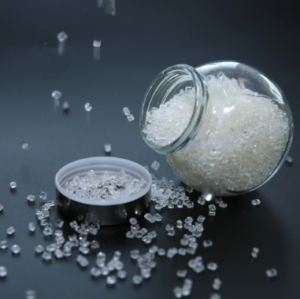
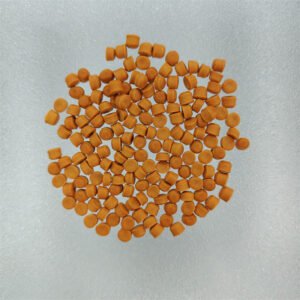
| Appearance | Light yellow translucent pellets |
| Viscosity at 200℃ | 27500mPa·s |
| Softening point | 95℃ |
| Processing temp.: | 160-200℃ |
| Feed speed: | 5-24m/min |
Package:
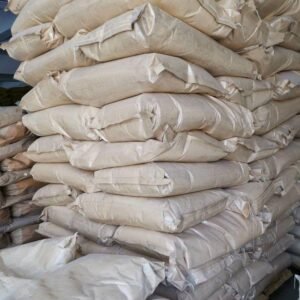
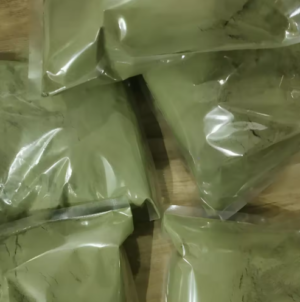
1g / 25g Bag
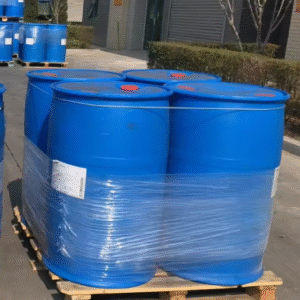
Palletized Shipping
Lead Time: 1-7 Days
Shipping Methods: Sea/Air/Express delivery