Address
Room 2301C, 23rd Floor, Building 1, jinghu Commercial center, No, 34, Liangzhuang Street, Eri District, Zhengzhou City, Henan province
Work Hours
Monday to Friday: 7AM - 7PM
Weekend: 10AM - 5PM
Address
Room 2301C, 23rd Floor, Building 1, jinghu Commercial center, No, 34, Liangzhuang Street, Eri District, Zhengzhou City, Henan province
Work Hours
Monday to Friday: 7AM - 7PM
Weekend: 10AM - 5PM

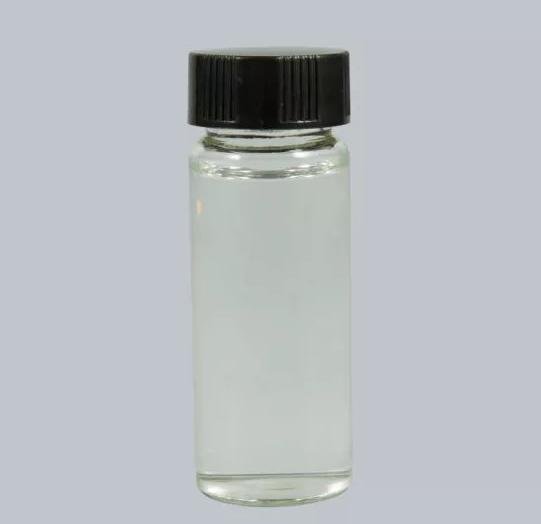
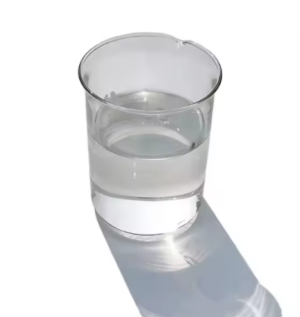
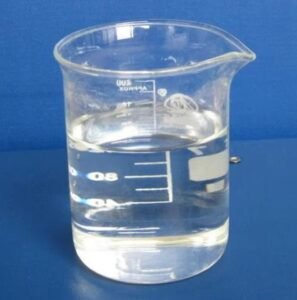
Dimethyl sulfoxide (DMSO) is a sulfur-containing organic compound that is a colorless, odorless, transparent, oily liquid at room temperature and has extremely strong hygroscopic properties. As an aprotic polar solvent, it is miscible with water, ethanol, acetone, and many other organic solvents, as well as many inorganic substances, in any proportion, thus earning it the nickname “universal solvent” in the chemical industry.
This substance was first synthesized by the Russian chemist Alexander Zaytsev in 1866. From the 1950s onwards, with its discoveries in areas such as cryopreservation of cells and organs, and anti-inflammatory and analgesic applications, DMSO gradually entered the scientific and medical communities, and was once hailed as a “panacea.” Although its large-scale application in the pharmaceutical field has been limited due to potential ocular toxicity and safety concerns, it still plays an irreplaceable and important role in industrial solvents, synthetic fibers, electronic cleaning, and biological laboratories (such as cell cryopreservation and PCR reactions).
In the pharmaceutical field, DMSO is primarily used as a drug carrier and transdermal absorption enhancer. It significantly improves drug absorption through the skin or mucous membranes and is commonly used in topical formulations to help drugs penetrate the affected area more effectively. In biological laboratories, DMSO is an indispensable cell cryoprotectant. During cell cryopreservation, it lowers the freezing point, reduces ice crystal formation, and maintains osmotic pressure balance inside and outside the cell, thus protecting cells from low-temperature damage. It is widely used for the preservation of stem cells, immune cells, and various biological samples. Furthermore, it is frequently used as a co-solvent in PCR reactions to reduce the secondary structure of the DNA template, improving amplification efficiency and specificity.
DMSO is also an important solvent in petrochemical, synthetic fiber, and organic synthesis industries. In acrylic fiber production, it is used as a polymerization and spinning solvent, simplifying the process and improving fiber quality. In aromatic hydrocarbon extraction, its high selectivity for separating aromatic hydrocarbons offers advantages such as low extraction temperature and non-corrosiveness. In organic synthesis reactions, it often participates in the reaction as a reaction medium or reagent. For example, the well-known Swern oxidation reaction uses DMSO as an oxidant to convert alcohols into ketones.
Due to its low freezing point, DMSO is often used as an antifreeze, widely applied in automotive antifreeze, brake fluid, and the cryopreservation of blood and organs. In the electronics industry, it is used to clean integrated circuits and optical glass, effectively removing oil and flux residues without corroding precision components. In agriculture, it can be used as a penetrant and synergist for pesticides, improving their absorption efficiency.
Technical Specifications:
| Parameter | Specification |
| Appearance | Colorless Transparent Liquid |
| Purity | ≥99.9% |
| Crystallization Point | ≥18.20°C |
| Acid Value (as KOH) | ≤0.03 |
| Transmittance (400 nm) | ≥96.0% |
| Refractive Index (20°C) | 1.4778–1.4790 |
| Water Content | ≤0.05% |
| Color (APHA) | ≤10 |
| pH | 6–8 |
Package:
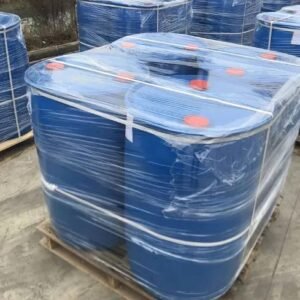
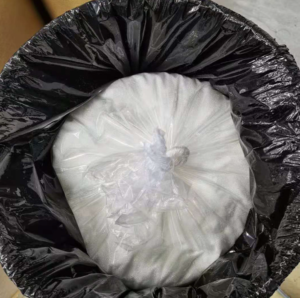
1kg / 200kg Bucket
Palletized Shipping
Lead Time: 1-7 Days
Shipping Methods: Sea/Air/Express delivery