Address
Room 2301C, 23rd Floor, Building 1, jinghu Commercial center, No, 34, Liangzhuang Street, Eri District, Zhengzhou City, Henan province
Work Hours
Monday to Friday: 7AM - 7PM
Weekend: 10AM - 5PM
Address
Room 2301C, 23rd Floor, Building 1, jinghu Commercial center, No, 34, Liangzhuang Street, Eri District, Zhengzhou City, Henan province
Work Hours
Monday to Friday: 7AM - 7PM
Weekend: 10AM - 5PM

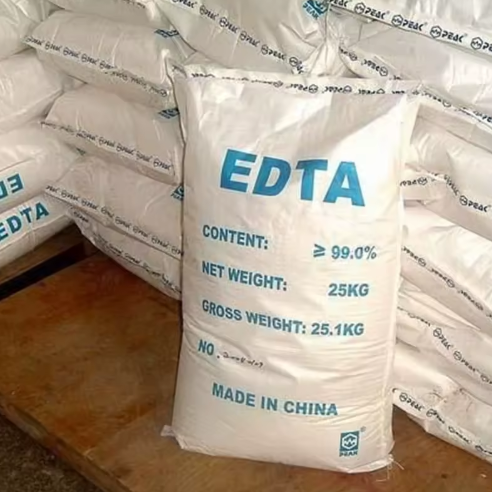
EDTA is a crucial complexing agent and a quintessential example of a chelating agent; it is capable of forming stable, water-soluble complexes with alkali metals, rare earth elements, and transition metals. As an organic compound with limited solubility in water, EDTA is frequently stored and utilized in the form of its disodium salt.
In addition to the sodium salt, various other salts—including ammonium salts as well as salts of iron, magnesium, calcium, copper, manganese, zinc, cobalt, and aluminum—are available, each serving distinct purposes. Furthermore, EDTA can be employed to facilitate the rapid excretion of harmful radioactive metals from the human body, thereby acting as a detoxifying agent; it also serves as a water treatment agent.
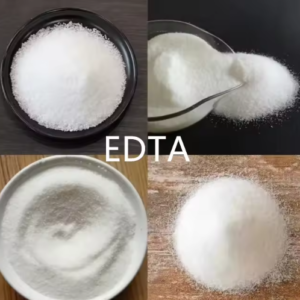
Among the salts of ethylenediaminetetraacetic acid (EDTA), the disodium salt is of the greatest importance. It serves as a key complexing agent.
It is utilized in solutions for electroless copper plating, gold plating, and lead-tin alloy plating, as well as for the electrochemical polishing of steel components and the pre-treatment of copper parts prior to silver plating; in these applications, EDTA-Na may also be used as a substitute.
Furthermore, it finds application in detergents, liquid soaps, shampoos, agricultural chemical sprays, bleaching and fixing solutions for the processing of color photographic materials, water purification agents, pH regulators, anticoagulants, and similar products.
In the redox initiation systems employed for the polymerization of styrene-butadiene rubber (SBR), EDTA disodium salt functions as a constituent of the activator; its primary role is to complex ferrous ions, thereby controlling the rate of the polymerization reaction.
Technical Specifications:
| Test items | Standard indicators | Test results | |||
| Assay % | 99.0 Min | 99.2 | |||
| Chloride (Cl)% | 0.01 Max | 0.003 | |||
| Sulfate(SO4)Content% | 0.05 Max | 0.01 | |||
| Iron (Fe )% | 0.001 Max | 0.0001 | |||
| Lead(Pb)% | 0.001 Max | Not Found | |||
| PH (50g/L,25ºC) solution |
4.0-5.0 | 4.36 | |||
| mgcaco3/g Chelating value | 265 Min | 266 | |||
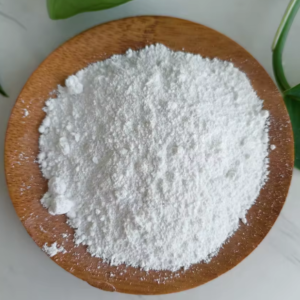
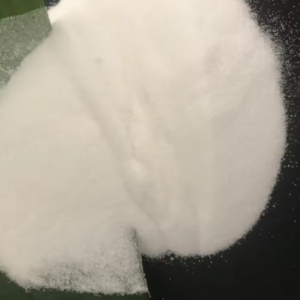
| Appearance | White crystalline powder | White crystalline powder | |||
| Conclusions | QUALIFIED | QUALIFIED | |||
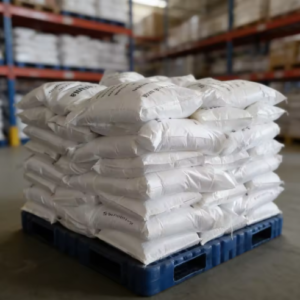
Package:
1kg / 25kg Plastic bag
Palletized Shipping
Lead Time: 1-7 Days
Shipping Methods: Sea/Air/Express delivery