Address
Room 2301C, 23rd Floor, Building 1, jinghu Commercial center, No, 34, Liangzhuang Street, Eri District, Zhengzhou City, Henan province
Work Hours
Monday to Friday: 7AM - 7PM
Weekend: 10AM - 5PM
Address
Room 2301C, 23rd Floor, Building 1, jinghu Commercial center, No, 34, Liangzhuang Street, Eri District, Zhengzhou City, Henan province
Work Hours
Monday to Friday: 7AM - 7PM
Weekend: 10AM - 5PM

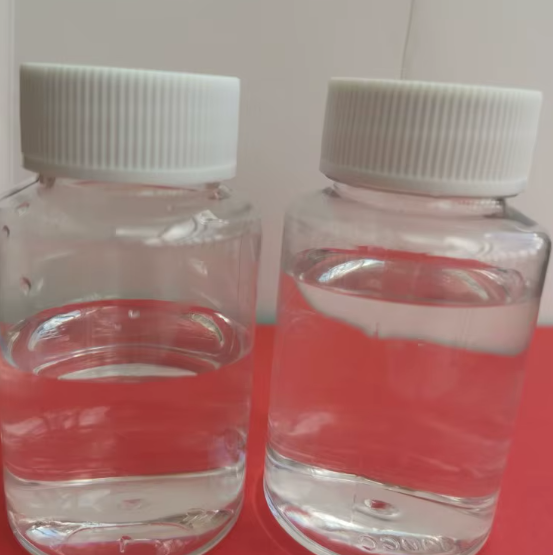
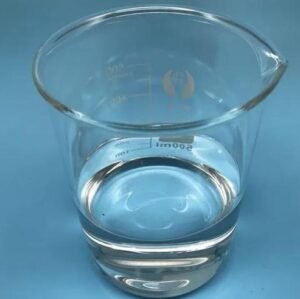
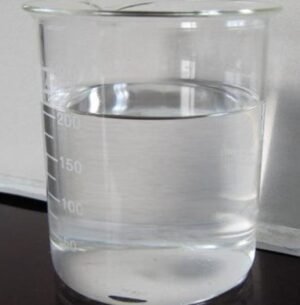
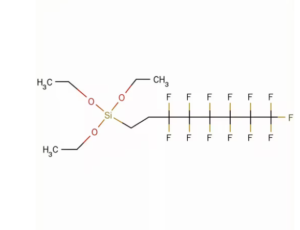
Tridecafluorooctyltriethoxysilane (1H,1H,2H,2H-Perfluorooctyltriethoxysilane) is an organosilicon compound belonging to the bifunctional silane coupling agent family. Its molecular structure simultaneously contains a hydrolyzable ethoxysilane group and a long perfluorooctyl chain, a unique structure that combines the bonding properties of inorganic materials with the low surface energy of organofluorine materials. This substance is a colorless, transparent liquid at room temperature, miscible with many organic solvents, and widely used in the surface modification of materials such as glass, ceramics, and metals.
As a highly efficient surfactant and coupling agent, tridecafluorooctyltriethoxysilane can chemically react with the hydroxyl groups on the substrate surface to form strong chemical bonds. The monolayer or multilayer films formed on the material surface have extremely low surface free energy, significantly improving the material’s hydrophobic, oleophobic, antifouling, anti-stick, and weather-resistant properties. Therefore, it is widely used in automotive glass antifogging, textile waterproofing and oil-repellent finishing, cultural relic preservation, and electronic packaging materials. However, because it belongs to the perfluoroalkyl and polyfluoroalkyl substances (PFAS) family, it is environmentally persistent and bioaccumulative, and has been subject to increasingly stringent environmental regulations worldwide in recent years.
Comparable Products:
Evonik: F8261
Function
Glass and Ceramics: Surface treatment for automotive glass, architectural glass, mobile phone screens, and camera lenses. The treated surface exhibits excellent hydrophobicity and self-cleaning properties, effectively preventing condensation, oil adhesion, and fingerprints, without affecting the optical transmittance of the substrate.
Stone and Concrete: Waterproofing and stain protection for marble, granite, ceramic tiles, and concrete products. This coating penetrates to a certain depth into the substrate, forming a protective layer to prevent weathering, efflorescence, and freeze-thaw damage caused by rainwater penetration, extending the material’s lifespan.
Metal Corrosion Protection: Anti-oxidation and anti-corrosion treatment for metal surfaces such as copper, iron, and aluminum. Perfluorosilane films isolate metals from air and moisture, effectively inhibiting rust.
Electronic Encapsulation: As an adhesion promoter, used for interfacial bonding between fluoropolymers and inorganic materials (such as glass and metals). It significantly improves the adhesive strength and reliability of encapsulation materials, preventing delamination and detachment.
Optical Coatings: Used to prepare anti-reflective or anti-glare coatings. The low refractive index of perfluorosilanes helps reduce light reflection loss, improving the transmittance and lifespan of optical components.
In the textile industry, they are used for finishing natural fibers (cotton, linen, wool) and synthetic fibers. They reduce fiber water retention, improving the hydrophobicity, stain resistance, and ease of stain removal of fabrics, while maintaining breathability and hand feel. In the paper industry, particularly in the manufacture of paper-based microfluidic chips, they are used to construct hydrophilic-hydrophobic channels, control fluid flow, and improve the chip’s detection performance.
Cultural relic preservation: Used for weathering prevention and reinforcement of brick, stone, and mural artifacts. Through infiltration reinforcement, the durability of cultural relics can be improved.
Water treatment: Used to prepare modified adsorbent materials (such as F-SNP-NH2), utilizing their fluoride-loving interactions to efficiently remove recalcitrant pollutants such as perfluorooctane sulfonic acid (PFOS) from water.
Energy sector: Used for surface coating of lithium-ion battery cathode materials, forming a hydrophobic protective film on the material surface, improving the material’s stability in aqueous slurries.
Technical Specifications:
|
Appearance
|
Colorless transparent liquid
|
|
Solid Content
|
2.5%~3.0%
|
|
Density (25℃)
|
1.05~1.10 g/cm³
|
|
Viscosity (25℃)
|
5~10 cP
|
|
Drying Time
|
Tack-free ≤5min (25℃), fully cured ≤24h
|
|
Film Thickness
|
50~100nm
|
|
Waterproof Rating
|
IPX7 (1m immersion 30min)
|
|
Salt Spray Resistance
|
1000h (ASTM B117) no corrosion
|
|
Dielectric Strength
|
>25kV/mm
|
|
Volume Resistivity
|
>1×10¹⁴Ω·cm
|
|
Light Transmittance
|
>95% (visible light)
|
|
Storage Condition
|
Cool dry (5℃~30℃), sealed
|
|
Shelf Life
|
12 months (unopened)
|
Package:
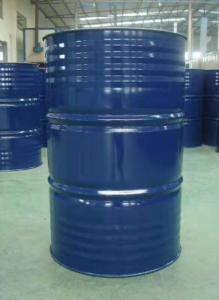
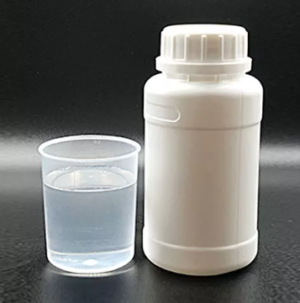
1Kg / 200Kg Bucket
Palletized Shipping
Lead Time: 1-7 Days
Shipping Methods: Sea/Air/Express delivery