Address
Room 2301C, 23rd Floor, Building 1, jinghu Commercial center, No, 34, Liangzhuang Street, Eri District, Zhengzhou City, Henan province
Work Hours
Monday to Friday: 7AM - 7PM
Weekend: 10AM - 5PM
Address
Room 2301C, 23rd Floor, Building 1, jinghu Commercial center, No, 34, Liangzhuang Street, Eri District, Zhengzhou City, Henan province
Work Hours
Monday to Friday: 7AM - 7PM
Weekend: 10AM - 5PM

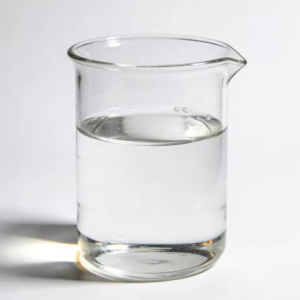
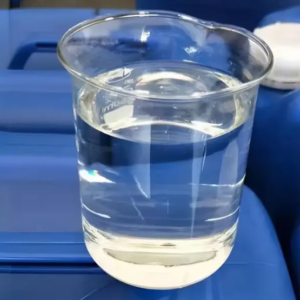
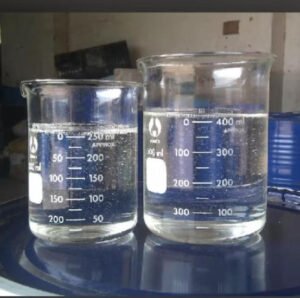
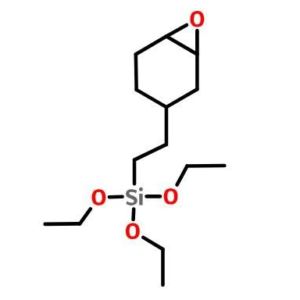
2-(3,4-Epoxycyclohexyl)ethyltriethoxysilane is an organosilicon compound containing an epoxy group and a triethoxysilyl group. At room temperature, it is a colorless to pale yellow transparent liquid with a turpentine-like odor. As a high-performance silane coupling agent, its molecular structure contains two key parts: a cyclohexyl group containing an epoxy group and a silyl group with three ethoxy groups. This unique “dual-headed” structure allows it to simultaneously connect organic and inorganic materials, acting like a bridge to tightly bind them together.
This compound has wide applications in the chemical industry. In glass fiber reinforced plastics (FRP) and filled plastics, it significantly improves the strength and water resistance of the materials; in adhesives and sealants, it enhances the adhesion of adhesives to glass, metals, and other objects; in the coatings industry, it improves the hardness, abrasion resistance, and weather resistance of coatings. Furthermore, it is particularly suitable for water-based coating systems, effectively solving the stability problems that easily occur in water-based coatings during storage and use.
Comparable Products:
Momentive: COATOSIL 1770
Shinetsu: KBE-303
Function
In the production of glass fiber reinforced composites (such as fiberglass) and mineral-filled plastics (such as nylon, PBT, and PET), 2-(3,4-epoxycyclohexyl)ethyltriethoxysilane is a commonly used coupling agent. Glass fibers and inorganic fillers are inorganic, while the resin matrix is usually organic, resulting in poor bonding between the two. Using this coupling agent allows it to coat the surface of the glass fibers or inorganic fillers like an adhesive. One end of the coupling agent binds to the inorganic material, while the other end binds to the organic material, significantly improving the dispersibility and compatibility of the filler in the resin matrix. This not only improves the tensile strength, flexural strength, and interlaminar shear strength of the composite material but also greatly enhances its water resistance, preventing strength loss after water absorption.
This substance is an excellent adhesion promoter for sealants and adhesives such as polyurethane, polysulfide, epoxy, and acrylate. Adding a small amount of this substance when making adhesives can significantly improve the adhesive strength to inorganic substrates such as glass, metals (such as aluminum and steel), and concrete. Especially in humid environments, it effectively prevents adhesive peeling (i.e., water-resistant peel performance). In the electronics industry, it is used in electronic packaging materials and potting compounds, effectively improving the electrical properties of materials under humid conditions and ensuring the reliability of electronic devices such as circuit boards.
In the coatings industry, this silane coupling agent is mainly used as an adhesion promoter and crosslinking agent. It is particularly suitable for water-based acrylic and polyurethane systems. Compared to ordinary silane coupling agents, it has longer storage stability in aqueous environments and does not cause rapid gelation of the coating. Adding it to coatings can effectively improve the wet adhesion of the coating to substrates such as metals and glass, making the coating more wear-resistant, scratch-resistant, and less prone to peeling. Furthermore, it can also be used for surface treatment of materials such as glass, ceramics, and metals, forming a dense organosilicon protective film, thereby improving the surface’s corrosion resistance and wear resistance.
Technical Specifications:
|
Items |
Result |
|
Appearance |
A low-viscosity, colorless, transparent liquid with a slight turpentine odor. |
|
Density (ρ20), g/cm³ |
1,015 g/cm3 |
|
Refractive index |
1.29 |
|
Solubility |
It is soluble in most aliphatic and aromatic solvents such as alcohols, ketones, ethers, and benzene. It hydrolyzes in water, and the hydrolysates readily self-polymerize. |
|
Purity |
>98% |
Package:
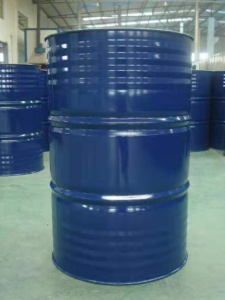
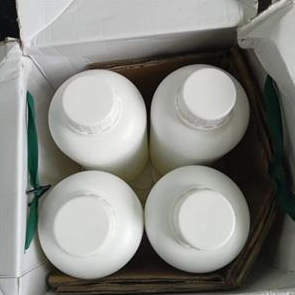
1Kg / 200Kg Bucket
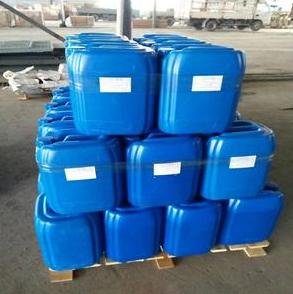
Palletized Shipping
Lead Time: 1-7 Days
Shipping Methods: Sea/Air/Express delivery