Address
Room 2301C, 23rd Floor, Building 1, jinghu Commercial center, No, 34, Liangzhuang Street, Eri District, Zhengzhou City, Henan province
Work Hours
Monday to Friday: 7AM - 7PM
Weekend: 10AM - 5PM
Address
Room 2301C, 23rd Floor, Building 1, jinghu Commercial center, No, 34, Liangzhuang Street, Eri District, Zhengzhou City, Henan province
Work Hours
Monday to Friday: 7AM - 7PM
Weekend: 10AM - 5PM
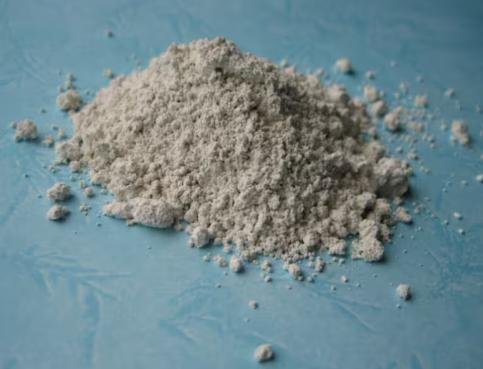
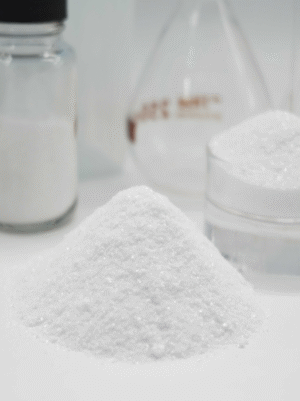
Aluminum nitride (AlN) is a synthetically produced, high-performance inorganic non-metallic material with the chemical formula AlN. It belongs to the hexagonal wurtzite crystal system, with covalent bonds as the primary bond type and also exhibiting ionic bonding characteristics. Aluminum nitride possesses extremely high thermal conductivity, excellent electrical insulation, a low dielectric constant, a coefficient of thermal expansion matching that of semiconductor silicon, and good chemical stability. As a wide-bandgap semiconductor material, its theoretical thermal conductivity is close to that of metallic copper, several times that of alumina ceramics, and it is non-toxic and environmentally friendly, making it an ideal alternative to beryllium oxide (BeO).
Aluminum nitride was first discovered in 1862 and first synthesized in 1877, but it did not receive widespread attention until the 1970s due to its superior physical properties. Currently, aluminum nitride is industrially produced and widely used in electronic packaging, semiconductor lighting, power electronics, microwave devices, deep ultraviolet optoelectronics, and high-temperature structural ceramics, serving as a key fundamental material supporting the development of next-generation information technology and new energy technologies.
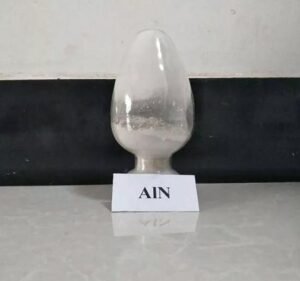
Aluminum nitride (Anitride) ceramic substrates are its primary application area. Due to its extremely high thermal conductivity and excellent electrical insulation, it is widely used in high-power LED packaging, IGBT modules, power MOSFETs, and heat dissipation modules for servers and data centers. Anitride substrates effectively dissipate heat generated during chip operation, improving device reliability and lifespan.
Aluminum nitride is a key substrate material for manufacturing deep ultraviolet (DUV) optoelectronic devices such as UV LEDs and lasers. Furthermore, due to its excellent lattice and thermal matching with gallium nitride (GaN), Anitride is also used as a buffer layer or substrate for GaN epitaxial growth, helping to reduce device defect density and improve performance.
Utilizing its low dielectric loss properties, Anitride is used to manufacture high-performance microwave dielectric filters and radomes, playing a role in 5G communication and radar systems. Due to its excellent high-temperature and corrosion resistance, Anitride is also used to manufacture crucibles for smelting metals, thermocouple protection tubes, and thermal protection components in the aerospace field. In addition, Anitride has good biocompatibility and can be used to manufacture artificial bones and implants, showing potential applications in the biomedical field.
Technical Specifications:
| Purity | 97-98% | 99.80% | 99.95% |
| Particle size | 1-3um | 1-3um | 1-2um |
| 3-5um | 3-5um | 1-3um | |
| 5-10um | 5-10um | 3-5um | |
| 10um | 10um | 5-10um | |
| 15um | 15um | 10um | |
| 20um | 20um | 15um | |
| 25um | 25um | 20um | |
| 25um |
Package:
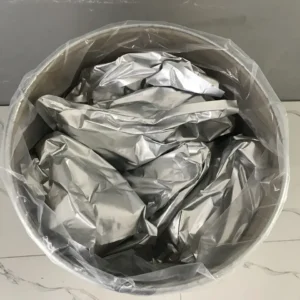
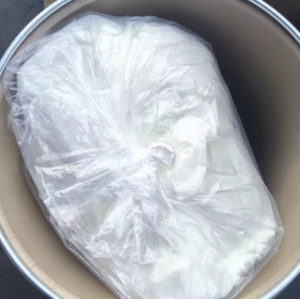
1Kg / 25Kg Bucket
Palletized Shipping
Lead Time: 1-7 Days
Shipping Methods: Sea/Air/Express delivery