Address
Room 2301C, 23rd Floor, Building 1, jinghu Commercial center, No, 34, Liangzhuang Street, Eri District, Zhengzhou City, Henan province
Work Hours
Monday to Friday: 7AM - 7PM
Weekend: 10AM - 5PM
Address
Room 2301C, 23rd Floor, Building 1, jinghu Commercial center, No, 34, Liangzhuang Street, Eri District, Zhengzhou City, Henan province
Work Hours
Monday to Friday: 7AM - 7PM
Weekend: 10AM - 5PM

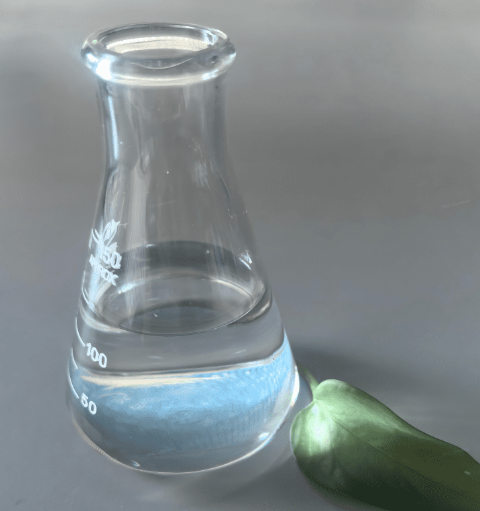
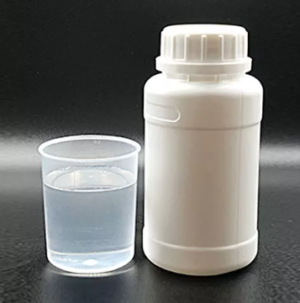
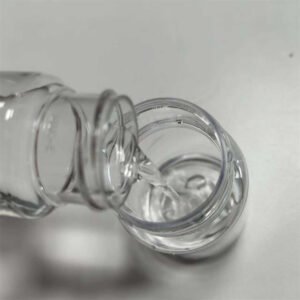
Ethyl silicate, chemically known as tetraethyl orthosilicate, is an important organosilicon compound. At room temperature, ethyl silicate is a colorless, transparent liquid with a characteristic odor similar to diethyl ether. It is slightly soluble in water and miscible with many organic solvents such as ethanol and diethyl ether. Under the action of catalysts such as acids or alkalis, ethyl silicate undergoes rapid hydrolysis to form silica sol, which further condenses to form silica gel or films with a highly cross-linked structure.
As a key chemical raw material, ethyl silicate and its polymers have wide applications in industrial production. In the field of anti-corrosion coatings, it is a core base material for manufacturing inorganic zinc-rich coatings, forming a dense protective film that effectively resists chemical corrosion and high-temperature erosion. In the precision casting industry, it is often used as a binder for mold shells to manufacture complex metal parts with precise dimensions and smooth surfaces. Furthermore, high-purity ethyl silicate is an important precursor for the preparation of aerogels, silica nanomaterials, and insulating layers for semiconductor integrated circuits, playing a vital role in high-tech fields such as aerospace and electronics manufacturing.
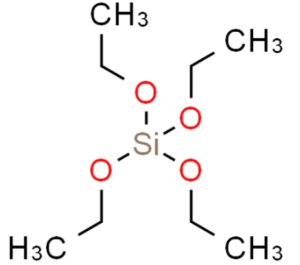
Comparable Products:
Dow Corning Z-6697
Evonik: DYNA-SILA
Shinetsu: KBE-04
Momen-tive:TEOS
Function
Ethyl silicate is the core base material for manufacturing inorganic zinc-rich coatings. During curing, the silica network structure it forms bonds strongly with zinc powder, providing not only a physical barrier but also effectively preventing steel corrosion through electrochemical action (cathode protection). These coatings are widely used in marine engineering, bridges, large steel structures, and other fields with extremely high corrosion resistance requirements, exhibiting excellent chemical corrosion resistance and heat resistance.
In investment casting (lost-wax casting), ethyl silicate hydrolysate is a key binder for preparing the mold shell. It bonds firmly with refractory powders (such as quartz powder and zircon powder) to create a high-strength mold shell. During high-temperature calcination, the binder burns, leaving voids that give the mold shell good permeability. This process can produce precision castings with high dimensional accuracy, smooth surfaces, and complex shapes, making it the mainstream process for manufacturing key components such as aero-engine blades and turbine disks.
Ethyl silicate is a major precursor for preparing silica aerogels. Aerogel materials with extremely low density and excellent thermal insulation properties can be obtained through the sol-gel method, utilizing the three-dimensional network structure formed by hydrolysis and condensation, followed by drying. Furthermore, it is used to prepare silica nanoparticles and mesoporous materials, and is widely applied in catalyst supports and adsorbents. In the electronics industry, high-purity electronic-grade tetraethyl orthosilicate (TEOS) is an important silicon source in the chemical vapor deposition (CVD) process of semiconductor manufacturing, used to deposit silica insulating layers, and is one of the key materials for manufacturing integrated circuits.
Technical Specifications:
| Appearance | Clear colorless liquid |
| Melting point | -77 °C |
| Density | 0.933 g/mL at 20 °C(lit.) |
| Purity | 99% |
| Free acid | <1.0 |
Package:
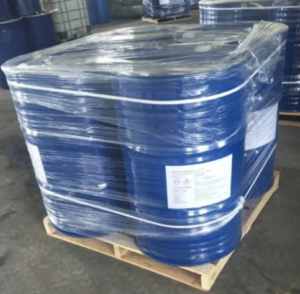
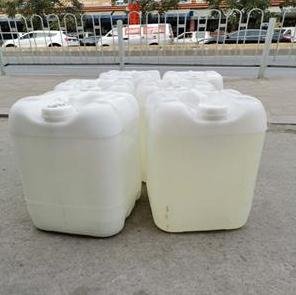
1Kg / 200Kg Bucket
Palletized Shipping
Lead Time: 1-7 Days
Shipping Methods: Sea/Air/Express delivery