Address
Room 2301C, 23rd Floor, Building 1, jinghu Commercial center, No, 34, Liangzhuang Street, Eri District, Zhengzhou City, Henan province
Work Hours
Monday to Friday: 7AM - 7PM
Weekend: 10AM - 5PM
Address
Room 2301C, 23rd Floor, Building 1, jinghu Commercial center, No, 34, Liangzhuang Street, Eri District, Zhengzhou City, Henan province
Work Hours
Monday to Friday: 7AM - 7PM
Weekend: 10AM - 5PM
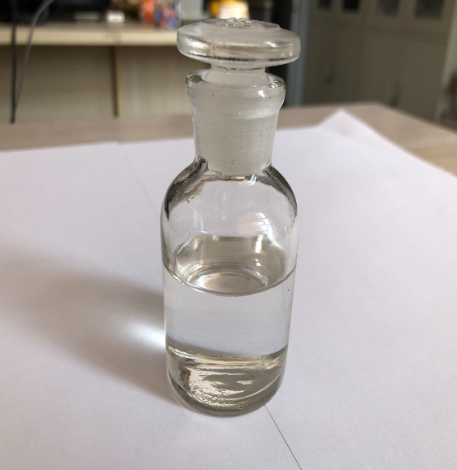
Lithium silicate (chemical formula Li₂SiO₃) is an inorganic compound composed of lithium, silicon, and oxygen, typically appearing as a white powder or a colorless, transparent liquid. As a soluble silicate, it dissolves readily in water at room temperature; its aqueous solution is weakly alkaline and exhibits excellent film-forming properties, as well as resistance to heat, water, and chemical corrosion. Compared to other alkali metal silicates (such as sodium silicate or potassium silicate), the most distinctive feature of lithium silicate is the “self-drying” nature of its aqueous solution: upon water evaporation, it forms a hard, water-insoluble film through an irreversible transformation process. Additionally, the solution has low viscosity and allows for a high molar ratio of SiO₂ to Li₂O, resulting in superior stability and weather resistance.
Lithium silicate has a wide range of applications. In the construction industry, it serves as a key raw material for water-based inorganic zinc-rich coatings, widely used for the long-term corrosion protection of steel structures; as a concrete sealer and hardener, it significantly enhances floor hardness and abrasion resistance without causing efflorescence. In the realm of industrial materials, it is used as a high-performance adhesive and as an additive for premium welding electrodes and specialty glass-ceramics. In the new energy sector, lithium silicate and its derivatives act as lithium-replenishing agents for lithium batteries, playing a vital role in boosting energy density and cycle life.
Preparation method
The wet chemical method is currently the most widely used industrial preparation technique, featuring a relatively mature process. This method begins by reacting sodium silicate (water glass) with sulfuric acid to produce hydrated silicic acid and sodium sulfate. Subsequently, the hydrated silicic acid reacts with lithium hydroxide (LiOH) to form lithium silicate and water. Finally, impurities such as sodium sulfate are removed via filtration, and the solution is concentrated to yield a pure aqueous lithium silicate solution.
The sol-gel method is a synthesis technique that utilizes silica sol as the silicon source. In this process, an aqueous lithium hydroxide solution is mixed with an alkaline silica sol in specific proportions and reacted under heating in the presence of a catalyst. This method operates under relatively mild reaction conditions and allows for easy control over product particle size and structure; it enables the production of lithium silicate with varying molar ratios and solid contents, making it particularly suitable for preparing high-purity, specialty lithium silicate materials.
Lithium silicate is a core raw material for the production of water-based inorganic zinc-rich coatings. Leveraging the film-forming properties of lithium silicate and the sacrificial anodic protection provided by zinc powder, these coatings are widely used for corrosion protection of steel structures in offshore engineering, oil pipelines, ships, bridges, and chemical plants. Additionally, the excellent heat resistance of lithium silicate allows for the formulation of high-temperature resistant coatings suitable for surfaces exposed to high-heat baking or direct flame contact, offering superior fire-retardant properties.
As a third-generation concrete sealer and hardener (lithium-based), lithium silicate penetrates the concrete matrix and reacts chemically with free calcium ions to form calcium silicate gel. This gel effectively fills the concrete’s capillary pores, significantly enhancing its hardness, abrasion resistance, and impermeability. Unlike traditional sodium- or potassium-based hardeners, lithium-based hardeners do not cause efflorescence (whitening) or alkali-silica reaction (ASR), and they yield floors with higher gloss and superior wear resistance.
Lithium silicate is a high-performance inorganic binder characterized by excellent bond strength, water resistance, and resistance to hydrothermal aging. It is widely used to bond a variety of materials, including wood, paper, plastics, glass, metals, concrete, brick, tile, and asbestos. Its excellent chemical corrosion resistance makes it particularly suitable for sectors with stringent safety requirements, such as military products, aerospace equipment, and naval vessels.
In the ceramics industry, lithium silicate is a key component of dental glass-ceramics (such as IPS e.max). These materials offer high strength, high transparency, and excellent biocompatibility, making them widely used in dental restorations and cosmetic dental veneers. Furthermore, lithium silicate is used in the manufacture of specialty optical glass and glass fibers, where it improves heat resistance, chemical stability, and mechanical strength.
In the electronics and energy sectors, lithium silicate and its derivatives (such as Li₄SiO₄) demonstrate significant application value. They serve as lithium-supplementing agents for the anodes of lithium-ion batteries; by releasing lithium ions during charging, they compensate for irreversible capacity loss incurred during cycling, thereby significantly boosting coulombic efficiency and cycle life. Consequently, they are among the critical materials for enhancing the performance of power batteries.
Technical Specifications:
| Molecular Weight | 89.9657 |
| Boiling point | > 340ºC/760mmHg |
| Appearance | Colorless Liquid |
| Usage | Industy |
| CAS | 12627-14-4 |
| Purity | 99%Min |
| Density |
1.16 g/mL at 25 °C |
Package:
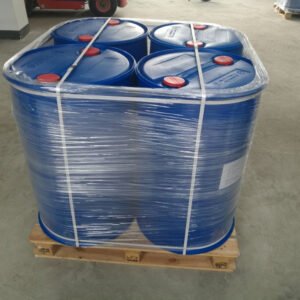
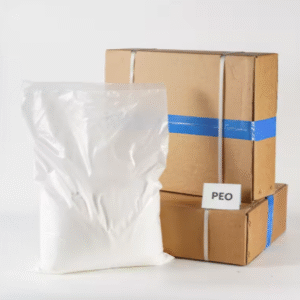
1Kg / 200Kg Bucket
Palletized Shipping
Lead Time: 1-7 Days
Shipping Methods: Sea/Air/Express delivery