Address
Room 2301C, 23rd Floor, Building 1, jinghu Commercial center, No, 34, Liangzhuang Street, Eri District, Zhengzhou City, Henan province
Work Hours
Monday to Friday: 7AM - 7PM
Weekend: 10AM - 5PM
Address
Room 2301C, 23rd Floor, Building 1, jinghu Commercial center, No, 34, Liangzhuang Street, Eri District, Zhengzhou City, Henan province
Work Hours
Monday to Friday: 7AM - 7PM
Weekend: 10AM - 5PM

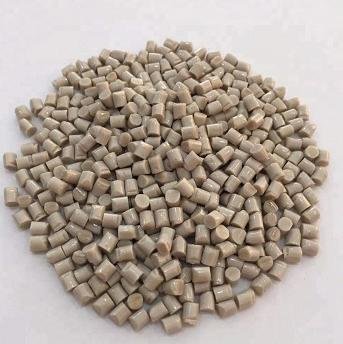
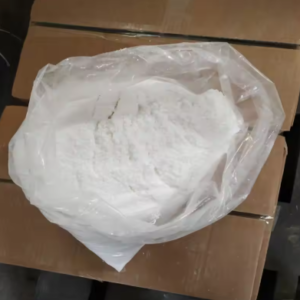
PEEK (polyetheretherketone) is a high-performance, semi-crystalline engineering plastic. Its molecular structure contains benzene rings, ether bonds, and ketone bonds, giving it an extremely high melting point, excellent mechanical strength, good chemical resistance, and biocompatibility. As an ideal material for replacing steel with plastic, PEEK maintains stable physical and chemical properties at high temperatures, and its density is only 1.3 g/cm³, about half that of aluminum alloys, resulting in an extremely high strength-to-weight ratio.
This material was first successfully developed by Imperial Chemical Industries (ICI) in 1978 and has since been widely used in aerospace, medical devices, and electronics. With the development of the global new materials industry, the application scope of PEEK continues to expand, especially in emerging fields such as new energy vehicles and humanoid robots, where its lightweight and fatigue-resistant properties play a crucial role. Currently, the global PEEK market is dominated by a few multinational corporations, while countries like China are accelerating their industrialization process, breaking down technological barriers, and achieving independent control over key materials.
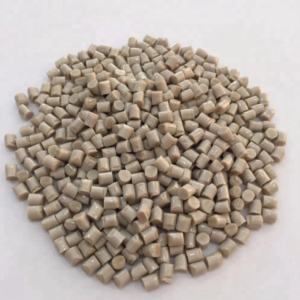
In the aerospace field, PEEK is primarily used to replace metals and ceramics for weight reduction. Applications include seals, valves, and bearings inside aircraft engines, as well as fuselage structural components such as wing fasteners and seat frames. PEEK’s resistance to high and low temperatures and its low coefficient of friction make it particularly suitable for manufacturing components operating in extreme environments, helping to reduce aircraft weight and improve fuel efficiency.
In automotive manufacturing, PEEK is used in high-temperature components within engine compartments, such as piston rings, valve guides, gaskets, bearings, and clutch gear rings. Particularly in the new energy vehicle sector, PEEK’s excellent insulation and high-temperature resistance have led to its use in motor enameled wires, battery seals, and charging pile components.
PEEK is an important material in the medical implant field, widely used in spinal implants (such as spinal rods and interbody fusion devices), cranioplasty grafts, and joint prostheses. Compared to titanium alloys, PEEK has a lower elastic modulus, allowing for better matching with human bone, reducing stress shielding, and promoting bone healing. Furthermore, PEEK can also be used to manufacture surgical instruments and endoscopic components.
In the electronics and electrical fields, PEEK is used as a high-temperature insulating material, such as wafer carriers, CMP retaining rings, connectors, and cable sheaths in semiconductor manufacturing. Its excellent chemical resistance and dimensional stability make it ideal for electronic packaging and precision electronic components, ensuring the reliability of electronic devices in high-temperature environments.
In the petrochemical and energy sectors, PEEK is used to manufacture corrosion-resistant pipes, valves, pump bodies, and seals. In industrial robotics, PEEK, due to its lightweight and fatigue-resistant properties, is used to manufacture robot joints, frames, and transmission components to improve the robot’s mobility and load-bearing capacity.
Technical Specifications:
|
Item
|
Test Standard
|
Unit
|
||||
|
Color
|
Natural or Black
|
Natural or Black
|
Black
|
Black
|
||
|
Density
|
ISO 1183
|
g/cm3
|
1.3±0.01
|
1.5±0.01
|
1.4±0.01
|
1.43±0.01
|
|
Water Abs. (25ºC.24Hrs)
|
ISO 62
|
%
|
0.5
|
0.11
|
0.06
|
0.06
|
|
Mould shrinking percentage |
3mm,170ºC, Flow direction
|
%
|
1.2
|
0.4
|
0.1
|
0.3
|
|
Perpendicular to flow direction
|
%
|
1.5
|
0.8
|
0.5
|
0.5
|
|
|
Melting point
|
DSC
|
ºC
|
343
|
343
|
343
|
343
|
|
Distortion temperature
|
ASTM D648
|
ºC
|
163
|
315
|
315
|
293
|
|
Continuous using temperature
|
UL 74685
|
ºC
|
260
|
260
|
260
|
260
|
|
Coefficient of thermal expansion
|
ASTM D696
|
10-5ºC
|
4.7
|
2.2
|
1.5
|
2.2
|
|
Tensile strength(23ºC)
|
ISO527-2/1B/50
|
Mpa
|
100
|
155
|
220
|
134
|
|
Tensile elongation(23ºC)
|
ISO527-2/1B/50
|
%
|
34
|
2
|
1.8
|
2.2
|
|
Bending strength(23ºC)
|
ISO 178
|
Mpa
|
163
|
212
|
298
|
186
|
|
Comprehensive strength(23ºC)
|
ASTM D695
|
Mpa
|
118
|
215
|
240
|
150
|
|
Lzod impact strength ( no gap)
|
ISO 180/U
|
KJm-2
|
No crack
|
51
|
46
|
32
|
|
Rockwell hardness
|
ASTM D785
|
99
|
103
|
107
|
102
|
|
|
Flammable level
|
UL 94
|
V-0 @mm
|
1.5
|
1.5
|
1.5
|
0.75
|
|
Dielectric strength
|
IEC 248
|
KV/mm
|
1.8
|
1.9
|
||
|
Dielectric constant
|
IEC 250
|
3.2
|
3.3
|
|||
|
Surface resistivit
|
Ω
|
1015Ω
|
1015Ω
|
3×10⁶Ω
|
5×10⁶Ω
|
|
|
Friction coefficient
|
μ
|
0.30-0.38
|
0.38-0.46
|
0.28
|
0.18
|
Package:
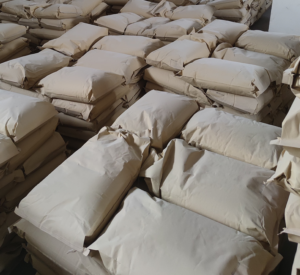
1Kg / 25Kg Bag
Palletized Shipping
Lead Time: 1-7 Days
Shipping Methods: Sea/Air/Express delivery