Address
Room 2301C, 23rd Floor, Building 1, jinghu Commercial center, No, 34, Liangzhuang Street, Eri District, Zhengzhou City, Henan province
Work Hours
Monday to Friday: 7AM - 7PM
Weekend: 10AM - 5PM
Address
Room 2301C, 23rd Floor, Building 1, jinghu Commercial center, No, 34, Liangzhuang Street, Eri District, Zhengzhou City, Henan province
Work Hours
Monday to Friday: 7AM - 7PM
Weekend: 10AM - 5PM

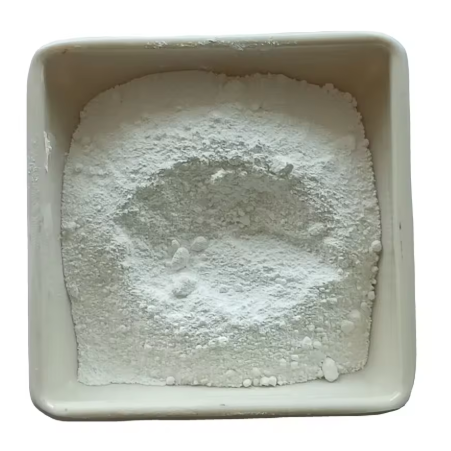
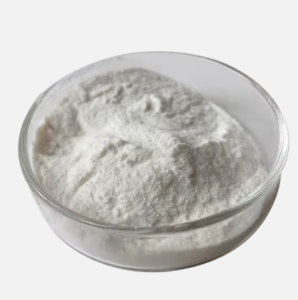
Hydroxyapatite (HAP or HA), with the chemical formula Ca₁₀(PO₄)₆(OH)₂, is a naturally occurring calcium phosphate mineral and the main inorganic component of vertebrate bones and teeth.
Its crystal structure is stable, and it possesses excellent biocompatibility, bioactivity, and osteoconductivity, allowing it to form chemical bonds with body tissues. As an important biomedical material, hydroxyapatite is widely used in bone defect repair, dental implants, soft tissue fillers, and oral care products. Furthermore, due to its unique ion exchange and adsorption properties, it also demonstrates significant application value in industrial fields such as wastewater treatment, environmental remediation, and as a catalyst carrier.
Bone Repair: Widely used for filling bone defects, treating non-union fractures, and in spinal fusion surgery, as an artificial bone substitute material.
Dental Implants: Used as a surface coating for implants to promote the integration of the implant with bone tissue and improve the success rate of implantation.
Soft Tissue Filling: In medical aesthetics, hydroxyapatite microspheres (such as Radiesse) are used to fill facial wrinkles, nasolabial folds, and the chin. Through mechanical stimulation and fibroblast activation, it promotes collagen regeneration, achieving long-lasting shaping.
Ocular Prosthesis Socket: Used for intraorbital implantation, possessing good biocompatibility and vascularization properties.
Hydroxyapatite Toothpaste: Its core function is remineralization: when teeth demineralize (calcium loss) in an acidic environment, hydroxyapatite releases calcium ions, promoting mineral deposition to repair tooth enamel. In addition, it can adsorb pigments and bacteria in the oral cavity, providing whitening, anti-sensitivity, and plaque reduction effects.
Hydroxyapatite has excellent ion exchange and adsorption properties, making it an excellent water treatment material.
Heavy Metal Removal: Can be used to adsorb heavy metal ions such as lead, cadmium, nickel, and mercury from wastewater, fixing them in the crystal lattice through an ion exchange mechanism.
Fluoride/Phosphate Removal: Can effectively remove excess fluoride ions and phosphates from water, preventing eutrophication.
Soil Remediation: Used to remediate lead and cadmium contaminated soil, reducing the bioavailability of heavy metals through passivation.
Industrial Catalysis:
Due to its large specific surface area, high temperature resistance, and ion exchange capacity, hydroxyapatite is used as a catalyst support, especially suitable for oxidation reactions and hydrogenation reactions. For example, hydroxyapatite catalysts loaded with noble metals (such as Pd, Rh) show high activity and selectivity in organic synthesis. In addition, its high melting point and low thermal conductivity can be used to prepare thermal insulation paper, refractory materials, etc.
Technical Specifications:
|
Item
|
Specification
|
Test result
|
|
Physical Contro
|
||
|
Appearance
|
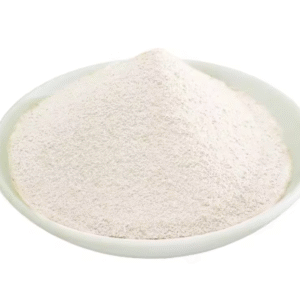
White Powder
|
Conforms
|
|
Odor
|
Characteristic
|
Conforms
|
|
Taste
|
Characteristic
|
Conforms
|
|
Purity
|
99%
|
Conforms
|
|
Loss on Drying
|
≤5.0%
|
Conforms
|
|
Ash
|
≤5.0%
|
Conforms
|
|
Particle size
|
95% pass 80 mesh
|
Conforms
|
|
Allergens
|
None
|
Conforms
|
|
Chemical Control
|
||
|
Heavy metals
|
NMT 10ppm
|
Conforms
|
|
Arsenic
|
NMT 2ppm
|
Conforms
|
|
Lead
|
NMT 2ppm
|
Conforms
|
|
Cadmium
|
NMT 2ppm
|
Conforms
|
|
Mercury
|
NMT 2ppm
|
Conforms
|
|
Microbiological Control
|
||
|
Total Plate Count
|
10,000cfu/g Max
|
Conforms
|
|
Yeast & Mold
|
1,000cfu/g Max
|
Conforms
|
|
E.Coli
|
Negative
|
Negative
|
|
Salmonella
|
Negative
|
Negative
|
Package:
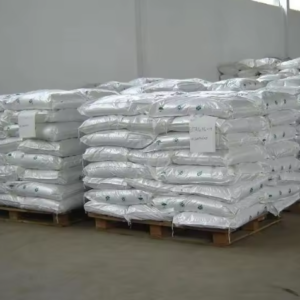
1kg / 20kg bag
Palletized Shipping
Lead Time: 1-7 Days
Shipping Methods: Sea/Air/Express delivery