Address
Room 2301C, 23rd Floor, Building 1, jinghu Commercial center, No, 34, Liangzhuang Street, Eri District, Zhengzhou City, Henan province
Work Hours
Monday to Friday: 7AM - 7PM
Weekend: 10AM - 5PM
Address
Room 2301C, 23rd Floor, Building 1, jinghu Commercial center, No, 34, Liangzhuang Street, Eri District, Zhengzhou City, Henan province
Work Hours
Monday to Friday: 7AM - 7PM
Weekend: 10AM - 5PM

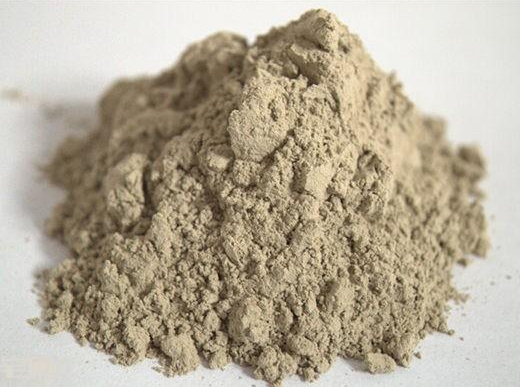
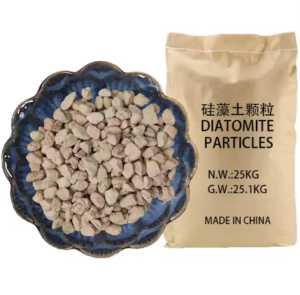
Diatomite—also known as diatomaceous earth or kieselguhr—is a siliceous biogenic sedimentary rock formed from the accumulated silicate remains of diatoms, which are single-celled aquatic plants. The primary constituent of this rock is hydrated amorphous silica, specifically opal. Over vast geological timescales, following the death of diatoms, their rigid siliceous cell walls accumulated on the seabed; through the process of diagenesis, these deposits ultimately transformed into this unique mineral.
The most distinctive characteristic of diatomite is that it retains the biological morphology of the diatoms; at a microscopic level, it exhibits a variety of complex structures—such as disc-like or tubular shapes—and is permeated by regularly arranged micropores. This specialized “molecular sieve” structure endows diatomite with an immense specific surface area and exceptionally high porosity, resulting in superior properties such as light weight, strong adsorption capacity, chemical stability, and excellent thermal and acoustic insulation. As a non-renewable natural resource, diatomite is widely distributed across the globe, with the United States and China holding the largest reserves. Following purification and modification treatments, diatomite finds extensive application in fields such as industrial filtration aids, architectural decorative materials (e.g., diatom mud), catalyst carriers, agricultural soil amendments, and environmental water treatment; it is widely hailed as the “MSG of Industry” and the “Eco-friendly Material of the 21st Century.”
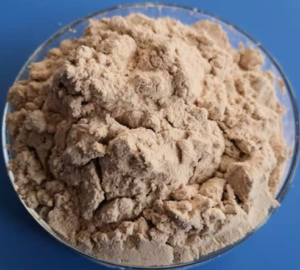
Diatomaceous earth is currently one of the most widely used filter aids in the world. By leveraging its unique porous structure and non-compressibility, diatomaceous earth creates a highly efficient filtration medium. In the food industry, it is extensively used for filtering beer, beverages, and edible oils; it effectively removes minute particles, bacteria, and impurities, thereby enhancing product clarity and purity. In the pharmaceutical and chemical sectors, it is also employed for the clarification of various medicinal liquids and chemical solutions.
In the construction sector, diatomaceous earth is processed into a variety of functional materials. The most notable of these is “diatom mud,” an interior wall decorative material created by harnessing diatomaceous earth’s adsorptive properties and microporous structure. Diatom mud offers a range of functions—including regulating indoor humidity, adsorbing formaldehyde, deodorizing, fire resistance, and thermal insulation—making it a green and eco-friendly building material.
Furthermore, diatomaceous earth is utilized in the production of thermal insulation materials—such as insulating bricks and calcium silicate boards—which are widely applied for thermal insulation in industrial kilns and building walls. In the coatings industry, diatomaceous earth serves as a functional filler added to paints and coatings, providing matting, thickening, abrasion resistance, and scratch resistance properties.
As a soil amendment, diatomaceous earth is rich in silicon; it can be applied to soil as a silicon fertilizer to promote plant photosynthesis and enhance crops’ resistance to lodging (falling over). Additionally, its porous structure helps improve soil aeration and water retention capabilities.
In the field of environmental protection, diatomaceous earth is used to treat industrial wastewater and domestic sewage, effectively adsorbing heavy metal ions and organic pollutants present in the water. In agricultural pest control, diatomaceous earth also serves as a physical insecticide; by utilizing its sharp-edged particles to abrade the exoskeletons of pests—thereby causing dehydration and death—it offers an eco-friendly method of biological pest control.
Due to its high specific surface area, as well as its excellent thermal and chemical stability, diatomaceous earth serves as an ideal catalyst support. It is widely employed in the petrochemical and fine chemical industries—for instance, as a support for vanadium catalysts in sulfuric acid production, or as a catalyst support in hydrocracking reactions. Diatomaceous earth enhances catalyst dispersion and activity, thereby extending the catalyst’s service life.
Product Specifications:
|
Technical specifications for diatomite
|
|
|
silicon dioxide content
|
≥80 (﹪)
|
|
iron trioxide
|
≤1.5 (﹪)
|
|
Moisture content
|
<5 (﹪)
|
|
PH value
|
6
|
|
Searches the rate
|
2.5-3.5
|
|
plumbum
|
<2(mg/kg)
|
|
arsenic
|
<2(mg/kg)
|
|
aluminum
|
≤0.45 (﹪)
|
|
calcium
|
≤0.5 (﹪)
|
Package:
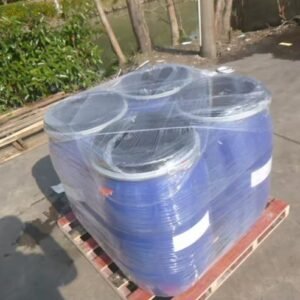
1kg/25kg Bag
Palletized Shipping
Lead Time: 1-7 Days
Shipping Methods: Sea/Air/Express delivery